
Serpentine Belt Replacement Cost in Los Angeles: Complete 2026 Guide
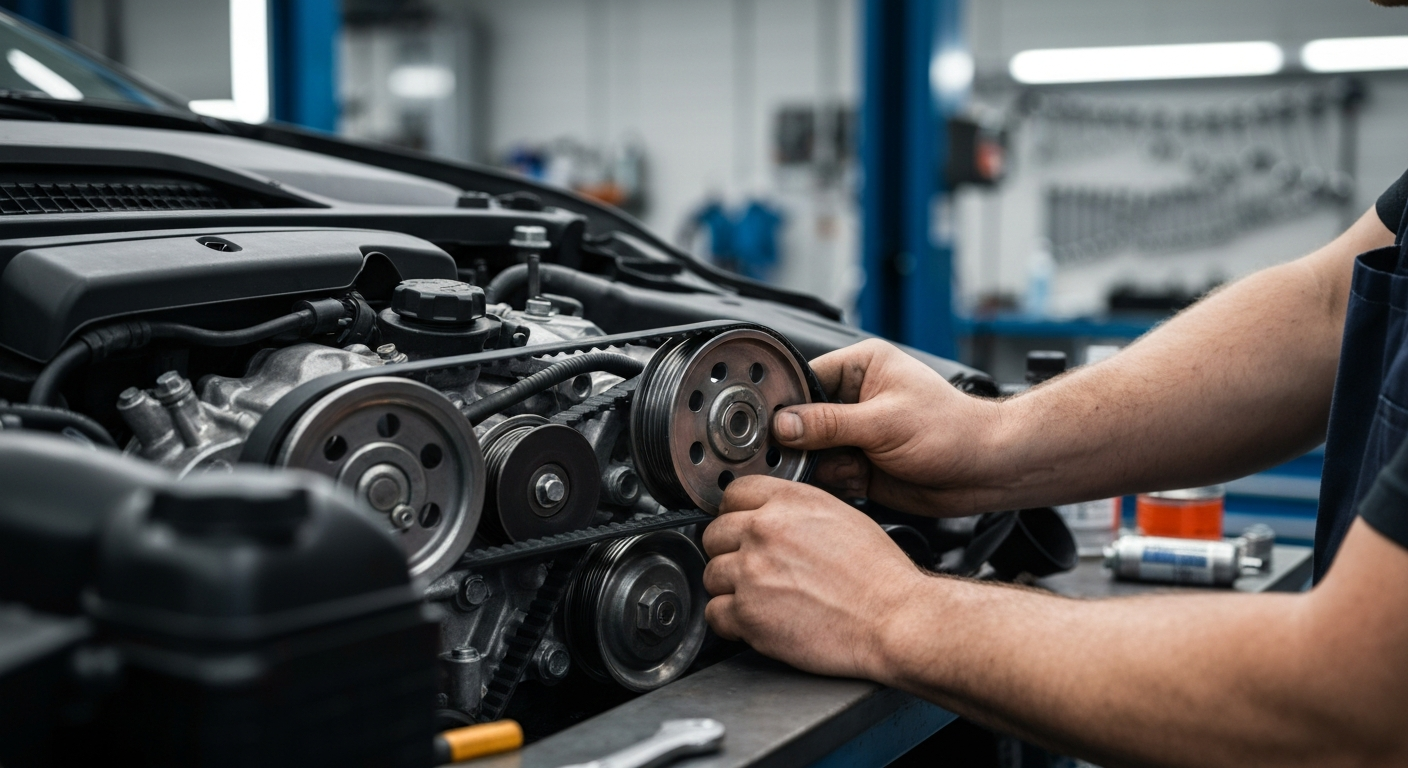
Your serpentine belt is one of the most critical yet overlooked components in your vehicle. In Los Angeles, you can expect to pay between $136-$176 for serpentine belt replacement, depending on your vehicle’s make and model. But the cost is only part of the story. At Hyperion Auto Repair, our ASE-certified technicians know that choosing the right shop makes all the difference.
With over 40 years of service to Los Angeles drivers, Hyperion Auto Repair offers professional serpentine belt replacement with free multi-point inspections and warranty on all repairs. This comprehensive guide will walk you through everything you need to know about serpentine belt replacement costs, warning signs, and why professional service matters.
What is a Serpentine Belt and Why It Matters
The Role of Your Serpentine Belt
A serpentine belt is a relatively long, flat, multi-ribbed belt that is driven by your engine’s crankshaft pulley. This single belt is responsible for powering multiple critical systems in your vehicle simultaneously:
- Alternator – generates electrical power to charge your battery
- Air Conditioning Compressor – essential in Los Angeles heat
- Water Pump – circulates coolant to prevent overheating
- Power Steering Pump – enables smooth steering control
- Cooling Fan – assists with engine cooling
When your serpentine belt fails, every one of these systems fails simultaneously. This makes it a critical single point of failure. If your belt breaks while driving, you risk engine overheating, loss of electrical power, complete loss of power steering, and being stranded on the side of the road—often in Los Angeles traffic.
How Your Serpentine Belt Works
The serpentine belt is tensioned by a hydraulic or spring-loaded automatic tensioner that maintains proper tension as the belt stretches over time. The belt must be properly centered on all pulleys to function correctly. A misaligned pulley or worn tensioner can cause premature belt wear.
The name “serpentine” comes from the belt’s serpentine routing path—it weaves through multiple pulleys in a specific pattern that is unique to each vehicle model. Proper routing during replacement is critical for correct belt tension and function.
Serpentine Belt Replacement Cost in Los Angeles
2026 Los Angeles Pricing Breakdown
Based on current market data for Los Angeles, the average serpentine belt replacement cost is $136-$176 for most vehicles. Here’s how this breaks down:
- Parts Cost: $25-$75 – varies significantly by vehicle make/model and part quality
- Labor Cost: $85-$125 – depends on vehicle accessibility and shop hourly rate
At Hyperion Auto Repair, our transparent pricing means no surprises. We provide detailed estimates that include all costs upfront, and our competitive rates reflect the value of working with ASE-certified technicians who get the job done right.
The reason costs vary so widely is due to multiple factors:
- Vehicle Make and Model – luxury and performance vehicles often have more expensive replacement belts
- Part Quality – OEM (original equipment manufacturer) belts cost more than aftermarket, but last longer
- Shop Overhead – dealerships charge 20-30% more due to higher operating costs
- Shop Location – Los Angeles pricing is competitive compared to other major cities
Cost Comparison: Dealer vs. Independent Shop
When you need a serpentine belt replacement, you have options. Dealerships typically charge $150-$250 more than independent shops like Hyperion Auto Repair. Why? Dealerships have higher overhead—facilities, administrative staff, and corporate overhead are passed directly to you through higher prices.
However, choosing an independent shop doesn’t mean sacrificing quality. Hyperion’s ASE-certified technicians have the same expertise as dealership mechanics, without the dealership markup. You get expert service at fair prices.
Hidden Costs to Know About
During your free multi-point inspection, we may recommend additional repairs that aren’t immediately obvious:
- Belt Tensioner Replacement – $267-$365 (often recommended for vehicles over 80,000 miles)
- Idler Pulley Replacement – $128-$175 (worn pulley can damage new belt prematurely)
- Pulley Realignment – varies by cause and repair scope
These aren’t hidden fees—Hyperion will fully explain any recommended repairs and why they’re necessary during your free inspection. You’re always in control of your repair decisions, and we never perform work without your explicit approval.
7 Warning Signs Your Serpentine Belt Needs Replacement
Sign 1: Squealing Noises from Engine
A high-pitched squealing sound from your engine, especially during cold starts or acceleration, is often the first sign of serpentine belt trouble. This squealing indicates that your belt is either stretched or glazed (worn smooth), reducing its ability to grip the pulleys.
In Los Angeles traffic, you might notice the squealing getting louder as your AC compressor works harder in the heat. Don’t ignore this sound—it’s your vehicle telling you the belt is failing. Typically, you have 1-2 weeks before complete failure, so schedule an inspection promptly.
Sign 2: Visible Belt Damage
If you can see under your hood, look for visible signs of belt damage:
- Cracks running perpendicular across the belt
- Missing chunks of rubber
- Shredded or frayed edges
- Glazed (shiny, worn smooth) appearance
Any of these signs mean your belt is at the end of its life. Professional inspection confirms the severity, but visible damage always warrants replacement within days, not weeks.
Sign 3: Battery Warning Light
Your battery warning light indicates an electrical system problem. Often, this is caused by a loose or slipping serpentine belt that can’t turn the alternator fast enough to maintain proper charging.
When the alternator doesn’t get proper belt drive speed, your battery discharges while driving. This light means: “Your vehicle is currently running on battery power only, and the battery is draining.” Without the alternator charging, you’ll eventually run out of power and be stranded.
Sign 4: Power Steering Difficulty
If your steering wheel suddenly becomes hard to turn, especially at low speeds and parking, your serpentine belt may be slipping. The belt drives the power steering pump, and when the belt slips, power steering assist is lost.
Hard steering at parking speeds is a safety hazard and indicates imminent belt failure. This requires immediate professional attention before the belt breaks completely.
Sign 5: AC Compressor Not Cooling
In Los Angeles summers, a non-functioning air conditioning system is more than an inconvenience—it’s a safety and comfort crisis. The belt drives your AC compressor. If your AC suddenly stops working and your engine is running normally, belt slip is often the culprit.
This is frequently the first sign of belt wear, especially in our climate where the AC works hard nearly year-round.
Sign 6: Overheating Engine
This is the most serious warning sign. If your serpentine belt drives your water pump and the belt breaks, coolant circulation stops immediately. Your engine can overheat in seconds to minutes, causing catastrophic damage.
If your temperature gauge climbs to the red zone, pull over immediately and turn off the engine. Do not attempt to drive to the shop. Call for a tow truck. An overheating engine can cause head gasket failure, warped cylinder heads, or complete engine seizure—repairs costing $500-$5,000+.
Sign 7: Visible Belt Slippage
With the engine running (and safely parked), you might be able to see the belt moving on the pulleys—this is belt slippage. The belt should not move relative to the pulleys. If you see movement, your belt is wearing or your tensioner is failing.
Only a professional should perform this check safely. Never attempt to inspect a running engine on your own—hands and loose clothing can be caught in moving belt systems.
Serpentine Belt Replacement Timeline
Manufacturer Recommended Interval: 90,000 Miles
Most vehicle manufacturers recommend serpentine belt replacement at approximately 90,000 miles. Some vehicles suggest 100,000 miles, while others may recommend 80,000 miles. Your owner’s manual contains the exact recommendation for your specific vehicle.
However, manufacturers also specify that belts should be inspected regularly before reaching the replacement interval. Belt wear can accelerate due to age, climate, and driving conditions.
Los Angeles Driving Conditions
Los Angeles drivers should be aware that our climate accelerates belt wear:
- Extreme Heat – degrades rubber faster than cooler climates
- Stop-and-Go Traffic – AC system works continuously, stressing the belt
- Frequent Acceleration – places more stress on all accessory systems
- Longer Driving Seasons – belts work more months per year
Many LA drivers should plan belt replacement at 80,000-85,000 miles rather than waiting until 90,000+. Regular professional inspection helps determine the right timing for your specific vehicle and driving patterns.
Regular Inspection Schedule
We recommend professional serpentine belt inspection at every 30,000 miles in Los Angeles. This allows early detection of wear patterns and gives you time to plan replacement before failure occurs.
Hyperion Auto Repair includes a comprehensive free multi-point vehicle inspection with every service. This inspection documents belt condition and helps you stay ahead of potential problems.
What Hyperion’s Serpentine Belt Replacement Process Includes
Step 1: Comprehensive Diagnosis
Before any work begins, our ASE-certified technician runs your engine to listen for noise sources. They verify that your belt tensioner and idler pulleys operate smoothly and silently. All pulley alignment is checked to ensure they’re turning in the same plane.
This diagnostic step is what separates professional service from quick-fix shops. We’re not just replacing a belt—we’re ensuring your entire accessory system is functioning properly.
Step 2: Belt Documentation
The technician documents the belt’s routing path through your accessory pulleys. This routing is specific to your vehicle and must be precisely followed during reinstallation. A routing error means improper belt tension and potential failure of your new belt.
Digital photos provide a reference guide during installation, ensuring proper reassembly.
Step 3: Tension Release and Removal
The belt tensioner is released using a wrench or lever, reducing tension on the belt. With the tension removed, the old belt slides off the pulleys and is properly disposed.
Step 4: Component Inspection
With the belt removed, all rotating components are inspected:
- Alternator – verified for smooth operation
- AC Compressor – checked for noise and free rotation
- Water Pump – inspected for leaks and noise
- Power Steering Pump – verified for proper operation
- Belt Tensioner – checked for wear or noise (may recommend replacement)
- Idler Pulleys – inspected for wear (may recommend replacement)
This inspection often identifies components needing replacement. Our technician explains findings clearly and discusses your options.
Step 5: New Belt Installation
A high-quality replacement belt is selected based on your vehicle’s specifications and your preferences (OEM or quality aftermarket). The belt is carefully threaded through all pulleys following the routing diagram established in Step 2.
The belt tensioner is held away from the belt during threading. Once the belt is centered on all pulleys, the tensioner is released to apply tension.
Step 6: Tension Application and Testing
Your engine is started to verify normal operation. The belt is checked for proper routing and centering on all pulleys. There should be no squealing or noise. All accessories—alternator, AC compressor, water pump, power steering, and cooling fan—are verified as functioning properly.
The engine runs for several minutes to ensure everything is operating correctly before you take your vehicle home.
Why You Shouldn’t Drive with a Bad Serpentine Belt
Immediate Safety Risks
A failing serpentine belt presents immediate safety hazards:
- Unexpected Belt Break – leaves you stranded on a Los Angeles freeway with no power steering or electrical power
- Loss of Power Steering – makes your vehicle difficult or impossible to control at highway speeds
- Loss of Electrical Power – no headlights, taillights, brake lights, or warning signals
- Engine Overheating – can cause catastrophic engine damage in minutes
Driving a car with a known serpentine belt problem is gambling with your safety and the safety of other Los Angeles drivers.
Catastrophic Damage Risk
The financial consequences of ignoring a serpentine belt problem are severe:
- Immediate Cost – $136-$176 for belt replacement
- If Belt Drives Water Pump and Fails – engine overheating causes head gasket failure ($500-$1,500 repair)
- Worst Case – engine seizure from overheating requires complete engine replacement ($2,000-$5,000+)
A $150 repair today can prevent a $4,000 repair tomorrow. Professional inspection catches problems before they become catastrophic.
Hyperion’s Preventive Approach
Our business is built on preventive maintenance and expert diagnosis. Regular free multi-point vehicle inspections catch serpentine belt problems early—when a simple belt replacement prevents thousands in damage.
With ASE certification and 40+ years of Los Angeles service, our technicians know how to identify emerging belt problems and recommend appropriate timing for replacement.
How to Extend Your Serpentine Belt Life
Regular Engine Maintenance
Maintaining your overall engine health reduces stress on your serpentine belt:
- Regular Oil Changes – proper lubrication reduces drag on accessory systems
- Clean Engine Cooling System – a clogged radiator makes the water pump work harder, stressing the belt
- Radiator Flush Service – maintains optimal cooling efficiency
- Air Filter Replacement – reduces overall engine strain
Each of these maintenance items reduces the workload on your serpentine belt, helping it last longer.
Avoid Extreme Driving Conditions
While you can’t avoid Los Angeles traffic, you can reduce unnecessary stress on your belt:
- Avoid aggressive acceleration and hard acceleration from stops
- Don’t consistently run the AC at maximum setting in extreme heat
- If towing, verify your vehicle is rated for towing and avoid towing at the limit
- Allow your engine to cool before turning it off after extended driving
Professional Inspections
The most important thing you can do is schedule regular free multi-point vehicle inspections. Catching belt wear early gives you time to plan a replacement at your convenience rather than facing an emergency failure.
At Hyperion Auto Repair, we include serpentine belt inspection with every service. You’ll always know the condition of your belt and can plan maintenance proactively.
Why Choose Hyperion for Your Serpentine Belt Replacement
ASE-Certified Expert Technicians
Hyperion’s technicians hold ASE (Automotive Service Excellence) certification, meaning they’ve passed comprehensive exams and maintained continuous training in automotive repair. ASE certification demonstrates expertise in serpentine belt service and the complex diagnostic skills required for proper component inspection.
Our team doesn’t just replace belts—they diagnose the complete accessory system and ensure all components will work properly with your new belt.
Free Multi-Point Vehicle Inspection
With every service at Hyperion Auto Repair, you receive a comprehensive free multi-point vehicle inspection that documents your vehicle’s condition. This inspection:
- Identifies belt wear before failure occurs
- Catches tensioner and pulley problems
- Discovers related issues (cooling system, battery, alternator)
- Empowers you to make informed repair decisions
- Comes with absolutely no obligation to repair
Warranty on All Repairs
We stand behind our work. Every serpentine belt replacement at Hyperion includes:
- Parts Warranty – confidence that your replacement belt will perform as specified
- Labor Warranty – assurance that the installation was performed correctly
- Peace of Mind – if any issue arises, we make it right
Family-Owned Since 1985
Hyperion Auto Repair has served the Los Angeles community for over 40 years. We’re not a chain—we’re a family-owned business with deep roots in our community. Our reputation depends entirely on the quality of our work and our commitment to customer service.
We’ve built 40+ years of customer loyalty by doing quality work at fair prices. That legacy is worth protecting, and it benefits every customer who walks through our door.
Fair Los Angeles Pricing
Our pricing is transparent and competitive:
- No Hidden Fees – what we quote is what you pay
- vs. Dealer Pricing – we charge 20-30% less than dealerships
- vs. Chain Shops – competitive with regional chains but with better personalized service
- Warranty Included – factory warranty comparable to dealerships
You don’t have to sacrifice quality to afford professional service.
Common Questions About Serpentine Belts
Q: Can I drive with a squealing belt?
A: Not safely. Squealing indicates a belt in distress—it could fail during your commute. Have your vehicle inspected within 1 week. Don’t risk being stranded.
Q: How long does serpentine belt replacement take?
A: Typically 1-2 hours depending on your vehicle’s engine bay layout and accessibility. Our technician will provide an accurate time estimate during your inspection.
Q: Should I replace the tensioner at the same time as the belt?
A: For vehicles over 80,000 miles, it’s often recommended. The tensioner works as hard as the belt. Replacing them together costs less than replacing the tensioner separately later when it fails. Our technician will recommend based on your specific situation.
Q: Are there different belt types?
A: Yes. OEM (Original Equipment Manufacturer) belts are made by your vehicle’s manufacturer and are usually the best option. Quality aftermarket belts offer good value. We’ll discuss options during your inspection and provide a recommendation.
Q: What causes premature belt failure?
A: Several factors: misaligned pulleys, worn tensioner bearing, oil contamination, extreme heat (our Los Angeles climate), or accessory bearing failure. Professional inspection identifies the root cause.
Q: Will my vehicle need additional repairs?
A: Possibly. The inspection may identify a worn tensioner or idle pulley that should be replaced to prevent premature failure of your new belt. All recommendations will be clearly explained with no obligation.
Schedule Your Free Serpentine Belt Inspection Today
Don’t let serpentine belt problems catch you off guard. Contact Hyperion Auto Repair today for a free multi-point vehicle inspection that will assess your belt’s condition and any related component wear.
Why wait for failure when preventive inspection catches problems early?
Hyperion Auto Repair
Professional Auto Care You Can Trust
📍 Address: 1845 Hyperion Avenue, Los Angeles, CA 90027
📞 Phone: (323) 667-3180
🌐 Service Area: Los Angeles and surrounding communities
Why Choose Hyperion:
- ✓ ASE-Certified Technicians
- ✓ Free Multi-Point Inspection
- ✓ Family-Owned Since 1985
- ✓ Warranty on All Repairs
- ✓ Fair Los Angeles Pricing
- ✓ No Hidden Fees
Call today or visit us for a free inspection. No obligation—just honest expertise.