Auto Body Structural Repair in Los Angeles: Complete Guide to Damage Assessment, Repair Process & Costs
After an accident, your car might look relatively intact on the surface. But beneath the paint and panels, there could be serious structural damage that threatens your safety. Auto body structural repair is one of the most critical services in collision recovery, yet it’s often misunderstood. Many drivers don’t realize that collision damage can extend far beyond what’s visible, affecting the very foundation of your vehicle’s safety systems.
At Hyperion Auto Repair in Los Angeles, we’ve been repairing vehicles since 1985. Our ASE-certified technicians have the expertise and equipment to identify and repair structural damage with precision. If you’ve been in an accident, our free multi-point inspections can reveal hidden damage and guide your repair plan.
This comprehensive guide walks you through everything you need to know about auto body structural repair—from identifying damage to understanding the repair process, costs, and safety implications.
What is Auto Body Structural Repair?
Structural repair refers to any work done on the underlying framework of your vehicle that supports its body, engine, and safety systems. Most modern cars use a unibody construction, where the entire vehicle frame and body are integrated into one unit. This is different from older vehicles that used a traditional separate frame.
In unibody vehicles, the structural integrity is distributed across multiple components:
- The chassis/floor pan – the base that supports the engine and cabin
- A and B pillars – vertical supports that frame the doors and cabin
- Roof rails – provide side-impact protection
- Subframes – support the engine, suspension, and rear axle
- Crumple zones – designed to absorb impact energy
When any of these components are damaged, the entire vehicle’s crash energy management system is compromised. This is why even a “minor” accident can have serious structural implications that must be professionally evaluated and repaired.
Signs Your Vehicle Has Structural Damage
Some signs of structural damage are obvious, while others are hidden beneath the surface. Here’s what to watch for:
Obvious Signs:
- Doors that don’t close properly or close with difficulty
- Uneven gaps between body panels
- Windows that don’t roll up or down smoothly
- Visible bending or crumpling of the frame
- Trunk or hood that doesn’t align properly
Hidden Signs:
- The vehicle pulls to one side while driving straight
- Steering feels off-center or unusual
- Suspension components are loose or damaged
- Tires wear unevenly after the accident
- The vehicle feels “off” or unstable at highway speeds
- You notice new rattling or creaking sounds
The danger with hidden structural damage is that you might think your car is fine, but the underlying damage progressively worsens with each mile you drive. This is why we always recommend a professional frame inspection after any collision, even if the damage looks minimal.
How Structural Damage Occurs
Structural damage typically results from:
- Head-on collisions – compress the front frame and crumple zones, potentially affecting the entire vehicle structure
- Side-impact collisions – compromise the pillars and side frame components
- Rear-end collisions – damage the rear subframe, trunk, and potentially push the structure out of alignment
- Rollover accidents – cause twisting and bending of the entire frame
- High-impact/low-speed accidents – even slow collisions can push frame components out of alignment
Modern vehicles are engineered with crumple zones—areas designed to absorb impact energy and protect the passenger compartment. When these zones are damaged, they’ve done their job of protecting you, but they must be properly repaired or replaced to maintain that protection in a future accident.
The Auto Body Structural Repair Process
Professional structural repair follows a methodical, multi-step process to restore your vehicle to pre-accident condition. Here’s what happens at Hyperion Auto Repair:
Step 1: Damage Assessment & Structural Evaluation
We begin with a detailed inspection using modern laser measuring systems. Our technicians scan the vehicle to pinpoint any misalignment or damage, comparing measurements against manufacturer specifications. This assessment involves:
- Visual inspection of all visible damage
- Laser scanning to detect hidden misalignment
- Documentation with photos and measurements
- Creation of a detailed repair plan
- Free estimate (no obligation)
Step 2: Structural Correction & Frame Straightening
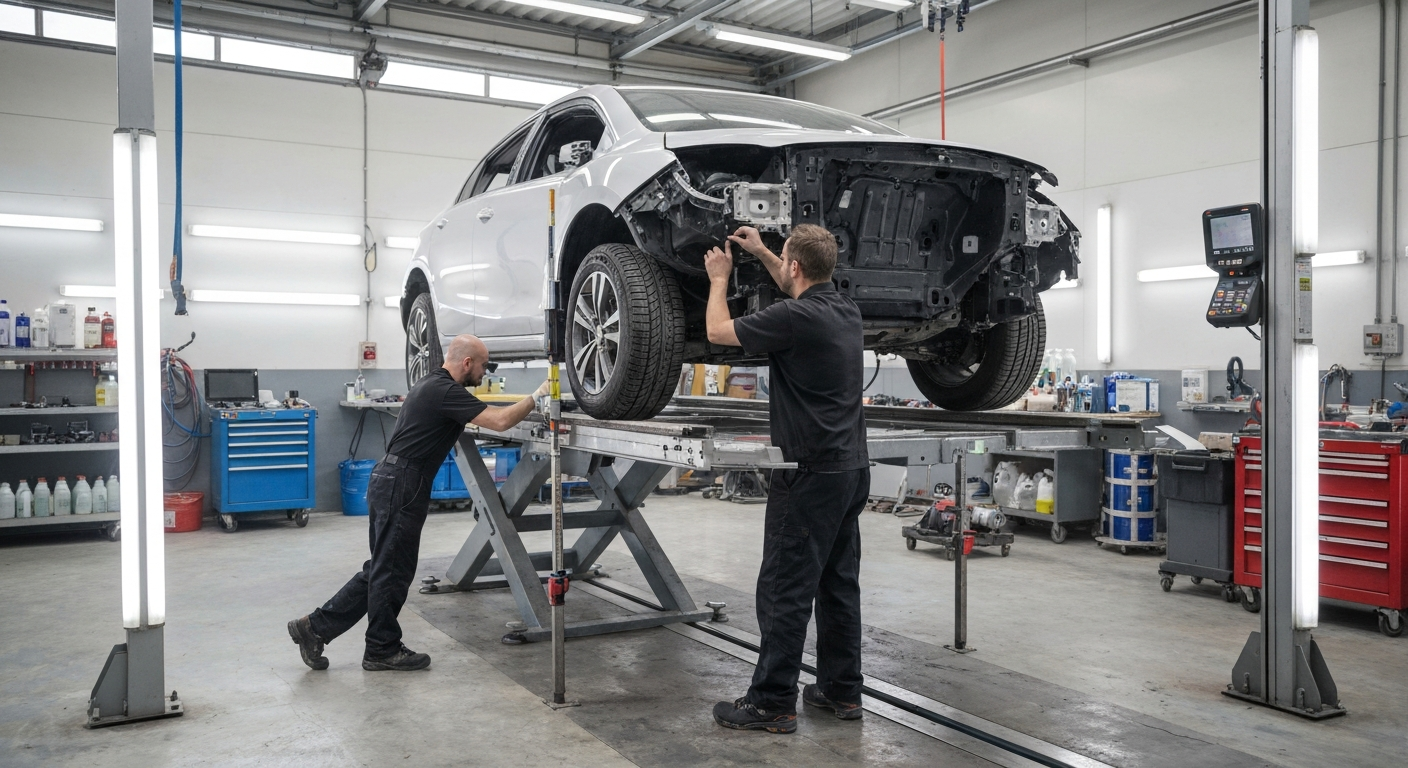
Once we’ve identified the damage, our specialized frame straightening equipment moves damaged components back to factory specifications. This isn’t a quick hammer-and-straighten approach—it’s a precision process using computer-controlled equipment and controlled force to restore alignment down to the millimeter.
This step is crucial because even small misalignments can compromise safety systems like airbag timing, suspension geometry, and steering response.
Step 3: Component Repair or Replacement
Some structural components can be repaired, while others must be replaced. Our technicians follow manufacturer repair procedures to determine the best approach for each component. Replacement uses OEM (Original Equipment Manufacturer) parts to ensure proper fit and safety.
Step 4: Verification & Quality Assurance
After repairs are complete, we perform a final laser scan to verify that all components have been returned to factory specifications. We also perform safety system checks and test all mechanical systems before returning your vehicle.
Why Professional Body Repair Service is Critical
You might be tempted to take your vehicle to the cheapest repair shop available. But structural repair isn’t the place to cut corners. Poor structural repair can result in:
- Reduced vehicle safety in future accidents
- Premature wear on suspension and steering components
- Poor handling and drivability
- Future alignment and mechanical problems
- Potential insurance claim denials if accidents occur later
Professional ASE-certified technicians understand how to diagnose and repair structural damage correctly, ensuring your vehicle is safe to drive and maintains its value.
Tools & Equipment Used in Structural Repair
Modern structural repair requires specialized equipment:
- Laser Measuring Systems – measure frame alignment to within millimeters
- Computerized Frame Straightening Equipment – applies precise, controlled force to bend components back to specification
- Measuring Decks – hold vehicle in position during repairs
- MIG Welding Equipment – used for structural component repairs and attachment
- Diagnostic Scanning Tools – verify all vehicle systems after repair
At Hyperion Auto Repair, we invest in the latest equipment to ensure every repair meets the highest standards. This precision technology is why properly repaired vehicles are safer than vehicles with unrepaired structural damage.
Auto Body Structural Repair Costs in Los Angeles
Structural repair costs vary widely based on damage severity. Here’s what you can expect:
- Minor frame pulls (minimal misalignment): $2,500 – $5,000
- Moderate structural damage (some component replacement): $5,000 – $10,000
- Major structural damage (extensive repair/replacement): $10,000 – $15,000+
Costs depend on:
- Severity and extent of damage
- Vehicle make and model
- Type of structural materials (steel, aluminum, carbon fiber)
- Number of components requiring replacement
- Labor hours required
- Safety system recalibrations needed (like ADAS)
Luxury vehicles and exotic cars typically cost more due to specialized materials and repair procedures. Parts availability can also extend timelines and affect costs.
Insurance Coverage: Most collision insurance covers structural repair after an accident. Insurance adjusters evaluate the claim and authorize repairs up to the vehicle’s value. Hyperion works directly with all major insurance providers to manage claims and ensure transparent pricing throughout the process.
Why ASE-Certified Certified Technicians Matter
Not all mechanics are qualified to perform structural repairs. Look for shops with:
- ASE Certification – demonstrates technical expertise and ongoing training
- I-CAR Certification – industry-standard training for collision repair
- Modern Equipment – laser measuring and computerized straightening systems
- Manufacturer Training – specific expertise for vehicle brands they repair
- Warranty Guarantees – confidence in their work quality
At Hyperion Auto Repair, our technicians are ASE-certified with decades of combined experience. We’ve been serving Los Angeles families since 1985, and we stand behind every repair with a comprehensive warranty.
How Long Does Auto Body Structural Repair Take?
Repair timelines depend heavily on damage severity and parts availability:
- Minor frame adjustments: 3-7 business days
- Moderate structural damage: 1-2 weeks
- Major structural damage: 2-4+ weeks
Additional time may be needed if:
- OEM parts must be ordered (some specialty parts take 2-4 weeks)
- Safety systems require calibration (ADAS recalibration can add 1-2 days)
- Additional hidden damage is discovered during disassembly
Throughout the process, we keep you informed about progress and any changes to the timeline or estimate.
Is It Safe to Drive With Structural Damage?
The short answer: No.
Driving with unrepaired structural damage is dangerous because:
- Compromised Crash Safety: Even a few millimeters of frame misalignment affects airbag deployment timing, potentially causing them to deploy incorrectly or fail.
- Suspension Damage: Structural misalignment can cause wheels to be at incorrect angles, leading to excessive tire wear and loss of traction.
- Steering Issues: Frame damage affects steering geometry, causing the vehicle to pull to one side and reducing responsiveness.
- Future Accidents: Your vehicle won’t protect you properly in another collision if the structure isn’t restored to factory specifications.
Additionally, if you’re in another accident with unrepaired structural damage, your insurance claim might be denied or reduced.
Insurance & Structural Repair Claims
Here’s how the insurance process typically works:
- Report the claim to your insurance company immediately after the accident
- Insurance adjuster evaluates damage and authorizes repairs
- Get an estimate from a qualified repair shop (we provide free estimates)
- Insurance approves estimate (adjustments may be needed if supplement damage is discovered)
- Repairs are performed according to the authorized plan
- Final inspection and vehicle pickup
Hyperion Auto Repair works with all major insurance carriers. We’ll handle the paperwork, communicate with adjusters, and keep your insurance informed throughout the process. This removes stress from you and ensures your claim is handled smoothly.
Warranty & Quality Guarantees
When you choose Hyperion Auto Repair for structural repair, every job includes:
- Lifetime Warranty on Workmanship – covers the repair for as long as you own the vehicle
- Quality Assurance Inspections – multiple checkpoints throughout the repair process
- Free Re-Inspections – if you ever have concerns, we’ll re-inspect at no charge
- Transparent Communication – you’ll know exactly what’s being done and why
Our warranty demonstrates our confidence in our work and our commitment to your satisfaction.
Frequently Asked Questions About Structural Repair
What’s the difference between structural damage and frame damage?
Structural damage refers to any damage affecting the vehicle’s safety structure, including the unibody frame and connected components like pillars, floor pan, and crumple zones. Frame damage specifically means damage to the primary load-bearing frame or subframe. In modern unibody vehicles, the terms often overlap since the frame IS the primary structure.
How do you know if your car has frame damage?
Obvious signs include doors that won’t close, uneven panel gaps, and visible crumpling. Hidden signs include the car pulling to one side, steering issues, and uneven tire wear. The only way to know for certain is a professional laser scan. Even if the exterior looks fine, misalignment can exist beneath the surface—especially in high-speed accidents or if airbags deployed.
Can frame damage be repaired, or does it need to be replaced?
Many components can be repaired using frame straightening equipment. Some severely damaged structural components must be replaced with OEM parts. Our damage assessment determines the best approach for each component, weighing repair vs. replacement based on safety and cost.
Why does structural repair take so long?
Precision is time-consuming. We must carefully straighten or replace components to exact specifications, perform welds, recalibrate safety systems, and conduct multiple inspections. Rushing this process compromises safety. Additionally, parts availability can extend timelines if we’re waiting for OEM components to arrive.
Does insurance cover structural repair?
Yes, collision insurance typically covers structural repair after an accident. Your insurance adjuster evaluates the damage and authorizes repairs up to your vehicle’s value. Hyperion works with all major carriers to ensure smooth claims processing.
Don’t Risk Your Safety—Get Professional Structural Repair
Auto body structural repair is not a DIY job or a task for an unprepared mechanic. Your vehicle’s safety—and your family’s safety—depends on repairs being done correctly with precision equipment and expert knowledge.
Hyperion Auto Repair has been protecting Los Angeles families since 1985. Our ASE-certified technicians use the latest equipment and follow manufacturer repair procedures for every job. We offer:
- Free Multi-Point Inspections – identify all damage, visible and hidden
- Free Estimates – no obligation, transparent pricing
- Professional ASE-Certified Service – expert technicians you can trust
- Lifetime Warranty – confidence in our work quality
- Insurance Coordination – we handle the paperwork and claims
- Warranty on All Repairs – because we stand behind our work
If you’ve been in an accident or suspect structural damage, contact Hyperion Auto Repair for a professional repair service evaluation today.
Hyperion Auto Repair
1845 Hyperion Avenue
Los Angeles, CA 90027
(323) 667-3180
Open Monday-Friday, 7:30 AM – 5:00 PM
Serving Los Angeles with expert auto body repair since 1985.