
Wheel Alignment in Los Angeles: Complete Guide to Service, Costs & Professional Solutions
Los Angeles drivers face unique challenges when it comes to vehicle maintenance. From pothole-ridden streets to intense traffic conditions, our city’s roads put constant stress on your vehicle’s alignment. A properly aligned car isn’t just about comfort—it’s about safety, fuel efficiency, and protecting your investment.
This comprehensive guide covers everything you need to know about wheel alignment in Los Angeles, including warning signs, costs, the diagnostic process, and why professional ASE-certified service matters. At Hyperion Auto Repair, we’ve been keeping Los Angeles vehicles properly aligned since 1985.
Why Wheel Alignment Matters for Los Angeles Drivers
Wheel alignment refers to adjusting your vehicle’s suspension so that all four wheels are positioned at the correct angles relative to the road and each other. When your wheels are in alignment, your tires make optimal contact with the pavement. This affects multiple aspects of your vehicle’s performance:
Safety: Misaligned wheels reduce your vehicle’s stability and handling, especially during emergency maneuvers or high-speed driving. Los Angeles freeway conditions demand responsive handling.
Tire Life: Proper alignment significantly extends tire life. Misalignment causes uneven wear patterns that quickly degrade tires, sometimes reducing tire life by 50% or more.
Fuel Efficiency: Misaligned wheels increase rolling resistance, forcing your engine to work harder. Studies indicate that proper alignment can meaningfully improve fuel economy.
Suspension Health: Misalignment puts extra stress on suspension components, leading to premature wear of struts, shocks, and other parts.
Warning Signs Your Car Needs Wheel Alignment
Your vehicle often signals alignment problems before they become serious. Learning to recognize these signs helps you catch problems early, when professional alignment can prevent expensive suspension repairs.
Uneven or Rapid Tire Wear
The most common sign of misalignment is uneven tire wear. Look at your tire tread—does it wear more on the inside edge, outside edge, or in the center? Each wear pattern indicates a specific alignment problem. Inner edge wear often indicates toe-in issues, outer edge wear suggests toe-out conditions, and side wear patterns indicate camber problems. Misaligned wheels can dramatically reduce tire lifespan compared to properly aligned vehicles.
Vehicle Pulls to One Side
If your car drifts or pulls toward the left or right when you take your hands off the steering wheel on a straight road, alignment is likely the culprit. This pulling occurs because the wheels aren’t pointing in the same direction. While it might seem like a minor annoyance, this constant pulling means your vehicle isn’t driving straight, which stresses tires and suspensions.
Steering Wheel is Off-Center
When driving straight, your steering wheel should be centered. If the wheel is noticeably off-center—rotated to the left or right—your alignment needs adjustment. This is particularly visible on freeways when you’re maintaining a straight line without active steering inputs.
Vibration or Shimmy at Highway Speeds
A vibration felt through the steering wheel or chassis at highway speeds often indicates alignment problems, though it can also signal tire imbalance. If the shimmy is severe enough to be unsafe, have it professionally diagnosed immediately. Proper alignment will eliminate vibration caused by misaligned wheels.
Squealing Tires During Turns
When misaligned wheels try to turn, they experience additional stress. This stress often creates squealing or chirping sounds during cornering. Los Angeles drivers navigating urban streets and freeway onramps often notice this sound first.
Understanding Your Vehicle’s Alignment System
Professional alignment requires understanding three key angles that position your wheels correctly. These angles are measured precisely to manufacturer specifications.
The Three Key Angles: Camber, Caster & Toe
Camber is the angle at which your wheel tilts inward or outward when viewed from the front. Proper negative camber (slight inward tilt) improves cornering stability and tire contact. A slight inward angle is typical for most vehicles. Excessive negative or positive camber causes uneven tire wear on the edges.
Caster is the angle of your steering pivot when viewed from the side. Caster affects steering stability and the centering of your steering wheel after turning. A positive caster angle (tilted toward the rear) is typical for most vehicles. This angle is rarely adjusted unless there’s suspension damage.
Toe is the angle at which your wheels point inward or outward when viewed from above. Toe-in (wheels pointing inward) versus toe-out (wheels pointing outward) dramatically affects tire wear and handling. Proper toe alignment is critical for even tire wear. Toe is the most commonly out-of-spec angle and usually the first to need adjustment.
Front vs. Four-Wheel Alignment
Most vehicles need front-wheel alignment, which adjusts only the front wheels. Front alignment typically costs $85-$150 and takes 45 minutes to an hour. It’s recommended regularly to maintain proper wheel angles.
Four-wheel alignment adjusts all four wheels and is essential for rear-wheel drive and all-wheel drive vehicles. Four-wheel alignment typically costs $150-$200 and takes 1-1.5 hours. Many Los Angeles drivers with AWD vehicles should consider four-wheel alignment to maintain optimal handling and tire life.
Why Los Angeles Roads Affect Alignment
Los Angeles streets present unique challenges. Pothole-filled surface streets, damaged concrete in older neighborhoods, and intense freeway traffic create constant alignment-disrupting impacts. A single significant pothole can knock your alignment out of specification. LA’s temperature variations can also affect your suspension geometry over time.
Wheel Alignment Costs in Los Angeles
Understanding alignment pricing helps you budget for this critical service and recognize fair pricing from local shops.
2-Wheel (Front) Alignment Pricing
Front-wheel alignment in Los Angeles typically costs $85-$150. This includes diagnostic measurement, adjustment of angles, and verification. The price varies based on vehicle complexity—luxury vehicles and some specialty cars may cost more. Service time is usually 45 minutes to 1 hour.
4-Wheel Alignment Pricing
Four-wheel alignment typically costs $150-$250 depending on your vehicle. AWD vehicles often cost more because rear suspension adjustment is more complex. Service time is typically 1-1.5 hours. For AWD and rear-wheel drive vehicles, four-wheel alignment is strongly recommended.
Factors Affecting Alignment Costs
Vehicle Type: Luxury vehicles, sports cars, and vehicles with complex suspension systems cost more to align. European imports often cost more than domestic vehicles.
Damage Level: If alignment problems are caused by suspension component failure (bent tie rods, damaged struts), you’ll need to replace those parts first, adding significant cost to your total repair bill.
Technology Requirements: Some newer vehicles require calibration of advanced suspension systems, adding to labor costs.
The Wheel Alignment Diagnostic Process
Professional alignment follows a systematic approach that ensures accurate results.
Step 1: Visual Vehicle Inspection
Technicians begin by visually inspecting your suspension and steering components. They look for bent tie rods, worn ball joints, damaged struts, and other obvious problems. Any suspension component that’s damaged or worn must be repaired before alignment—alignment won’t fix underlying component damage.
Step 2: Alignment Machine Measurement
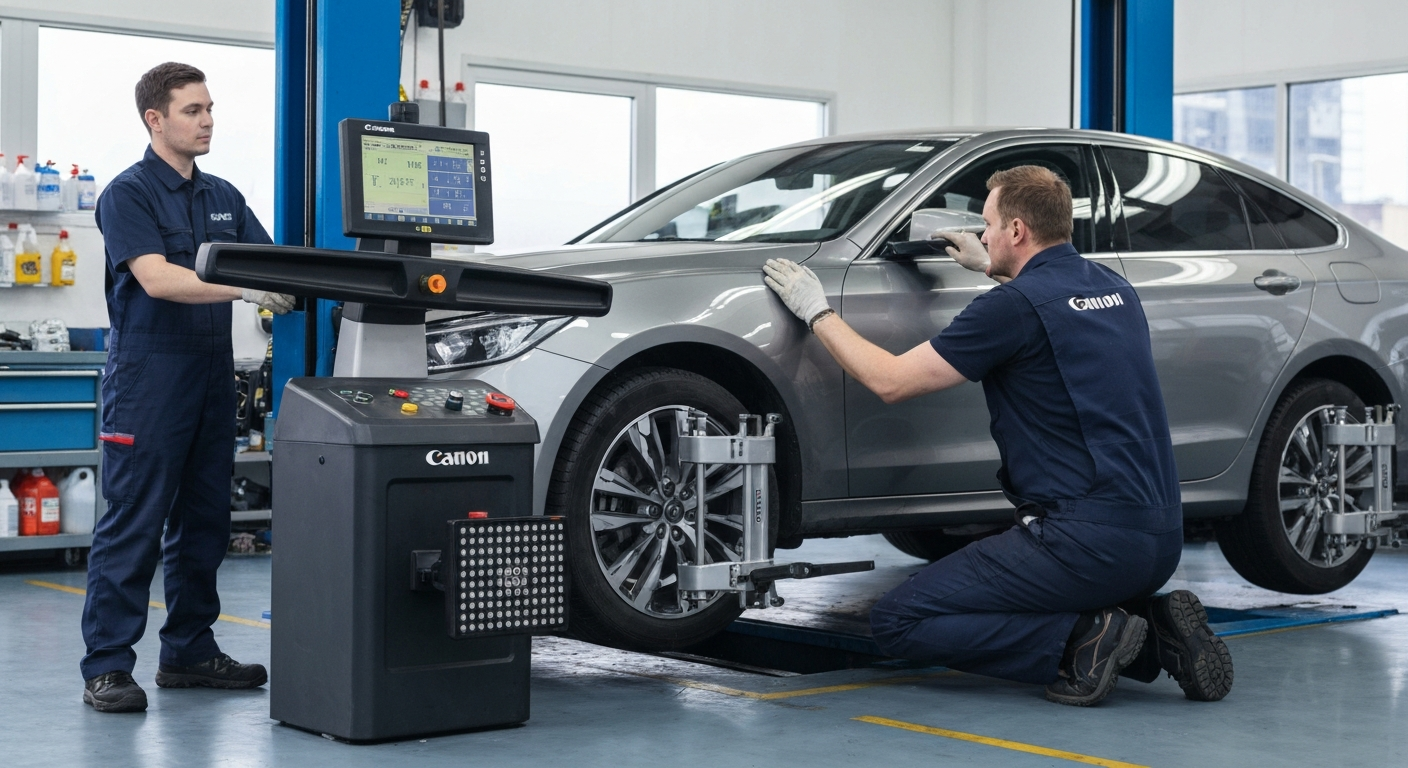
Modern alignment equipment uses laser or camera-based systems to precisely measure wheel angles. Technicians place sensors on your wheels that communicate with a central computer. The vehicle is positioned on a level alignment rack. The computer displays exact measurements for all four wheels compared to manufacturer specifications.
Step 3: Reading the Alignment Report
Professional alignment shops provide detailed reports showing current angles versus manufacturer specifications. The report shows whether each measurement is within specification, and by how much each is out of specification. Understanding these numbers helps you know whether adjustment is needed.
Step 4: Correction and Adjustment
Technicians adjust wheels by turning adjustment bolts or eccentric cams on the suspension. The specific adjustment process varies by vehicle model and suspension design. Technicians know which components can be safely adjusted and which require component replacement.
Step 5: Verification Test Drive
After adjustment, technicians re-measure angles to verify all are within specification. Many shops perform a brief test drive to confirm the steering wheel is centered and the vehicle drives straight. Final verification ensures the work meets professional standards.
How to Maintain Proper Wheel Alignment
Preventing misalignment is easier and cheaper than fixing it. These maintenance practices help keep your alignment in specification.
Get Alignment Checked Regularly
Many alignment experts recommend checking alignment regularly or whenever you suspect a problem. Los Angeles drivers should consider more frequent checks given our rough road conditions. If you notice any warning signs—pulling, uneven wear, or steering wheel vibration—get alignment checked immediately.
Address Suspension Issues Immediately
Worn struts, damaged control arms, bent tie rods, and other suspension problems all cause misalignment. The longer you drive with a worn component, the worse your alignment becomes. Prompt suspension repair prevents alignment problems and protects other suspension parts from premature wear.
Avoid Potholes and Road Hazards
While you can’t always avoid potholes on LA streets, hitting them at high speed dramatically increases alignment damage. Slow down on rough roads when possible. A single hard pothole hit can throw your alignment out of specification enough to cause immediate tire wear.
Check Tire Pressure Monthly
While tire pressure doesn’t cause misalignment, it affects how tires wear. Underinflated tires wear excessively on the edges; overinflated tires wear in the center. Proper tire pressure ensures alignment adjustments result in even wear patterns. Check your door jamb or fuel door for manufacturer specifications.
Related Services That Impact Your Alignment
Several other vehicle services directly relate to alignment and suspension health:
Tire Rotation and Balancing works together with alignment to ensure optimal tire life. Regular rotation prevents the uneven wear that misalignment causes. Balancing eliminates vibration that could mask alignment problems.
Suspension Repair is essential before alignment. Worn struts, damaged control arms, and bent suspension components must be fixed before alignment work can be effective.
Brake Service can sometimes interact with suspension geometry. Professional brake repair ensures all suspension components function properly for safe alignment.
Strut Replacement is one of the most common suspension repairs that precedes alignment work. Worn struts cause alignment deterioration.
Why Choose Professional ASE-Certified Alignment Service
While some independent shops offer inexpensive alignment services, professional ASE-certified alignment provides important advantages:
Equipment Accuracy: Professional alignment machines are calibrated regularly to ensure reliable results. Poorly-maintained equipment produces inaccurate results that don’t last.
Suspension Expertise: ASE-certified technicians understand suspension geometry and can identify component problems that affect alignment. They know which adjustments are possible on each vehicle model.
Warranty Protection: Professional alignment typically includes a warranty. If alignment drifts after service, it’s corrected at no charge. Many budget shops don’t warranty their work.
Safety Assurance: Proper alignment directly impacts safety. Professional technicians take responsibility for accuracy and stand behind their work.
At Hyperion Auto Repair, our ASE-certified technicians have decades of combined experience aligning every vehicle type. We use modern laser alignment equipment, provide comprehensive written reports, and back all work with our warranty. We also offer a free multi-point inspection to identify any suspension components needing attention before alignment work.
Wheel Alignment FAQs
How often should I get a wheel alignment?
Most manufacturers recommend alignment every 12,000 miles or annually. Los Angeles drivers with our challenging road conditions should consider more frequent checks—every 6,000 miles or twice yearly. Check your owner’s manual for manufacturer recommendations specific to your vehicle.
Can I drive with misaligned wheels?
You can drive with misalignment, but you shouldn’t. Misaligned wheels are less safe, cause accelerated tire wear, reduce fuel economy, and stress suspension components. The longer you delay alignment, the more expensive eventual repairs become.
How long does wheel alignment take?
Front-wheel alignment typically takes 45 minutes to 1 hour. Four-wheel alignment usually takes 1 to 1.5 hours. If suspension components need repair before alignment, add additional time for that work.
Will wheel alignment improve fuel economy?
Yes. Misaligned wheels increase rolling resistance, forcing your engine to work harder. Proper alignment can improve fuel economy, though the exact improvement varies by vehicle and driving conditions.
Is wheel alignment covered by warranty?
New vehicle warranties typically cover suspension components but not alignment service itself. Alignment is considered maintenance. However, if suspension component failure causes misalignment within the warranty period, component replacement is covered. Always check your specific warranty terms.
Conclusion: Keep Your Wheels Properly Aligned
Proper wheel alignment is essential for vehicle safety, tire longevity, fuel efficiency, and suspension health. Los Angeles’s demanding road conditions make regular alignment checks especially important. By recognizing warning signs early and addressing misalignment promptly, you protect your investment and drive safely on our city’s streets and freeways.
At Hyperion Auto Repair, our ASE-certified technicians have kept Los Angeles vehicles properly aligned since 1985. We provide accurate laser alignment service, comprehensive suspension inspection, and transparent pricing with no hidden fees. Every alignment service comes with a warranty, and we offer a free multi-point inspection to identify any suspension issues affecting your alignment.
If you’ve noticed uneven tire wear, pulling, steering wheel off-center position, or steering wheel vibration, contact Hyperion Auto Repair today for professional wheel alignment service.
Hyperion Auto Repair
1845 Hyperion Avenue
Los Angeles, CA 90027
Phone: (323) 667-3180
Professional Auto Care You Can Trust