
Air Conditioning Repair in Los Angeles: Complete Guide for Local Drivers
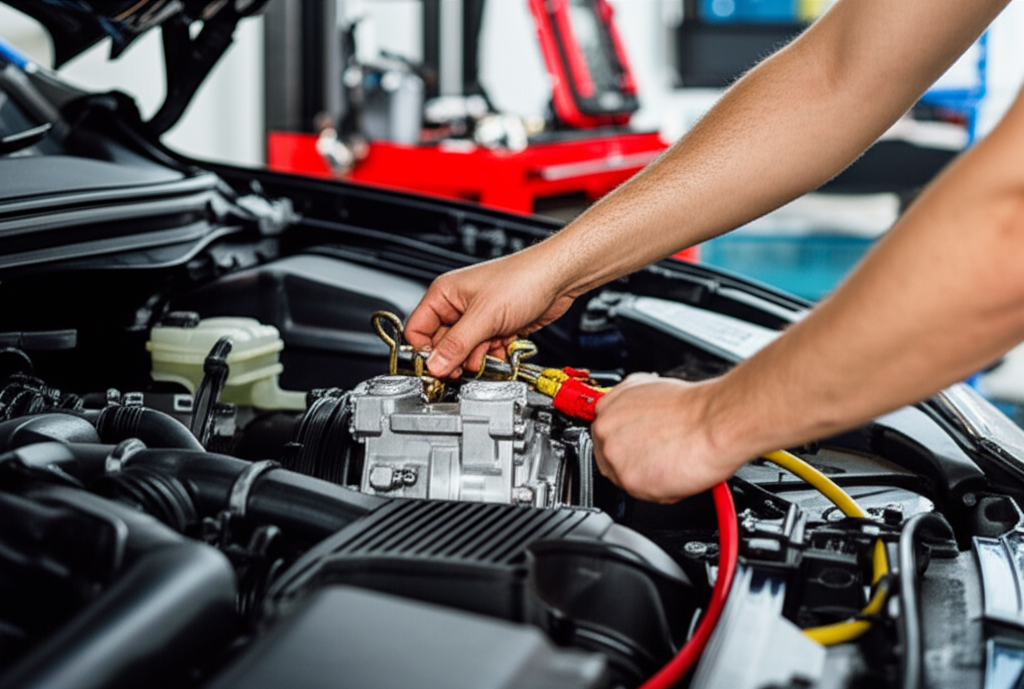
Expert AC repair guide for Los Angeles drivers. Learn warning signs, costs, diagnosis, and why professional service matters. Free inspections from Hyperion Auto Repair.
Why Professional Air Conditioning Repair Matters for Los Angeles Drivers
Los Angeles summers are no joke. When temperatures regularly climb into the 90s and beyond, a broken air conditioning system isn’t just an inconvenience—it’s a genuine safety concern. Your vehicle’s AC does more than keep you comfortable; it’s a complex system that affects your driving safety and the health of your car’s engine.
Many drivers don’t realize that when you switch to recirculated air, you’re actually helping your AC system work more efficiently. But when something goes wrong with that system, diagnosing the problem requires professional expertise. Unlike brake repair or transmission service, AC issues can be deceptively complex, with multiple components working together to deliver cold air to your cabin.
Understanding Your Vehicle’s AC System
The Compressor: The Heart of Your AC
Your vehicle’s air conditioning system starts with the compressor, which is belt-driven by your engine. This critical component circulates refrigerant throughout the system, pressurizing it to enable the cooling cycle. The compressor works continuously when your AC is running, which is why engine repair professionals sometimes need to evaluate AC components—the compressor pulley connects directly to your engine’s serpentine belt.
Modern compressors are sealed units, meaning they cannot be easily repaired if damaged. A failing compressor typically requires complete replacement, which is often one of the more expensive AC repairs Los Angeles drivers might encounter.
The Condenser and Receiver-Dryer
Once the compressor pressurizes the refrigerant, it flows to the condenser, which looks similar to your vehicle’s radiator. The condenser uses airflow to convert the hot, pressurized refrigerant into a cooler liquid. Next, the refrigerant passes through the receiver-dryer, which removes moisture and contaminants from the system. This desiccant bag is critical—moisture in an AC system can cause serious damage to the compressor and other components.
The Expansion Valve and Evaporator
The cooled, pressurized liquid refrigerant travels through a small restriction called the expansion valve, which controls how much refrigerant enters the evaporator. The evaporator, located inside your vehicle’s dashboard, is where the magic happens. As refrigerant expands in the evaporator, it rapidly cools, absorbing heat from inside your cabin. A blower motor forces air across the cold evaporator fins, and that chilled air is directed through your dashboard vents.
5 Warning Signs Your AC System Needs Professional Service
1. Warm Air Coming From Vents
This is the most obvious sign that something’s wrong. If you turn on your AC and feel warm air instead of cold, several problems could be responsible. The most common issue is low refrigerant due to a leak. Without sufficient refrigerant, the system cannot complete its cooling cycle. Other possibilities include a faulty compressor clutch (which engages and disengages the compressor), a broken condenser, or an electrical problem preventing the system from operating.
2. Unusual Noises When AC Is Running
Your AC system should run quietly. If you hear grinding, squealing, or clunking sounds when the AC is on, it’s time to have the system inspected. A squealing noise usually indicates a problem with the compressor belt—the same belt that drives other engine components. Grinding or clunking could indicate compressor bearing failure or other mechanical problems. Don’t ignore these noises. Similar diagnostic approaches to suspension repair apply here—unusual sounds are your vehicle’s way of telling you something needs attention.
3. Weak Airflow From Vents
If your AC is working but producing only weak airflow, the problem might not be with the refrigerant or compressor. A clogged cabin air filter is the most common culprit. These filters trap dust, pollen, and other particles, but over time they become blocked. When blocked, they reduce airflow significantly. Other possibilities include a failing blower motor or problems with the ductwork inside your dashboard.
4. Strange Odors Coming From AC
A sweet smell from your vents might indicate an internal leak from your air conditioning system. A musty or moldy smell suggests mold or mildew growing in the evaporator or ductwork, usually from moisture accumulation. These problems require prompt professional attention—the sweet-smelling refrigerant leak is especially important to address quickly to prevent environmental concerns and system damage.
5. Visible Leaks Under Your Vehicle
If you notice oily puddles under your car when it’s been parked, particularly after running the AC, your system likely has a refrigerant leak. Sometimes you’ll also see an oily residue or staining around AC component connections. Any visible leak warrants professional inspection and repair.
Most Common Air Conditioning Problems in Los Angeles Vehicles
Refrigerant Leaks
This is the most common AC problem. Refrigerant leaks can occur at hose connections, through pinhole punctures in refrigerant lines, or from worn seals. In Los Angeles’s hot climate, the constant use of AC systems puts extra stress on all components. When refrigerant levels drop, the system cannot cool effectively. Professional technicians use specialized dye testing to locate these leaks—they inject UV-visible dye into the system, then use a black light to identify where the dye escapes.
It’s important to know that simply adding refrigerant without fixing the leak is a temporary fix at best. The refrigerant will escape again, and you’ll be back to a non-functioning AC system.
Compressor Failure
The AC compressor is designed to provide years of reliable service, though Los Angeles’s year-round warm weather means vehicles here often use their AC more frequently than cars in other climates. This increased use can accelerate wear. Compressor failure can result from low refrigerant (which causes the compressor to work harder without proper lubrication), moisture in the system (which can cause internal corrosion), or simply age and wear.
A failed compressor usually means complete replacement. This is one of the more expensive AC repairs, often running $1,500 to $2,500 or more, including parts and labor.
Electrical Issues with AC Components
Your AC system is controlled by multiple electrical components: the clutch that engages the compressor, the relay that activates the system, the sensors that control cycling, and the blower motor. Any of these can fail. Electrical problems in your vehicle can cascade through multiple systems, including your AC.
Clogged Cabin Air Filters
This is the easiest problem to fix yourself, though having a professional handle it during your inspection is convenient. A clogged cabin air filter reduces airflow and can cause the evaporator to ice over in extreme cases. Most vehicles have a filter located behind the dashboard or under the hood. Replacement usually costs $20-$50 for parts, though labor charges apply if a technician does the work.
How Professionals Diagnose AC Problems
Pressure Testing
This is the first step in any professional AC diagnosis. Technicians connect manifold gauges to both the high-pressure and low-pressure ports of your AC system. These gauges tell them whether the refrigerant is at the correct pressure for your specific vehicle model. Low pressure usually indicates a refrigerant leak; high pressure might suggest a clogged condenser or failing compressor. The technician will also note whether the compressor is engaging and disengaging properly.
Dye Testing for Leaks
If pressure is low but no leak is obvious, fluorescent dye is injected into the system. After driving for a short period, the technician uses a UV light to trace where the dye has escaped, revealing the leak’s location. This is especially useful for finding small pinhole leaks that are otherwise invisible.
Electrical Diagnostics
Technicians use diagnostic equipment to test the AC clutch, relays, sensors, and wiring. They’ll check whether the compressor is engaging when the AC button is pressed and whether all electrical connections are secure and functioning properly.
Performance Testing
After repairs are completed, professionals test the system’s performance, measuring the temperature of air coming from the vents and the refrigerant cycling. Your AC should cool your cabin to comfortable temperatures within a few minutes of being turned on.
What to Expect: Air Conditioning Repair Costs in Los Angeles
Simple Repairs (Under $200)
These include cabin air filter replacement, blower motor relay replacement, and minor electrical repairs. These are typically the fastest fixes, often completed in under an hour.
Complex Repairs ($200-$1,000)
This category includes refrigerant refill after finding and sealing minor leaks, condenser repair or replacement, expansion valve replacement, and evaporator repair. These repairs usually take several hours and may involve refrigerant recovery and recycling.
Full AC System Replacement ($1,500-$3,500+)
If your compressor has failed or multiple components are damaged, a complete system replacement might be more cost-effective than piecemeal repairs. Modern AC systems are complex and can be expensive, but a full replacement comes with the advantage of having a completely renewed system with new seals, gaskets, and components.
Keep in mind that these are typical Los Angeles price ranges, and your specific costs will depend on your vehicle’s make and model, the exact nature of the problem, and the repair shop you choose. Ask Hyperion Auto Repair for a detailed estimate before proceeding with any major AC work.
Why Choose Professional AC Repair Over DIY Solutions
Environmental and Legal Requirements
In California, handling automotive refrigerant requires proper EPA certification. The Environmental Protection Agency (EPA) regulates refrigerant under the Clean Air Act because certain refrigerants can contribute to ozone depletion. Only EPA-certified technicians are legally permitted to recover, recycle, or dispose of refrigerant. This isn’t just environmental responsibility—it’s the law. Violating these regulations can result in significant fines.
Proper Refrigerant Handling
Modern refrigerants, including the newer R-1234yf now used in many newer vehicles, are expensive and require specialized equipment to handle safely. If refrigerant is improperly mixed or contaminated, it can damage the entire system and cost thousands of dollars to repair. Professional shops have the proper recovery and recycling equipment to handle refrigerant safely and legally.
Complex System Integration
Your AC system isn’t isolated—it’s integrated with your vehicle’s engine, electrical system, and climate control computer. Repairs that seem simple can have cascading effects if not performed correctly. Professional technicians understand these integrations and can ensure repairs don’t create new problems.
Warranty Protection
Hyperion Auto Repair offers a warranty on all AC repairs. This gives you peace of mind that if a problem recurs shortly after repair, you’re covered. DIY repairs offer no such protection.
AC Maintenance Tips to Prevent Future Problems
Annual AC Inspections
Have your AC system professionally inspected at least once a year, preferably before summer. An inspection can catch small problems before they become expensive repairs. This is especially important in Los Angeles, where heavy AC use year-round puts extra stress on the system.
Run Your AC in Winter
It might seem counterintuitive, but running your AC system during winter months is important. It keeps the seals in the system from drying out and cracking. Even if you don’t want cold air in your car, occasionally running the AC for a few minutes circulates refrigerant and maintains system integrity.
Replace Cabin Air Filters Regularly
Your cabin air filter should ideally be replaced every 12,000-15,000 miles, or at least once a year. In Los Angeles’s dusty environment, you might need to replace it more frequently. A clean filter ensures good airflow and reduces strain on your blower motor. As part of your regular vehicle maintenance routine, this is one of the most cost-effective preventive measures.
Check for Leaks
Regularly inspect the area under your car after running the AC, especially in hot weather. If you notice any oily residue or staining, have the system checked promptly. Early detection of leaks can prevent expensive compressor damage.
Why Choose Hyperion Auto Repair for Your AC Service
ASE-Certified Technicians
Hyperion Auto Repair’s technicians are ASE-certified professionals with extensive training in air conditioning systems. ASE (Automotive Service Excellence) certification requires passing rigorous exams and maintaining current knowledge of automotive technology. Our technicians understand the nuances of different AC systems and the latest diagnostic equipment.
Free Multi-Point Inspections
When you bring your vehicle in for AC service, we perform a complimentary multi-point inspection. We check your entire AC system—compressor clutch, refrigerant levels, electrical components, and ductwork. This comprehensive approach ensures we identify all potential problems, not just the symptom you brought in.
Warranty on All Repairs
Every repair we perform comes with our warranty. If your AC problem recurs within the warranty period, we’ll fix it at no charge. We stand behind our work and want you to have complete confidence in our service.
Family-Owned Since 1985
Hyperion Auto Repair has been serving Los Angeles families and businesses since 1985. We understand the unique challenges Los Angeles drivers face, from intense summer heat to the specific demands on vehicles in our area. We’re family-owned, locally rooted, and genuinely invested in our community’s automotive health.
Don’t Let Summer Heat Leave You Stranded
Your air conditioning system is too important to ignore. If you’ve noticed any warning signs that your AC needs service, don’t wait. In Los Angeles, a working AC isn’t a luxury—it’s essential.
Contact Hyperion Auto Repair today for your free multi-point AC inspection. Our ASE-certified technicians will diagnose your AC problems quickly and accurately, explain your repair options, and get you back on the road with a properly functioning system.
Hyperion Auto Repair
1845 Hyperion Avenue
Los Angeles, CA 90027
(323) 667-3180
We’re open six days a week and ready to help you stay cool this summer!