
Auto Air Conditioning Repair in Los Angeles: Complete Diagnostic & Service Guide
Los Angeles summers can be unbearable without a properly functioning air conditioning system. When your car’s AC stops working, it’s not just uncomfortable—it can affect your driving safety and vehicle performance. This comprehensive guide covers everything you need to know about auto air conditioning repair in Los Angeles, including warning signs, common problems, repair costs, and why professional ASE-certified service matters. At Hyperion Auto Repair, we provide free multi-point inspections to diagnose AC issues accurately.
Warning Signs Your Car’s AC Needs Repair
Your vehicle’s air conditioning system often gives you warning signs before complete failure. Understanding these signals helps you catch problems early and avoid expensive repairs.
Warm or Cool-but-Not-Cold Air
If your AC blows air that’s cool but not cold, several issues could be responsible. Low refrigerant is one of the most common causes—over time, AC systems naturally lose small amounts of refrigerant and need periodic recharging. Additionally, a worn or failing compressor clutch may not engage properly, preventing the compressor from pressurizing the refrigerant effectively. System blockages or a failing compressor itself can also reduce cooling capacity.
Unusual Noises When AC Runs
A functioning AC system should operate quietly. If you hear grinding noises, squealing, or clunking sounds when your AC compressor engages, it’s a warning sign. Grinding typically indicates a failing compressor, while squealing often points to belt problems. These sounds mean your system needs immediate professional attention—ignoring them can lead to complete compressor failure, which is the most expensive repair.
Unpleasant Smells from Vents
Bad smells from your air vents signal problems within your AC system. A musty or moldy smell indicates mold or bacteria growth in the evaporator core or ductwork. This often develops when moisture accumulates inside the system. A sweet odor, by contrast, suggests refrigerant leakage—refrigerant (Freon) has a distinct sweet smell. Both issues require professional diagnosis and repair.
Visible Leaks Under Vehicle
Liquid pooling under your parked car demands immediate attention. Clear oily fluid indicates refrigerant leakage from hoses, seals, or components. Frost or ice buildup on AC lines suggests pressure issues or blockages. Either condition requires professional leak detection and repair to prevent compressor damage from low refrigerant charge.
How Your Car’s Air Conditioning System Works
Understanding your AC system helps you recognize problems and make informed repair decisions. Your car’s air conditioning transforms refrigerant between liquid and gas states to absorb heat and humidity, leaving your cabin cool and dry.
Key AC System Components
The air conditioning system comprises several critical components working together:
- Compressor: Mounted at the engine front, this component pressurizes refrigerant gas. It’s critical to AC function but typically cannot be repaired—if faulty, replacement is necessary.
- Condenser: Located behind your vehicle’s grille, the condenser cools the hot refrigerant and releases heat through cooling fans.
- Evaporator: Mounted behind your dashboard, the evaporator is where cooling happens. Refrigerant changes back to liquid state here, and the cooling effect chills air blown into your cabin.
- Dryer (Receiver-Drier): This component removes moisture from the refrigerant to prevent ice formation and corrosion.
- Expansion Valve: Reduces temperature and pressure of refrigerant before it enters the evaporator.
- Refrigerant Hoses: Transfer refrigerant between system components in a pressurized, sealed environment.
Common AC Problems & Repair Costs in Los Angeles
AC repair costs vary significantly depending on what’s broken. Understanding typical costs helps you budget and make informed decisions about repairs.
Low Refrigerant / AC Recharge
One of the most common and affordable AC repairs is recharging. When refrigerant levels drop, your system can’t produce adequate cooling. Professional AC recharge typically costs $150–$300 and takes 1–2 hours. Unlike at-home recharge kits, professional service ensures proper refrigerant charge and system safety.
Compressor Replacement
The compressor is your AC system’s heart. If it fails, replacement becomes necessary—compressors typically cannot be repaired cost-effectively. Compressor replacement ranges from $800–$2,000 or more depending on your vehicle, including parts and labor. This is the most expensive single repair in most AC systems.
Refrigerant Leak Repair
Leaks are common AC problems. Professional leak detection costs approximately $200, while hose repair or replacement runs around $350. For seal or fitting leaks, technicians may use UV dye injection ($100–$330) to locate future leaks. The total cost for leak detection and repair typically ranges $350–$550.
AC Compressor Clutch Replacement
The compressor clutch connects your engine to the AC compressor. When it fails, you’ll hear a distinctive “clunk” sound and lose cooling function. Clutch replacement costs $450–$850 including labor. If you hear this sound, bring your vehicle in quickly—a failing clutch can damage the compressor.
Electrical Component Repairs
Electrical failures can disable your AC system. Common electrical repairs include blower motor replacement ($300–$450), relay switches ($20–$100), pressure switches ($70–$350), and wiring repairs ($100–$2,000).
For detailed AC recharge costs and pricing in Los Angeles, consult with professional technicians who can provide accurate estimates for your specific vehicle.
The AC Diagnostic Process
Professional ASE-certified technicians follow a systematic approach to identify AC problems accurately. This diagnostic process prevents misdiagnosis and unnecessary repairs.
Step 1: Visual Inspection
Technicians begin by visually inspecting the entire AC system. They look for visible leaks, damaged hoses, disconnected components, and obvious signs of wear or corrosion. They also check belt condition and hose routing.
Step 2: Pressure Testing
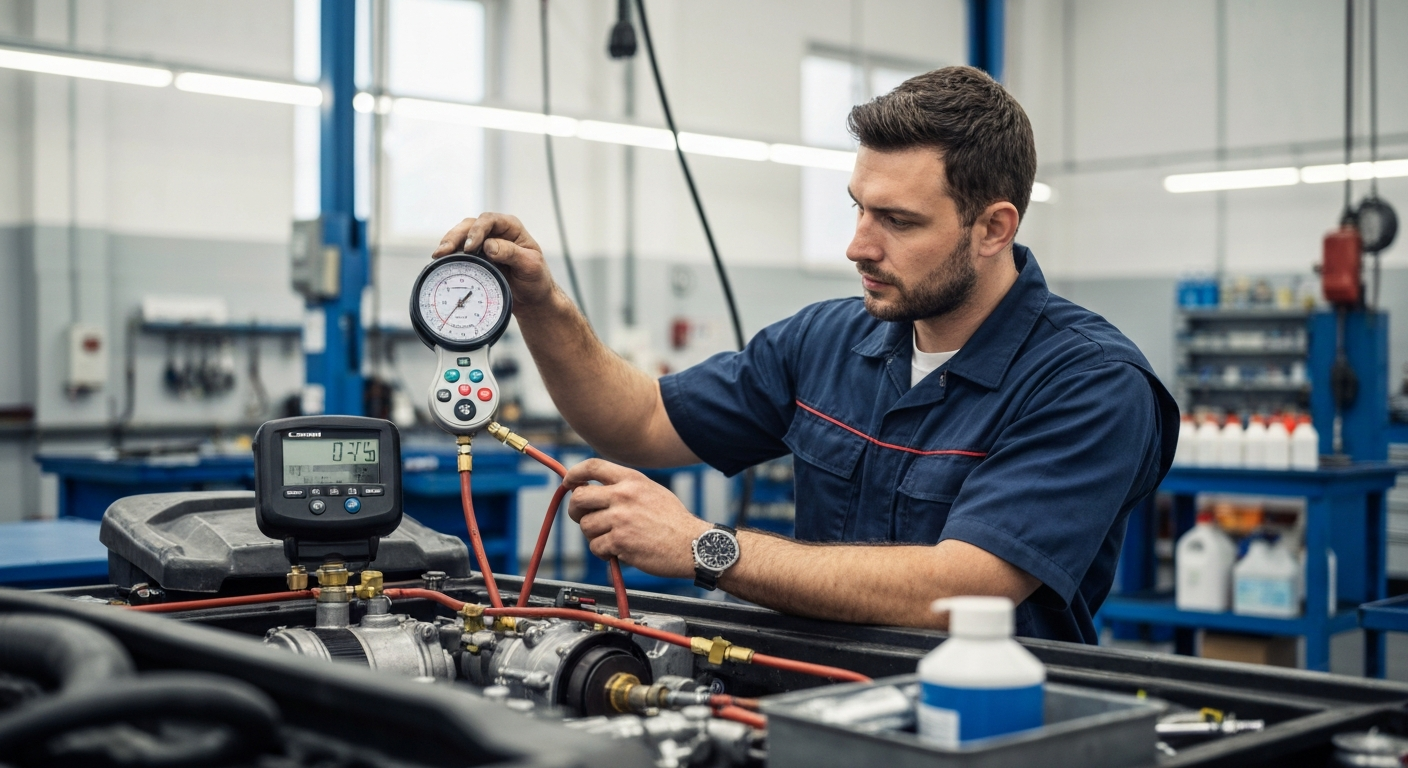
Using specialized manifold gauges, technicians measure high-side and low-side system pressures. Abnormal pressure readings indicate specific problems: low pressure suggests leaks or compressor problems, while high pressure can indicate blockages or compressor issues.
Step 3: Refrigerant Level Check
Proper refrigerant charge is essential for AC operation. Systems need exactly the right amount—too little means inadequate cooling, while too much stresses the system. Professional equipment accurately measures refrigerant levels.
Step 4: Component Testing
Technicians test compressor clutch engagement, electrical continuity, and component operation. They verify fans operate, switches function properly, and the system cycles correctly.
Why Professional ASE-Certified Service Matters
While some AC maintenance is DIY-friendly, major repairs require professional expertise and certification.
EPA Certification Requirements
Federal law requires certification to handle automotive refrigerants. Technicians must be EPA-certified (Section 609 certification) to legally perform AC work involving refrigerant. This certification ensures proper refrigerant handling, recovery, and recycling. Untrained technicians can damage your AC system or violate environmental regulations.
Diagnostic Accuracy
Professional technicians have specialized diagnostic equipment and training. Correct diagnosis prevents misidentifying problems, which can lead to unnecessary repairs and wasted money. ASE-certified technicians maintain current knowledge of evolving AC systems and refrigerants.
Warranty Protection
Professional repairs typically include warranties protecting you if problems persist. Many manufacturers also void vehicle warranties if non-certified technicians perform AC work.
DIY AC Maintenance You Can Do
While major repairs require professionals, you can perform some preventative maintenance:
Replace Cabin Air Filter
Your cabin air filter removes dust and pollen before air enters your AC system. A clogged filter reduces airflow and cooling efficiency. Replacement costs only $10–$30 and takes 15 minutes—change it annually or more frequently in dusty environments.
Clean Air Vents and Ducts
Regular cleaning prevents mold growth and removes debris blocking airflow. AC vent cleaners are inexpensive and effective. If mold smell persists after cleaning, professional evaporator cleaning may be necessary.
Run AC System Regularly
Running your AC system weekly—even in winter—maintains seal health and prevents refrigerant leakage. Regular use keeps compressor seals from drying out and cracking.
How to Avoid Expensive AC Repairs
Proactive maintenance prevents costly repairs and extends your AC system’s lifespan. Address problems early by scheduling inspections. Early problem detection prevents compressor failure. Get regular professional inspections to catch small leaks before major damage occurs. Change cabin filters regularly to improve airflow and prevent system strain. Keep the system running weekly to maintain compressor health. Address refrigerant leaks immediately—running a low-charge AC system can turn a $200 leak repair into a $1,500 compressor replacement.
Hyperion Auto Repair: Your Los Angeles AC Repair Specialists
When your car’s air conditioning needs professional service, Hyperion Auto Repair is your trusted partner. Since 1985, our family-owned business has served the Los Angeles community with expert, honest auto repair.
Our ASE-certified technicians have decades of combined experience diagnosing and repairing AC systems in all vehicle types. We provide free multi-point inspections to accurately diagnose your AC problems, transparent pricing with no hidden fees, and a warranty on all AC repairs. Located at 1845 Hyperion Avenue in Los Angeles, we’re conveniently accessible to residents across the greater Los Angeles area.
Contact Hyperion Auto Repair today:
Phone: (323) 667-3180
Address: 1845 Hyperion Avenue, Los Angeles, CA 90027
Visit us for a free inspection and expert diagnosis
Auto Air Conditioning Repair FAQs
How long does AC repair typically take?
Service duration varies by repair type. Simple AC recharges take 1–2 hours. Major component replacements (compressor, evaporator, condenser) require 4–8 hours and may need overnight service while waiting for parts.
Is it safe to drive with broken AC?
Yes, driving with a non-functional AC is safe in most conditions—it’s uncomfortable but not dangerous. However, in extreme heat, the lack of adequate air circulation can affect driver focus and pose safety risks for children and elderly passengers who are more sensitive to heat.
Can I use at-home AC recharge kits?
While available at auto parts stores, professional recharge is recommended. DIY kits provide only temporary solutions and can damage your system if not used correctly. Improper refrigerant charge stresses compressor components and reduces system efficiency. Professional service ensures proper charge and system safety.
Will my car insurance cover AC repairs?
Most comprehensive auto insurance policies don’t cover normal air conditioning wear and tear. Coverage applies only if AC system damage results from accidents, severe weather, vandalism, or animal damage. Check with your insurance provider about your specific policy coverage.
Conclusion: Keep Your AC Running Strong
Your car’s air conditioning system is essential for comfort and safety during Los Angeles summers. By understanding common AC problems, recognizing warning signs, and knowing when to seek professional help, you can make informed decisions about your vehicle’s care.
At Hyperion Auto Repair, we’re committed to keeping your car cool all summer long. Our ASE-certified technicians provide expert diagnostics, honest pricing, and quality repairs you can trust. With a free multi-point inspection and warranty on all work, we make AC repair simple and affordable.
Don’t suffer through another hot day with broken AC. Contact Hyperion Auto Repair at (323) 667-3180 or visit us at 1845 Hyperion Avenue to schedule your air conditioning repair today. We’re ready to get you cool again!