Auto Body Repair Near Me in Los Angeles: Complete Guide to Expert Service
Whether you’ve been in a collision or your vehicle needs cosmetic repairs, understanding the auto body repair process helps you make informed decisions about your vehicle’s care. This comprehensive guide covers everything Los Angeles drivers need to know about auto body repair, from the repair process to costs and choosing the right shop.
What Is Auto Body Repair?
Auto body repair refers to the process of repairing, restoring, or replacing the exterior components of a vehicle that have been damaged due to accidents, collisions, or impact. Unlike mechanical repairs that focus on the engine and internal systems, auto body repair addresses the structural frame, panels, doors, fenders, and other body components that make up the vehicle’s exterior.
When You Need Auto Body Repair
Auto body repair becomes necessary in several situations:
- Collision damage – Impact from other vehicles or objects
- Dents and dings – Minor impacts that don’t penetrate the paint
- Scratches and paint damage – Surface-level damage to the paint finish
- Frame damage – Structural damage to the vehicle’s chassis
- Panel replacement – Damaged doors, fenders, hoods, or bumpers
- Rust repair – Corrosion damage requiring panel replacement or restoration
Difference Between Auto Body and Mechanical Repair
Many vehicle owners confuse auto body repair with mechanical repair. The key difference is straightforward: auto body repair addresses the external structure and aesthetics of your vehicle, while mechanical repair focuses on the engine, transmission, suspension, brakes, and other internal systems. A collision might require both services – for example, frame damage (body shop) and brake system inspection (mechanical repair). At Hyperion Auto Repair, our ASE-certified technicians can assess your vehicle’s total needs.
The Auto Body Repair Process: Step-by-Step
Understanding the repair process helps you know what to expect when you bring your vehicle to a professional shop. Here’s how Hyperion Auto Repair handles auto body repairs from start to finish.
Step 1: Damage Assessment and Inspection
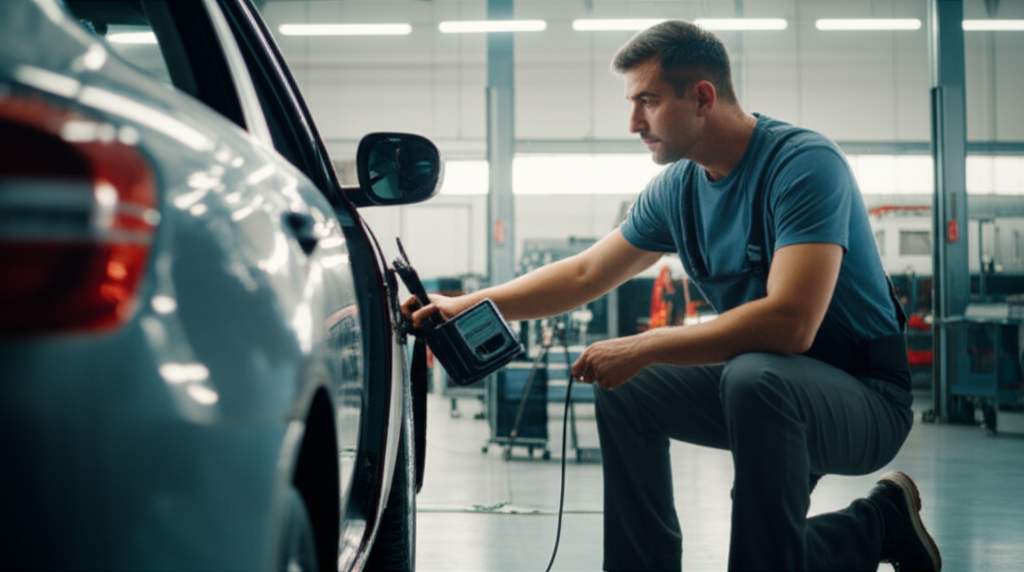
The first step in any auto body repair is a thorough damage assessment. Our technicians will:
- Visually inspect all visible and hidden damage
- Check for frame damage using specialized alignment equipment
- Document damage with photographs for insurance purposes
- Test mechanical systems that might have been affected
This inspection is critical because hidden damage – like frame misalignment or internal structural damage – can affect your vehicle’s safety and performance if left unaddressed. We recommend a free multi-point inspection even if damage seems minor, as we can identify issues that aren’t immediately visible.
Step 2: Estimate and Approval
Once the assessment is complete, we provide a detailed written estimate that includes:
- Labor costs broken down by repair type
- Parts costs (OEM or equivalent quality)
- Paint and finishing materials
- Estimated timeline for completion
If you’re working with insurance, we’ll submit this estimate to your provider. In California, under Insurance Code §758.5, you have the right to choose your own repair shop – your insurance company cannot require you to use a specific facility. We work with all major insurance providers and can often expedite claims.
Step 3: Disassembly and Structural Repairs
With your approval, our technicians begin the repair process:
- Disassembly – Carefully removing damaged panels, trim, and components
- Frame straightening – Using specialized equipment to correct frame damage and restore proper alignment
- Panel replacement – Fitting and securing new or repaired panels
- Welding – For structural repairs requiring permanent panel attachment
All repairs follow manufacturer specifications to ensure your vehicle’s safety and integrity. We use OEM (Original Equipment Manufacturer) parts when necessary to maintain your vehicle’s quality and resale value.
Step 4: Repainting and Finishing
For any repair involving exposed metal or primer, repainting is necessary. Our painters:
- Mix paint to match your vehicle’s exact factory color
- Sand and prepare surfaces for proper paint adhesion
- Apply primer, base coat, and clear coat in controlled conditions
- Allow proper curing time (typically 24-48 hours)
- Blend paint with adjacent panels to ensure seamless appearance
Quality paint work is essential for both aesthetics and protection – a proper paint job protects the underlying metal from rust and corrosion.
Step 5: Reassembly and Quality Inspection
Once repairs and painting are complete, we reassemble your vehicle and conduct a comprehensive quality inspection:
- Verify all panels align correctly
- Test all doors, windows, and mechanisms
- Check paint quality and finish
- Inspect all repaired areas under different lighting
- Road test to ensure no new issues
We don’t release your vehicle until we’re confident in the quality of all work performed. Every repair comes with a warranty on our workmanship.
Auto Body Repair Costs in Los Angeles
Auto body repair costs vary widely depending on the extent of damage, parts needed, and shop labor rates. Understanding typical price ranges helps you evaluate estimates.
Minor Damage Repairs
Minor damage like small dents, scratches, or single-panel repairs typically costs:
- Dent repair/PDR – $150-$400 (for dents without paint damage)
- Paint touch-up – $200-$500 (for scratches and small areas)
- Single panel replacement – $300-$1,000 (door, fender, or hood)
- Bumper repair/replacement – $400-$1,500
Major Damage Repairs
Significant damage involving frame work or multiple panels costs considerably more:
- Frame straightening – $1,500-$5,000+ (depending on severity)
- Multiple panel replacement – $2,000-$8,000+
- Full vehicle restoration – $5,000-$15,000+ (for severely damaged vehicles)
Most insurance policies cover auto body repair after an accident, though deductibles typically range from $250-$1,000. If you’re paying out of pocket, many shops offer payment plans.
Choosing the Right Auto Body Shop
Not all auto body shops are equal. Here’s what to look for when selecting a repair facility in Los Angeles.
Certifications That Matter
ASE Certification – Look for shops with ASE-certified technicians. ASE (Automotive Service Excellence) certification indicates that technicians have passed rigorous exams and maintain current knowledge of automotive repair standards. Hyperion Auto Repair’s technicians are ASE-certified, ensuring you receive service from qualified professionals.
I-CAR Certification – The Inter-Industry Conference on Auto Collision Repair (I-CAR) offers specialized training in collision repair techniques and vehicle construction. Certified shops have demonstrated commitment to industry best practices.
Manufacturer Certifications – Many vehicle manufacturers offer certification programs for shops that meet their repair standards. These certifications indicate the shop can perform repairs that maintain your vehicle’s warranty.
Questions to Ask Your Technician
When meeting with a shop, ask these important questions:
- “Are you certified by ASE, I-CAR, or vehicle manufacturers?”
- “What type of parts will be used – OEM or aftermarket?”
- “How long will the repair take?”
- “Do you provide a warranty on your work?”
- “How do you handle changes or additional damage discovered during repair?”
- “Do you work with my insurance company?”
Insurance and Auto Body Repair
If your damage is covered by insurance, here’s what you need to know:
Your Right to Choose – California Insurance Code §758.5 clearly states that insurance companies cannot require you to use a specific repair shop. You have the absolute right to choose Hyperion Auto Repair or any other licensed facility.
Deductibles – You’re typically responsible for paying your deductible (often $250-$1,000) before insurance covers the rest. Some policies offer deductible waivers for policyholders.
Insurance Adjusters – Your insurance company will likely send an adjuster to inspect damage and verify the estimate. They may approve the estimate as-is or request modifications.
Additional Damage – If hidden damage is discovered during repairs, we’ll contact your insurance company for additional authorization before proceeding.
Why Professional Auto Body Repair Matters
Choosing professional repair over DIY or cut-rate options protects your investment for several reasons:
Safety – A properly repaired vehicle maintains structural integrity essential for protecting you and your passengers. Frame damage that isn’t correctly straightened can compromise vehicle safety in future collisions.
Resale Value – A professionally repaired vehicle maintains better resale value than one with amateur repairs. Buyers and appraisers can tell the difference between quality work and substandard repairs.
Warranty Protection – Manufacturer warranties may not cover repairs performed by unqualified technicians. Professional shops stand behind their work with warranties.
Insurance Compliance – Insurance companies may deny future claims if they discover that previous repairs were performed improperly.
Your Trusted Auto Body Repair Experts in Los Angeles
Hyperion Auto Repair has served Los Angeles families and businesses since 1985, specializing in professional auto body repair and collision service. Our ASE-certified technicians combine decades of experience with modern repair equipment to restore your vehicle to pre-accident condition.
We offer:
- Free multi-point vehicle inspections to identify all damage
- Competitive estimates with transparent pricing
- Direct insurance company coordination
- Warranty on all body work and repairs
- Fast turnaround without compromising quality
If you need auto body repair in Los Angeles, contact Hyperion Auto Repair today at (323) 667-3180 or visit us at 1845 Hyperion Avenue. We’re here to get your vehicle back on the road safely and looking great.
FAQ: Auto Body Repair
Q: How long does auto body repair typically take?
A: Minor repairs like small dents or scratches take 1-3 days. Major repairs involving frame work, multiple panels, and repainting typically take 1-3 weeks depending on the extent of damage and shop workload.
Q: Will my insurance cover my auto body repair?
A: If you have collision or comprehensive coverage and the damage is covered under your policy, yes. You’ll typically pay your deductible, and insurance covers the rest. We recommend calling your insurance company immediately after an accident.
Q: What’s the difference between OEM and aftermarket parts?
A: OEM (Original Equipment Manufacturer) parts are made by your vehicle’s manufacturer and typically offer better quality and fit. Aftermarket parts are made by third parties and are usually less expensive. We recommend OEM parts for structural repairs and can use quality aftermarket parts for non-critical components with your approval.
Q: Can I use my car while it’s being repaired?
A: That depends on the extent of repairs and your insurance coverage. We can discuss rental vehicle options, and some insurance policies cover rental cars during repairs. Contact us to discuss your specific situation.
Q: What should I do immediately after a collision?
A: First, ensure everyone is safe and call 911 if there are injuries. Take photos of the damage, document the other driver’s information, and call your insurance company. Then, schedule an inspection with a professional auto body shop. Related: suspension repair services may also be needed depending on the accident.
Q: Why is my vehicle pulling to one side after a minor accident?
A: This typically indicates frame damage or wheel alignment issues that require professional inspection. Even seemingly minor collisions can misalign your frame. Our technicians can diagnose and correct the problem. Many drivers also need brake repair specialists to inspect their braking systems after an accident.
Q: Do you offer a warranty on auto body work?
A: Yes. Hyperion Auto Repair warrants all body work and repairs against defects in workmanship for a specified period. Ask us about the details when you bring your vehicle in.