
When to Replace Brake Pads: Complete Warning Signs Guide for Los Angeles Drivers
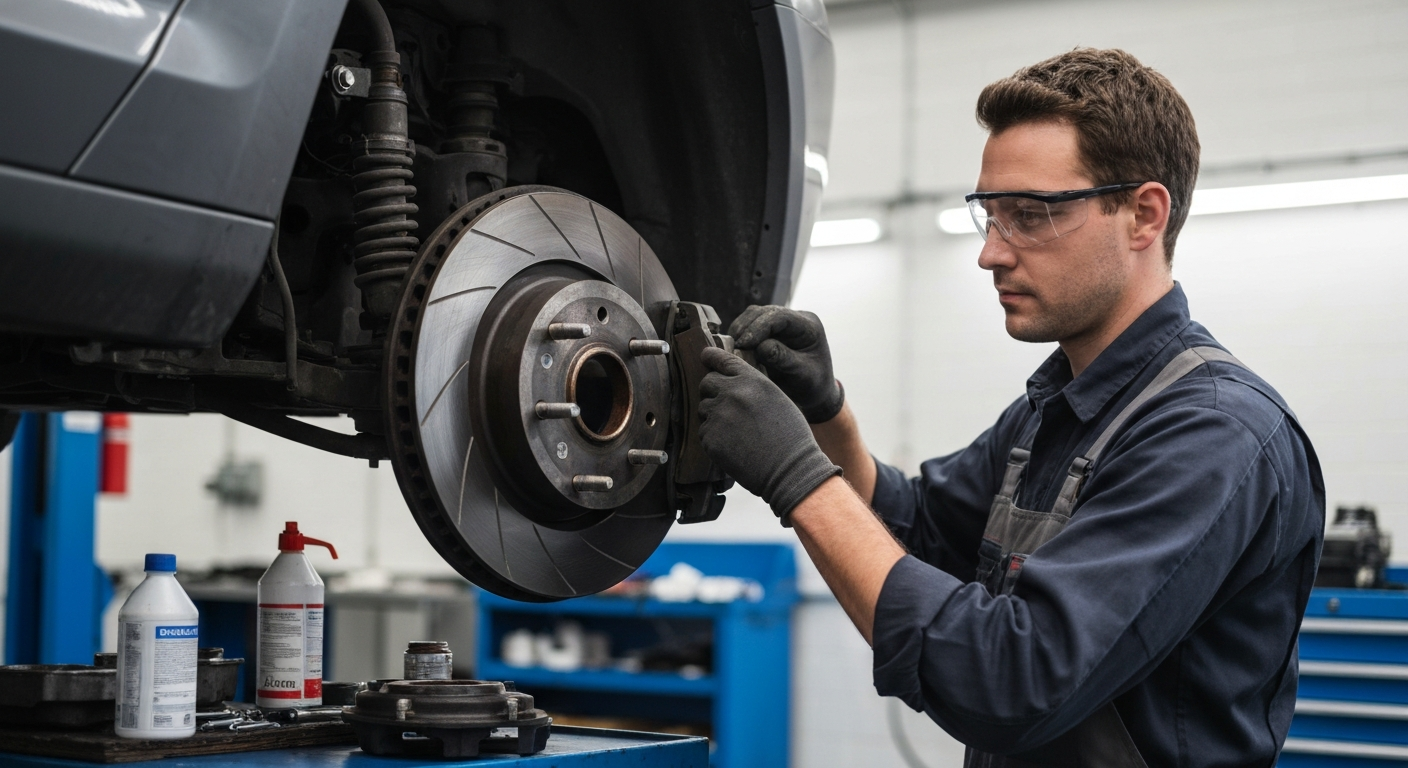
Your car’s braking system is one of the most critical safety features you depend on every day. In a busy city like Los Angeles—where you navigate heavy traffic, steep hills, and unexpected stops—properly functioning brakes aren’t just about comfort; they’re about the safety of you, your passengers, and everyone sharing the road.
Yet many Los Angeles drivers don’t know the warning signs that their brake pads need replacement until a serious problem develops. By understanding these critical signals, you can catch brake issues early, avoid expensive rotor damage, and maintain the safety of your vehicle.
At Hyperion Auto Repair, we’ve served the Los Angeles community since 1985 with expert brake service from ASE-certified technicians. We offer free multi-point inspections to identify brake issues before they become dangerous. In this guide, we’ll walk you through every warning sign your brake pads are failing and what you need to do about it.
Warning Sign #1: Squealing or Squeaking Noises When Braking
One of the most common—and earliest—warning signs that your brake pads need replacement is a high-pitched squealing or squeaking sound when you apply the brakes.
What Causes This Sound?
Most brake pads include a small metal wear indicator embedded into the pad material. As your pads wear down over time, this indicator gradually makes contact with the brake rotor. When it touches the rotor, it creates that distinctive squealing noise—essentially your vehicle’s way of alerting you that it’s time for new pads.
Is It an Emergency?
Not necessarily. Squealing brakes are an early warning sign, not an immediate emergency. You typically have time to schedule a professional inspection and replacement. However, don’t delay. The metal indicator is designed to alert you when the pad material is becoming dangerously thin—usually with only 2-4mm of pad material remaining.
What Happens If You Ignore It?
Continuing to drive with squealing brakes will quickly lead to the metal backing of the pads contacting the rotor directly. This creates the next, more severe warning sign.
Warning Sign #2: Grinding or Scraping Sounds When Braking
A grinding or scraping noise when you brake is a more serious warning sign than squealing. This sound indicates that the pad material has worn away completely, and the metal backing of the pads is now rubbing directly against your brake rotor.
Why This Is Serious
This metal-on-metal contact isn’t just loud—it’s actively damaging both your brake pads and rotors in real-time. Every time you brake, you’re causing additional damage that will significantly increase your repair costs. A simple pad replacement that might have cost $200-$300 can quickly turn into a $600-$1,000+ job once rotor damage is involved.
Should You Drive to a Mechanic?
Yes, but carefully and directly. If you hear grinding noises, your braking power is likely compromised. Avoid heavy traffic and highway driving if possible. Drive directly to Hyperion Auto Repair for immediate professional inspection. Continued driving with grinding brakes increases your risk of brake failure.
Warning Sign #3: Reduced Brake Responsiveness or Soft Brake Pedal
Another critical warning sign is when your brakes don’t feel as effective as they normally do. You might notice that:
- Your brake pedal feels softer or less responsive
- You need to press harder on the pedal to achieve the same stopping power
- Your stopping distance seems longer than usual
- The pedal sometimes goes closer to the floor before the car begins to slow
Why This Happens
As brake pads wear thin, the friction material loses its ability to grip the brake rotor effectively. Your braking system must work harder to slow the vehicle, and you lose the sharp, responsive braking you’re accustomed to.
Los Angeles Drivers: Pay Special Attention
If you navigate Los Angeles hills regularly—whether in the Hollywood Hills, Griffith Park areas, or even just dealing with downtown LA’s steep streets—reduced braking responsiveness is especially dangerous. You depend on reliable brakes for safety on grades.
The Safety Risk
Reduced brake responsiveness directly impacts your stopping distance. At 30 mph, the difference between worn brakes and new brakes can mean several additional feet needed to stop. In traffic emergencies, those extra feet matter critically.
Warning Sign #4: Brake Pedal Vibration or Pulsation
When you apply the brakes and feel a pulsating or vibrating sensation in the brake pedal—or sometimes in the steering wheel—this indicates that your brake rotors have become warped.
How This Develops
This typically happens when someone drives on severely worn brake pads for an extended period. The thin remaining pad material cannot distribute the heat from braking evenly. This uneven heat causes the brake rotor to warp slightly, creating the vibration you feel when braking.
Is It the Pedal or the Rotor?
The vibration is actually caused by the rotor being slightly out of round. As the rotor spins and makes contact with the pads, it creates a pulsing sensation transmitted back through the braking system to your pedal.
The Repair Consequence
Once rotors are warped, they typically cannot be repaired—they must be replaced. This transforms what might have been a $250 brake pad replacement into a $700-$1,000+ job including new rotors.
Warning Sign #5: Visible Brake Pad Wear
While less convenient than noticing sound or feel, visually inspecting your brake pads can give you a clear picture of their remaining life.
How to Look at Your Pads
You can usually see your brake pads through the gaps in your vehicle’s wheel spokes. Look for the metal rotor at the center of the wheel, and you should see the brake pads on either side of it. Fresh brake pads are typically ½ inch or more thick.
The ¼ Inch Rule
If the visible pad material appears to be ¼ inch thick or less, it’s time to replace your pads. At this point, you’re in the range where warning indicators should be activating, and severe wear is imminent.
Why Professional Inspection Is Better
While you can do a quick visual check, professional mechanics have specialized tools to accurately measure pad thickness. They can also inspect the rotors, calipers, and other brake components that affect braking safety. A professional inspection catches problems that are invisible from outside the wheel.
Factors That Affect How Quickly Your Brake Pads Wear
All brake pads don’t wear at the same rate. Several factors influence how long your pads will last before showing warning signs:
1. Your Driving Habits
Aggressive driving significantly accelerates brake pad wear. Frequent hard braking, “riding the brakes” on descents, and high-speed driving all generate more heat and friction, wearing pads faster. Smooth, anticipatory driving—where you brake gently and plan ahead—extends pad life considerably.
2. Road Conditions and Traffic Patterns
Stop-and-go city traffic (which describes much of Los Angeles driving) wears pads faster than highway driving. Mountain driving and hilly terrain require more braking and accelerate wear. Rough roads with potholes and debris can also contribute to faster degradation.
Los Angeles drivers deal with all of these conditions—heavy city traffic, mountain areas, and varied terrain—which means brake pads often wear faster here than in flatter, less congested regions.
3. Brake Pad Quality and Material
Not all brake pads are created equal. The three main types are:
- Organic pads: Least expensive, wear faster, quieter, generate less heat (good for daily driving)
- Semi-metallic pads: Mid-range cost, more durable, handle heat better, slightly noisier
- Ceramic pads: More expensive, longest-lasting, excellent heat dissipation, quietest (best for performance driving)
Higher-quality pads last longer and often provide better braking performance. While they cost more upfront, they save money over time by requiring less frequent replacement.
4. Vehicle Weight and Type
Heavier vehicles (trucks, SUVs) put more stress on the braking system. More weight means more friction needed to stop, which wears pads faster. If you drive an SUV or truck, expect to replace your brake pads more frequently than sedan drivers.
5. Regular Maintenance
Vehicles that receive regular car tune-ups include brake inspections and experience slower pad wear and longer rotor life. Professional maintenance catches small problems before they become big, expensive ones. This is why a free multi-point inspection at Hyperion Auto Repair can save you hundreds of dollars.
The Cost of Ignoring Brake Warning Signs
Understanding what happens if you ignore these warning signs can be motivating to take action:
Small Problem → Big Problem
- Squealing pads ignored: $250 brake pad replacement
- Squealing pads ignored further: $800+ (pads + rotor replacement)
- Grinding brakes ignored: $1,000+ (damaged pads, damaged rotors, possible caliper damage)
- Complete brake failure: $2,000+ plus potential accident costs
The financial difference between addressing warning signs early and ignoring them can be substantial.
Safety Risks
Beyond cost, failed brakes create serious safety risks:
- Longer stopping distances in emergencies
- Potential brake failure while driving
- Loss of brake assist or ABS functionality
- Increased accident risk for you and others on the road
How to Safely Inspect Your Own Brake Pads
If you want to check your brake pads yourself between professional inspections, here’s how to do it safely:
- Park on a level surface and engage the parking brake
- Remove a wheel by loosening lug nuts, raising the vehicle safely on jack stands (never rely on a jack alone), and removing the wheel
- Look at the brake pads mounted on either side of the rotor
- Measure thickness – a brake pad is ready for replacement when the friction material is ¼ inch thick or less
- Check for uneven wear – if outer and inner pads are different thicknesses, have a professional inspect
- Reinstall the wheel and tighten lug nuts properly
- Repeat for the other wheels (front and rear both should be checked)
Important Safety Notes:
- Never work under a vehicle supported only by a jack
- Wear safety glasses to prevent debris from entering your eyes
- If you’re uncomfortable doing this, let a professional handle it
- Professional inspection with proper equipment is always more reliable
The Value of Professional Brake Inspection
While DIY inspection can give you basic information, professional brake service provides comprehensive safety assurance.
What Hyperion’s Free Multi-Point Inspection Includes:
- Visual inspection of pads, rotors, calipers, and brake hoses
- Precise measurement of remaining pad thickness
- Assessment of rotor condition (scoring, warping, thickness)
- Brake fluid inspection and testing
- Visual check of brake lines for leaks or damage
- Brake system pressure and functionality testing
- Professional recommendation on timing for replacement
Why Professional Service Matters:
Our ASE-certified technicians have years of experience with every vehicle type. We use specialized diagnostic equipment that measures what your eyes cannot see. We also warranty our work, so if problems persist after your repair, we make it right at no additional cost.
Typical Brake Pad Replacement Costs in Los Angeles
Understanding typical costs helps you budget and make informed decisions:
Brake Pad Replacement Only
- Labor: $100-$200 per axle
- Parts (pads): $100-$200 per axle
- Total: $200-$400 for a complete front brake pad replacement
If Rotors Need Replacement
- Rotor replacement (both): $400-$800
- Combined with pads: $600-$1,000+
Factors Affecting Your Cost
- Vehicle make and model
- Pad quality selected (organic vs ceramic)
- Whether rotors need replacement
- Brake system complexity (some vehicles have more complicated brake systems)
Cost vs. Safety Trade-off:
Some people choose budget pads to save money. However, better-quality pads often cost only $50-$100 more but last significantly longer and provide better braking performance. The value is worth considering.
How to Extend Your Brake Pad Life
While brake pads are a wear item that will eventually need replacement, you can significantly extend their lifespan with conscious driving habits:
1. Brake Smoothly and Gently
Instead of hard braking, apply steady pressure gradually. Smooth braking generates less heat and wears pads more slowly.
2. Anticipate Stops
In Los Angeles traffic, look ahead. If you see brake lights ahead, begin slowing gradually rather than rushing toward a red light and braking hard. This single habit can extend brake pad life by thousands of miles.
3. Avoid “Riding the Brakes”
On long descents, don’t continuously apply light brake pressure. Instead, shift to a lower gear and use engine braking to slow the vehicle, reserving the brakes for significant speed reduction.
4. Reduce Vehicle Weight
Remove unnecessary items from your vehicle. Every pound of weight requires additional braking force. Heavy cargo means more pad wear.
5. Maintain Your Vehicle
Regular maintenance keeps your braking system efficient. Properly inflated tires, proper wheel alignment and brake maintenance work together for optimal safety, and a well-maintained suspension all contribute to healthy brakes.
6. Schedule Regular Inspections
Catch problems early before they accelerate wear. A free multi-point inspection once or twice yearly can identify brake issues that increase pad wear.
Why Professional ASE-Certified Service Matters for Brake Work
Not all brake repairs are created equal. Here’s why professional, certified service protects your safety:
EPA and DOT Regulations
Brake system work involves specific safety and environmental standards. ASE certification ensures technicians understand and follow these requirements.
Diagnostic Accuracy
Professional technicians can distinguish between simple pad wear and more complex issues like caliper problems, brake fluid contamination, or ABS system malfunctions. Incorrect diagnosis leads to wasted money on unnecessary repairs.
Warranty Protection
Professional repairs typically include warranties. If issues persist, the shop makes it right at no additional cost. This protects your investment.
Vehicle Warranty Protection
Using non-certified technicians on brake work can void your vehicle manufacturer’s warranty. Professional service protects your broader vehicle coverage.
FAQs: Brake Pad Replacement and Maintenance
How Often Should I Have My Brakes Inspected?
We recommend brake inspection at least once yearly, or sooner if you notice any of the warning signs discussed. Many maintenance schedules suggest inspection every 12 months or 12,000 miles, whichever comes first.
Can I Drive with Worn Brake Pads?
It depends on how worn. If you hear squealing, you can usually drive cautiously to a repair shop. If you hear grinding, your braking power is compromised—drive carefully directly to a mechanic. If your brakes feel soft or unresponsive, have them inspected before highway driving.
How Long Does Brake Pad Replacement Take?
A straightforward brake pad replacement typically takes 1-2 hours. If rotors need replacement or if there are complicating factors, it may take 2-3 hours. We can often complete the work same-day depending on your vehicle and our current schedule.
Should I Replace My Rotors When I Replace Pads?
Not always. If rotors are still within safe thickness limits and not warped or severely scored, you can often replace just the pads. However, if your pads are very thin (indicating heavy wear) and rotors show signs of damage, replacement is wise. We recommend having rotors measured and inspected professionally.
Why Check Both Front and Rear Brakes?
Front brakes typically wear faster because they handle approximately 70% of stopping force. However, rear brakes also require regular inspection. Some vehicles are prone to rear brake problems that cause front pads to wear unevenly. Professional inspection checks both.
The Hyperion Difference: Expert Brake Service You Can Trust
Since 1985, Hyperion Auto Repair has been the trusted brake specialist for Los Angeles families and businesses. Our commitment to brake safety and customer service sets us apart:
- ASE-Certified Technicians: Our team maintains current certifications and stays updated on the latest brake system technology
- Free Multi-Point Inspection: We start with a comprehensive inspection so you understand exactly what’s needed
- Transparent Pricing: No hidden fees, no upselling. You get honest assessments and fair pricing
- Warranty on All Work: If issues persist after your repair, we make it right
- Convenient Location: 1845 Hyperion Avenue in Los Angeles
- Quick Service: We understand you need your vehicle back quickly
Conclusion: Don’t Wait for Brake Failure
Your braking system is your connection to safety on Los Angeles roads. When your brake pads show warning signs—squealing, grinding, reduced responsiveness, vibration, or visible wear—it’s time to act.
The cost of early brake pad replacement is negligible compared to the cost of rotor damage, the risk of brake failure, or the consequences of an accident caused by inadequate braking.
Don’t ignore your brake warning signs. Contact Hyperion Auto Repair today for a free multi-point inspection. Our ASE-certified technicians will assess your brake system’s condition, provide transparent pricing, and get you back on the road safely.
Contact Hyperion Auto Repair:
- Phone: (323) 667-3180
- Address: 1845 Hyperion Avenue, Los Angeles, CA 90027
- Free Inspection: Schedule yours today
Your safety matters. Trust Hyperion Auto Repair with your brake service.