
Car Battery Replacement: Complete 2026 Guide to Cost, Lifespan & Warning Signs
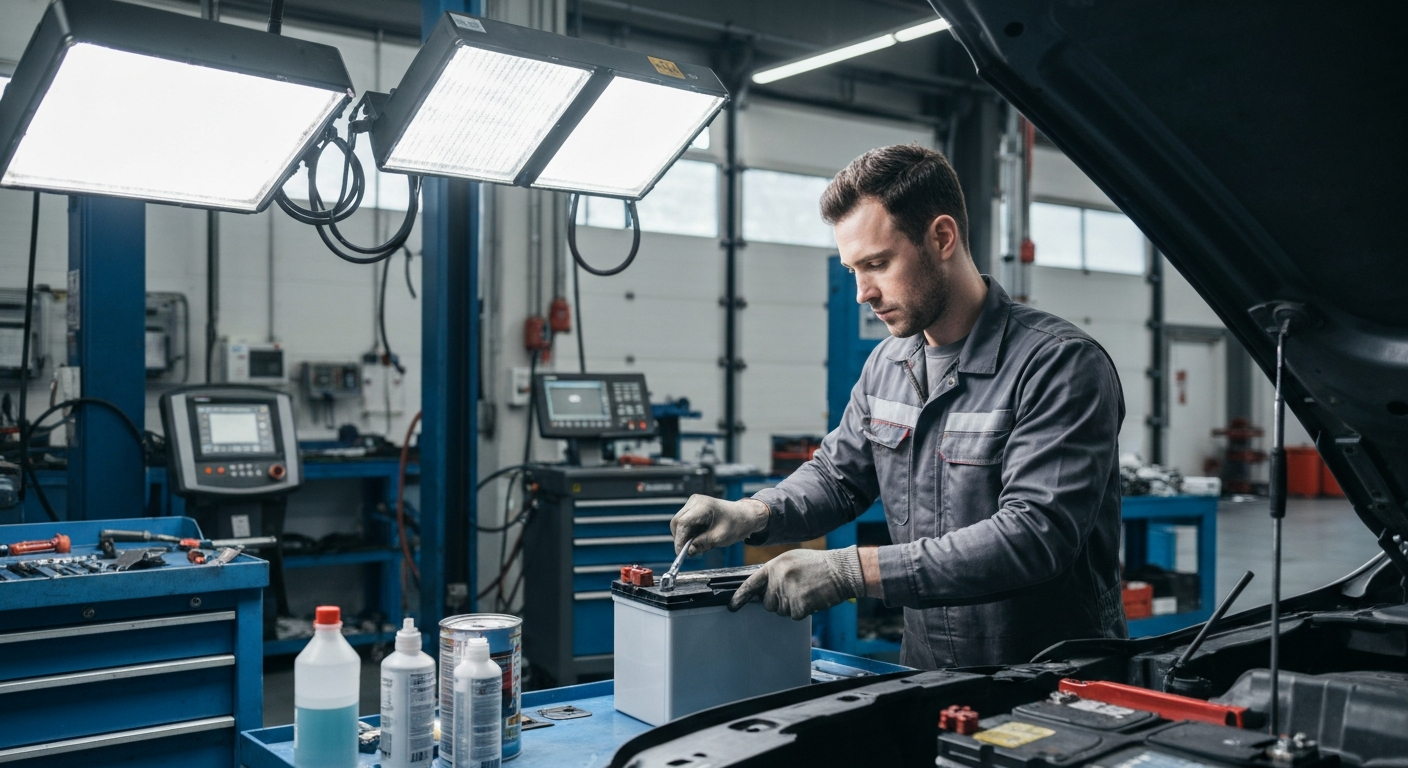
Your car battery is one of the most critical components in your vehicle, responsible for starting your engine and powering all electrical systems. Over time, even the best batteries deteriorate. Understanding when your battery needs replacement and what to expect can save you money, prevent unexpected breakdowns, and keep you safe on the road.
At Hyperion Auto Repair in Los Angeles, our ASE-certified technicians have helped thousands of vehicle owners navigate battery replacement with expert guidance and professional service. This comprehensive guide covers everything you need to know about car battery replacement, from warning signs to costs and professional solutions.
Why Your Car Battery Matters More Than You Think
Your car’s battery isn’t just for starting your engine. It powers every electrical component in your vehicle, from the alternator to your headlights, infotainment system, and safety features. A failing battery doesn’t just leave you stranded—it can affect your vehicle’s performance and safety. That’s why recognizing battery issues early is essential.
Warning Signs Your Car Battery Needs Replacement
Modern vehicles often give warning signs before a battery completely fails. Here are the eight most common indicators that your car battery replacement is necessary:
1. Engine Cranks Slowly or Won’t Start
If your engine takes longer to crank than normal, or won’t turn over at all even though you hear clicking sounds, your battery is likely losing its charge capacity. This is one of the earliest and most reliable signs of battery failure. The starter motor requires significant electrical current, and a weak battery simply can’t deliver enough power.
2. Completely Dead Battery
A battery that’s completely dead won’t turn on any electrical components. Your dashboard lights won’t illuminate, and the starter won’t respond to the ignition. This is an emergency that requires immediate professional jump-starting or replacement.
3. Dashboard Warning Lights
Modern vehicles have a battery warning light on the dashboard. If this light illuminates while driving, it indicates your alternator isn’t properly charging the battery. While this might be an alternator issue rather than a battery problem, professional diagnostics can determine the actual cause. A free multi-point inspection at Hyperion Auto Repair can pinpoint the exact issue.
4. Clicking Sound When Turning the Key
A rapid clicking sound when you try to start the engine—without the engine actually turning over—is a classic sign of insufficient battery voltage. This distinctive sound means the starter is trying to engage but doesn’t have enough electrical power to function.
5. Rotten Egg Smell Near the Battery
If you notice a sulfur or rotten egg smell coming from under the hood near the battery, your battery may be leaking battery acid or overcharging. This is a serious condition requiring immediate professional attention. Don’t attempt to handle this yourself—battery acid is extremely corrosive and dangerous.
6. Swollen or Cracked Battery Case
Extreme heat or overcharging can cause a battery case to swell or crack. A visibly damaged battery should be replaced immediately. The damage typically indicates internal cell failure that will only worsen with time.
7. Corroded Battery Terminals
White, blue, or green crusty deposits on your battery terminals indicate corrosion. While this issue can sometimes be cleaned, heavy corrosion suggests internal battery problems. A professional can assess whether cleaning will solve the issue or replacement is needed.
8. Dim or Flickering Headlights
If your headlights dim significantly when the engine is idling and brighten when you accelerate, your battery isn’t holding a proper charge. This is especially noticeable on older vehicles where the alternator’s output directly affects electrical brightness.
How Long Do Car Batteries Last?
Most car batteries have a lifespan of 3 to 5 years, though several factors influence this timeline. Understanding what affects your battery’s longevity helps you prepare for replacement and avoid unexpected failures.
Climate and Temperature Effects
Los Angeles’s warm climate actually affects battery lifespan differently than northern states. High heat accelerates chemical reactions within the battery, causing faster deterioration. Conversely, freezing temperatures in cold climates also damage batteries by reducing their ability to hold a charge. Drivers in moderate climates typically see longer battery life than those in extreme temperatures.
Driving Habits
Frequent short trips prevent the alternator from fully charging the battery. Long highway drives allow the alternator to fully charge the battery, extending its lifespan. If you primarily take short local drives, your battery may fail sooner than expected.
Vehicle Type and Age
Newer vehicles with modern battery management systems may see slightly longer battery life. However, vehicles with extensive electrical systems (especially those with aftermarket upgrades) may put more demand on the battery, reducing its lifespan.
Maintenance Habits
Regular cleaning of battery terminals, ensuring secure connections, and avoiding excessive electrical demand can extend battery life. Vehicles that sit unused for extended periods may experience premature battery failure due to self-discharge.
Car Battery Replacement Cost in 2026
Battery replacement costs vary depending on your vehicle type, battery quality, and whether you choose OEM or aftermarket options. Here’s what to expect in 2026:
Standard Battery Replacement Pricing
Most car batteries cost between $100 and $300, depending on the vehicle’s specifications and the battery brand. Economy batteries are at the lower end, while premium batteries with extended warranties can exceed $300.
Professional Installation Labor
Professional installation typically costs $50 to $150, depending on your vehicle’s design. Some vehicles require removing additional components to access the battery, increasing labor time. At Hyperion Auto Repair, our ASE-certified technicians provide professional installation with a warranty on the work performed.
OEM vs Aftermarket Batteries
Original Equipment Manufacturer (OEM) batteries are designed specifically for your vehicle and often cost more than aftermarket alternatives. However, OEM batteries typically offer better fit and reliability. Aftermarket batteries can save money but may not perform as well in extreme conditions.
Warranty Coverage
New batteries typically come with 1 to 3-year warranties. Premium batteries may offer extended warranties up to 5 years. Understanding warranty coverage is important because battery failure is sometimes covered under your vehicle’s warranty if the failure occurs within the specified timeframe.
The Battery Replacement Process: What Professionals Do
Understanding the professional battery replacement process helps you appreciate why ASE-certified technicians charge what they do for this service. Professional replacement involves more than simply swapping old and new batteries.
1. Battery Diagnostics
Before replacing your battery, professional technicians test your charging system to confirm the battery is actually the problem. Sometimes, a weak battery is actually caused by an alternator that’s not charging properly. Replacing the battery without fixing the alternator would be wasting your money. Our comprehensive diagnostic service ensures we identify the root cause of your electrical issues.
2. Disconnecting the Old Battery
The technician disconnects the negative terminal first, followed by the positive terminal. This order prevents electrical shorts and ensures safety. The battery is then carefully removed from its mounting location.
3. Terminal Cleaning
Before installing the new battery, professional technicians clean the battery terminals and cable ends. Corrosion buildup is removed to ensure excellent electrical contact with the new battery.
4. Installing the New Battery
The new battery is securely mounted in the battery tray. The positive terminal is connected first, followed by the negative terminal. This order ensures proper electrical connection and safety.
5. System Testing
After installation, technicians test your vehicle’s electrical systems to confirm everything is working properly. This includes checking that the starter works, lights are bright, and the charging system is functioning correctly.
DIY vs Professional Battery Replacement: Making the Right Choice
Many vehicle owners wonder whether they can replace their car battery themselves. While it’s possible for those with mechanical knowledge, there are significant safety considerations.
When You Can Tackle DIY Replacement
If you have mechanical experience and your vehicle has an easily accessible battery, DIY replacement might save money. You’ll need basic tools (typically just a wrench) and a clear understanding of your vehicle’s specific requirements.
When Professional Service is Worth the Cost
Professional battery replacement is worth the cost if:
- Your battery is difficult to access
- Your vehicle has a computer or security system that needs reset after battery replacement
- You’re not confident in your mechanical abilities
- You want the security of a warranty on both parts and labor
- You need system diagnostics to confirm the battery is the actual problem
Critical Safety Considerations
Battery acid is extremely corrosive and can cause severe burns. Improper handling of battery terminals can create electrical shorts that damage your vehicle’s electrical systems. Professional technicians have training, proper safety equipment, and insurance coverage if something goes wrong.
Battery Maintenance Tips to Extend Your Battery’s Life
Even before battery replacement becomes necessary, you can take steps to maximize your battery’s lifespan and performance:
Keep Battery Terminals Clean
Battery corrosion reduces electrical contact and forces your battery to work harder. Every 6 months, check your battery terminals and clean away any corrosion with a simple baking soda and water mixture. Ensure connections are tight and secure.
Avoid Excessive Electrical Demand
Using high-power electrical features (heated seats, defroster, etc.) while the engine idles drains battery charge faster than it can be replenished. Minimize idle time with these features running.
Drive Regularly and for Longer Periods
Highway driving allows your alternator to fully charge the battery. Frequent short trips prevent proper charging. If you primarily take short trips, consider taking a longer drive at least once a week to fully charge your battery.
Keep Your Battery Cool
Battery cases can be damaged by extreme heat. If your battery sits in direct sunlight, consider shade or a battery insulator. In Los Angeles’s warm climate, proper ventilation in the engine bay helps keep your battery cool.
Why Professional ASE-Certified Service Matters
When it comes to battery replacement, choosing the right service provider makes all the difference. Here’s why you should choose Hyperion Auto Repair for your battery needs:
Expert Diagnostics
Our ASE-certified technicians don’t just replace batteries—they diagnose the actual problem. Sometimes a customer thinks they need a new battery when the real issue is an alternator or starter. Proper diagnostics prevent unnecessary repairs and save you money.
Quality Parts and Warranty
We use quality batteries with solid warranties. Our technicians ensure proper installation, and we warranty our work. If a battery fails within our warranty period, we replace it at no cost.
Free Multi-Point Inspection
Every battery replacement at Hyperion includes our complimentary multi-point vehicle inspection. This comprehensive check ensures you’re aware of other potential issues before they become expensive emergencies.
Family-Owned and Trusted Since 1985
Hyperion Auto Repair has served Los Angeles families and businesses for nearly 40 years. Our reputation for honest, reliable service and fair pricing is built on thousands of satisfied customers who trust us with their vehicles.
When to Replace Your Battery vs When a Jump-Start Will Help
Not every case of a car not starting requires battery replacement. Sometimes a simple jump-start can get you back on the road. However, if you need jump-starts frequently, battery replacement is likely necessary.
As a rule of thumb: If your battery fails completely once and hasn’t failed before, a jump-start and charging system diagnostics might be all you need. If you’re requiring jump-starts multiple times per week, your battery replacement is overdue.
Conclusion: Don’t Let Battery Problems Strand You
Your car battery is too important to ignore. Recognizing the warning signs of battery failure and addressing them promptly prevents roadside emergencies and ensures your vehicle’s electrical systems operate safely and reliably.
At Hyperion Auto Repair in Los Angeles, we make battery replacement simple, affordable, and worry-free. Our ASE-certified technicians provide expert diagnostics, quality parts, professional installation, and the warranty peace of mind you deserve.
If you’re experiencing battery issues or think your battery might be failing, don’t wait for a complete failure. Contact Hyperion Auto Repair today at (323) 667-3180 to schedule your free multi-point inspection and battery diagnostics. We’re located at 1845 Hyperion Avenue, Los Angeles, CA 90027, and we’re committed to keeping you and your vehicle safe on the road.