
Car Battery Replacement: Warning Signs, Costs & Professional Solutions
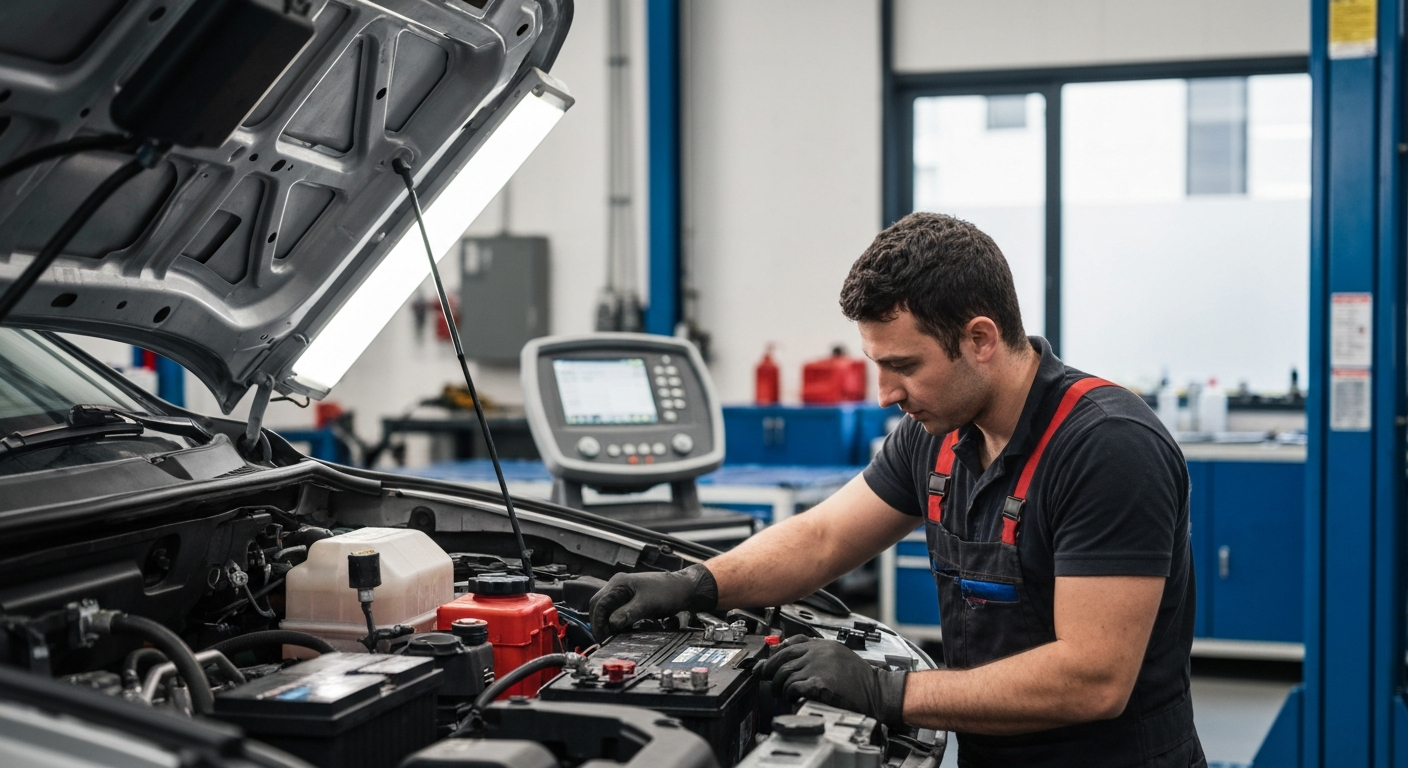
Your car battery is one of the most critical components under the hood. Without it, your vehicle simply won’t start. Yet many Los Angeles drivers ignore warning signs until they’re stranded with a dead battery. At Hyperion Auto Repair, we’ve helped countless customers recognize battery problems early and avoid breakdowns. This comprehensive guide explains everything you need to know about car battery replacement—from warning signs to costs to choosing the right replacement for your vehicle.
8 Warning Signs Your Battery Needs Replacement
A healthy car battery should last between 3 and 5 years in most climates. However, Los Angeles’s hot summers can accelerate battery degradation. Here are the key warning signs that your battery may need replacement:
1. Dim or Flickering Headlights
If your headlights appear noticeably dimmer than usual, especially at idle or when the engine is off, this is often the first sign of a failing battery. A weak battery cannot supply adequate power to electrical components, causing headlights to dim or flicker.
2. Slow Engine Cranking (Clicking Sounds)
When you turn the key and hear rapid clicking sounds instead of the engine starting normally, this indicates your battery is struggling to deliver the power needed for engine cranking. The slower the crank, the weaker your battery has become.
3. Electrical Component Failures
Look for malfunctions in power windows, door locks, seat adjustments, or dashboard electronics. A failing battery may provide inconsistent power to these systems, causing them to work intermittently or not at all.
4. Dashboard Warning Lights
Your vehicle’s dashboard warning light—typically a battery symbol or charging system indicator—illuminates when the battery or charging system has problems. This should never be ignored, as it signals that your vehicle is not charging properly.
5. Rotten, Sulfuric Smell
A bad smell coming from under the hood, similar to rotten eggs or sulfur, often indicates internal battery damage. This occurs when battery acid leaks or the internal chemistry breaks down. If you notice this smell, have your battery inspected immediately.
6. Bulging or Swollen Battery Case
A visibly swollen battery casing indicates overcharging or overheating—both serious problems. Never attempt to use a battery with a bulging case, as it may leak or fail suddenly. This requires immediate replacement.
7. Frequent Need for Jump-Starts
If you’re regularly needing jump-starts to get your car running, your battery is clearly failing. While a single jump-start might get you going, repeated jump-starts mean the battery cannot hold a charge and needs replacement.
8. Battery Age (3+ Years)
Even without obvious warning signs, if your battery is 3 years old or older, it’s wise to have it tested annually. Most car batteries have a lifespan of 3 to 5 years, and age is a major factor in battery failure.
Factors That Affect Car Battery Lifespan
Understanding what affects your battery’s lifespan helps you maintain it better and know when replacement is likely needed.
Time & Natural Aging
Like any chemical device, car batteries age over time. Even in perfect conditions, a battery gradually loses its ability to hold and deliver power. This is why the 3 to 5 year rule is so common—it reflects the natural aging process.
Heat & Temperature Effects
Temperature is one of the biggest factors affecting battery life. Heat accelerates the chemical reactions inside the battery, which generates electricity but also speeds up degradation. In cooler northern climates, batteries may last 5 years or longer. In hot regions like Los Angeles, where underhood temperatures can exceed 200°F in summer, batteries typically last only about 3 years.
If your vehicle is parked in direct sun or in a hot garage, battery degradation happens faster. The intense heat of Los Angeles summers means you should test your battery annually after its third year of use.
Vibration & Engine Movement
Internal battery components can break down due to vibration from engine operation and road conditions. Secure battery hold-down hardware keeps the battery stable and minimizes this damage. If hold-down brackets are loose or missing, vibration damage accelerates battery failure.
Driving Patterns & Usage
How you drive affects battery life. Short trips may not fully recharge your battery, while extended periods of parking can cause it to self-discharge. If you take mostly short trips around Los Angeles, use a battery tender or charger when your vehicle sits idle for extended periods to maintain charge.
Charging System Problems
A malfunctioning alternator or charging system can lead to under- or over-charging, both of which accelerate battery aging. If your battery seems to be failing too quickly, have your charging system inspected—the real problem might not be the battery itself.
How to Choose the Right Replacement Battery
Not all batteries fit all cars. Choosing the wrong battery can harm your vehicle’s electrical system and potentially cause damage. Here’s what to know:
Battery Type: Lead-Acid vs. AGM
Most vehicles use conventional flooded lead-acid batteries. However, many newer cars, especially those with engine stop-start systems for fuel economy, use advanced AGM (Absorbent Glass Mat) batteries. AGM batteries are more spill-resistant and handle repeated discharging and recharging better.
Important: Always replace your battery with the same type your vehicle originally came with. Your vehicle’s charging system is optimized for a specific battery type, and using the wrong type can shorten battery life or cause electrical problems.
Group Number
The group number (like Group 24 or Group 31) is an industry standard that specifies a battery’s physical size, terminal configuration, and location. Using a battery with the same group number ensures a secure fit, proper clearance, and correct installation of any heat shields. Check your owner’s manual or ask your mechanic for your vehicle’s correct group number.
Cold Cranking Amps (CCA) Rating
Cold Cranking Amps measure how much power a battery can provide at zero degrees Fahrenheit. This matters for winter performance. Always use a battery with a CCA rating that meets or exceeds your vehicle’s requirements. A higher-rated battery can work if it fits, but may have a shorter lifespan in hot climates like Los Angeles.
Amp-Hour (Ah) Rating
Some manufacturers use Amp-Hour (Ah) ratings instead of CCA. This indicates how long a battery can provide electrical current, typically measured at 20 amperes. Ensure your replacement battery meets your vehicle’s Ah rating.
Car Battery Replacement Cost in Los Angeles
Battery replacement costs vary based on battery type, quality, and your vehicle’s requirements. In Los Angeles, you can expect to pay:
- Standard Lead-Acid Battery: $100-$300 (battery only)
- Premium Lead-Acid Battery: $150-$400 (battery only)
- AGM Battery: $200-$500+ (battery only)
- Professional Installation: $50-$100 labor
At Hyperion Auto Repair, we provide transparent pricing with no surprises. Our ASE-certified technicians ensure proper installation and include a warranty on all work. We also offer free multi-point inspections that include battery testing, so you know exactly what your battery needs before any work begins.
Why Professional Battery Installation at Hyperion Matters
While some drivers attempt DIY battery replacement, professional installation ensures reliability and safety. Here’s why choosing Hyperion Auto Repair makes a difference:
ASE-Certified Technicians
Our technicians hold ASE certifications, meaning they’ve passed rigorous exams on automotive systems, including electrical and battery service. They know how to properly install your battery, connect terminals securely, and test your charging system.
Free Multi-Point Inspection Included
Before replacing your battery, we perform a free multi-point inspection to ensure the battery is actually the problem. Sometimes electrical issues stem from a failing alternator or other charging system component, not the battery itself.
Warranty on All Repairs
We stand behind our work with a warranty on all battery replacements. If your new battery fails prematurely, we’ll replace it at no cost.
Transparent, Upfront Pricing
We provide itemized estimates before any work begins. No hidden fees, no surprises at checkout. You’ll know exactly what the service costs before we start.
Same-Day Service Available
In most cases, we can replace your battery the same day. If you’re stranded with a dead battery, call us at (323) 667-3180 for immediate assistance.
Frequently Asked Questions About Car Battery Replacement
How often should I replace my car battery?
Most car batteries last 3 to 5 years. After 3 years, have your battery tested annually. In hot climates like Los Angeles, where summer temperatures accelerate degradation, you may need replacement closer to the 3-year mark.
What’s the difference between AGM and standard lead-acid batteries?
AGM (Absorbent Glass Mat) batteries are more durable, spill-resistant, and handle frequent charging cycles better. They’re often used in newer vehicles with engine stop-start systems. Standard lead-acid batteries are less expensive but may not last as long in demanding conditions. Use the type your vehicle manufacturer recommends.
Can I replace my battery myself?
While battery replacement seems simple, improper installation can damage your vehicle’s electrical system or create safety hazards. Terminal connections must be tight, the hold-down bracket must be secure, and the charging system should be tested after installation. Professional installation ensures these critical steps are done correctly.
What should I do with my old battery?
Never throw a car battery in the trash. Lead-acid batteries contain hazardous materials and are recyclable. Most retailers and repair shops, including Hyperion Auto Repair, accept old batteries for proper recycling. We handle battery disposal responsibly as part of our service.
What’s the difference between CCA and CA ratings?
Cold Cranking Amps (CCA) is the industry standard measure of battery starting power at zero degrees Fahrenheit. Cranking Amps (CA) is measured at a warmer temperature and shows inflated numbers. Always check the CCA rating—it’s the more accurate measure of starting power.
Don’t Let Battery Problems Leave You Stranded
A dead battery can happen at the worst time—leaving you stranded on a busy Los Angeles freeway or unable to get to an important appointment. By recognizing the warning signs early and getting professional inspection and replacement, you can avoid these situations entirely.
At Hyperion Auto Repair, we’ve been serving Los Angeles drivers since 1985. Our family-owned shop is known for ASE-certified service, transparent pricing, and standing behind every repair with a warranty. Whether your battery needs testing or replacement, we’re here to help.
Ready to get your battery inspected? Contact Hyperion Auto Repair today for a free multi-point inspection and honest assessment. Call us at (323) 667-3180 or visit our shop at 1845 Hyperion Avenue, Los Angeles, CA 90027. We offer same-day service for most battery replacements.