
Complete Guide to Car Tune-Ups: Cost, Timing, Services & Professional Solutions in Los Angeles
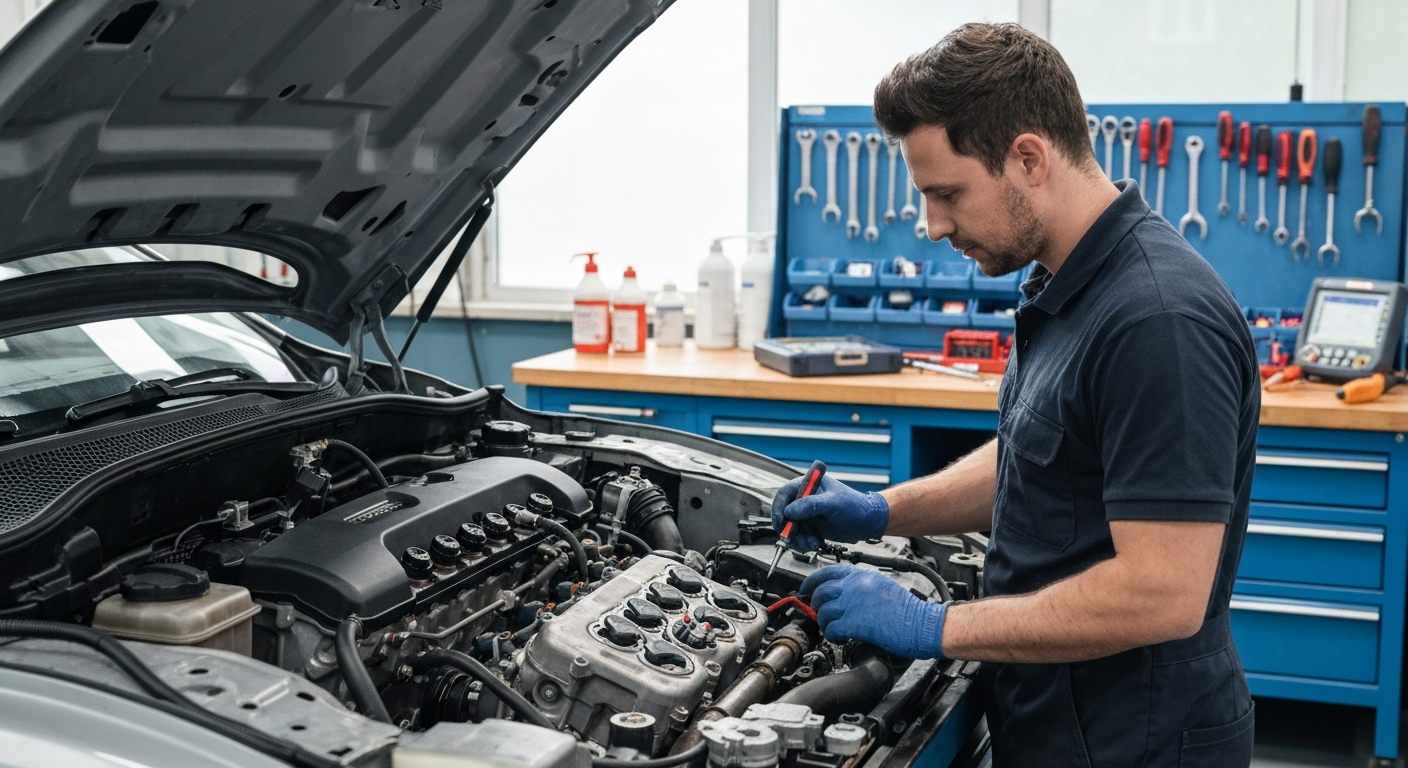
Your vehicle’s engine is a complex system of thousands of moving parts working in perfect harmony. When even one component falls out of sync, your car’s performance, fuel economy, and reliability suffer. That’s where a professional car tune-up makes all the difference.
Whether your check engine light has illuminated, your fuel economy has dropped noticeably, or you simply want to keep your vehicle running smoothly, understanding tune-ups is essential. At Hyperion Auto Repair in Los Angeles, our ASE-certified technicians specialize in comprehensive tune-up services that optimize your vehicle’s performance and extend engine lifespan.
This guide covers everything you need to know about car tune-ups, including what’s included, typical costs in Los Angeles, when you need one, and why professional service matters for your vehicle’s safety and longevity.
What Is a Car Tune-Up?
A car tune-up is preventive maintenance focused on inspecting and servicing the components that directly affect your engine’s performance. Unlike general automotive repairs that address specific problems, tune-ups are proactive—designed to optimize performance, fuel economy, and reliability before serious issues develop.
The term “tune-up” is somewhat of a catch-all phrase in the automotive industry, which is why costs and services included can vary significantly between shops. The scope of a tune-up depends on your vehicle’s age, condition, and manufacturer recommendations.
Why Tune-Ups Matter
Regular tune-ups provide multiple benefits that make them a worthwhile investment:
- Prevent Expensive Repairs: A $300-$500 tune-up today can prevent a $3,000-$5,000 engine or transmission repair tomorrow. By maintaining your engine’s health, you avoid cascading damage from ignored warning signs.
- Improve Fuel Economy: A properly tuned engine runs more efficiently. Many drivers report fuel economy improvements of 10-20% after a tune-up, which can pay for the service in weeks or months.
- Enhance Performance: You’ll notice smoother acceleration, better idling, easier starting, and more responsive driving.
- Extend Engine Life: Regular maintenance significantly extends your engine’s lifespan, protecting your vehicle investment.
- Ensure Safety: A well-maintained engine is safer to operate, with better brake performance and more reliable steering.
- Lower Emissions: A tuned engine produces fewer harmful emissions, benefiting the environment.
What’s Included in a Car Tune-Up?
The services included in a tune-up vary based on the package you choose and your vehicle’s needs. Here’s what you typically find in basic versus full tune-ups.
Basic Tune-Up (Typical Cost: $40-$150)
A basic tune-up focuses on the ignition system and is typically recommended for newer vehicles or routine maintenance.
Basic tune-up services usually include:
- Spark plug inspection and replacement (if needed)
- Ignition system diagnostic check
- Engine performance assessment
- Warning light diagnostics
Newer vehicles with modern spark plugs may only need spark plug replacement every 100,000 miles, making basic tune-ups less frequent but still important when issues arise.
Full Tune-Up (Typical Cost: $200-$800)
A full tune-up provides comprehensive engine maintenance and is recommended for older vehicles, vehicles approaching service intervals, or cars showing performance issues.
Full tune-up services typically include:
- All basic tune-up services (spark plugs, ignition system)
- Air filter replacement
- Fuel filter replacement
- Transmission fluid level and condition check
- Engine coolant system inspection
- PCV (Positive Crankcase Ventilation) valve inspection
- Distributor cap and rotor inspection (older vehicles)
- Battery health check
- Serpentine belt inspection
Why Tune-Up Costs Vary
Several factors influence the final cost of your tune-up:
Vehicle Make and Model: Some vehicles have simpler engine designs while others have complex modern engines with multiple computer systems. Luxury and performance vehicles typically cost more to service.
Vehicle Age: Older vehicles often have more components and subsystems requiring inspection or replacement. A 1995 car will likely have higher tune-up costs than a 2020 car due to additional components.
Local Labor Rates: In Los Angeles, automotive labor rates typically range from $100-$150 per hour, which is higher than national averages. A shop’s experience level and reputation also affect pricing.
Parts Selection: OEM (Original Equipment Manufacturer) parts cost more than aftermarket equivalents but often provide better fit and longevity. We recommend OEM parts for critical engine components.
Additional Discoveries: During inspection, technicians may identify additional issues (worn belts, leaking hoses, battery problems) that affect the final cost.
When Should You Get a Tune-Up?
The ideal timing for a tune-up depends on your vehicle’s age, manufacturer recommendations, and current performance.
Service Intervals by Vehicle Age
Modern Vehicles (2010 and newer): Most modern cars with advanced ignition systems can go 100,000 miles or more between tune-ups. Always consult your owner’s manual for specific recommendations, as manufacturers have engineered longer service intervals based on improved component durability.
Older Vehicles (pre-2010): Vehicles manufactured before 2010 typically need tune-ups every 12,000 to 30,000 miles or annually, whichever comes first. Traditional ignition systems and components degrade faster, requiring more frequent service.
Your Owner’s Manual Is the Authority: The manufacturer knows your vehicle best. Your owner’s manual specifies the recommended service intervals for your particular make and model. When in doubt, follow the manual’s guidance.
Warning Signs Your Vehicle Needs a Tune-Up
Don’t wait for the scheduled interval if you notice any of these warning signs. They indicate your vehicle needs professional attention:
- Check Engine Light: This illuminated dashboard light is your vehicle’s way of saying something needs attention. Get diagnostic service immediately.
- Reduced Engine Performance: Your car doesn’t accelerate like it used to, or feels sluggish.
- Decreased Fuel Economy: You’re visiting the gas station more frequently despite the same driving habits.
- Rough Idle: The engine shakes or vibrates noticeably when stopped at a red light.
- Difficulty Starting: Your car takes multiple attempts to start, especially in the morning.
- Stalling: The engine unexpectedly shuts off, especially when coming to a stop.
- Hesitation During Acceleration: When you press the gas pedal, there’s a delay before the engine responds.
- Rough Shifting (Automatic Transmission): Gear changes feel jerky or delayed.
- Knocking or Pinging Sounds: You hear unusual metallic sounds from the engine.
- Unusual Exhaust Smells: Different smells coming from the exhaust pipe may indicate engine issues.
Any of these warning signs suggest your vehicle needs professional diagnosis. Ignoring them can lead to more expensive repairs.
Car Tune-Up Costs in Los Angeles
Los Angeles is a major metropolitan area with higher-than-average automotive labor rates. Here’s what you can realistically expect to pay for professional tune-up service in the LA area.
Typical Tune-Up Pricing in Los Angeles
| Service Type | Typical LA Cost Range | Labor Time |
|---|---|---|
| Basic tune-up (spark plugs) | $100-$300 | 15-30 minutes |
| Full tune-up | $400-$1,000+ | 1-2 hours |
| Spark plugs only | $50-$150 | 15-20 minutes |
| Air filter replacement | $30-$80 | 5-10 minutes |
| Fuel filter replacement | $60-$150 | 20-30 minutes |
Los Angeles Labor Rates: Professional automotive technicians in the LA area typically charge $100-$150 per hour. ASE-certified technicians with advanced training may be on the higher end of this range, but their expertise provides better diagnostic accuracy and quality work.
Parts Costs: The cost of parts varies significantly. Spark plugs might range from $10-$30 each depending on type (standard, iridium, or platinum). Air filters might be $20-$50. Fuel filters could be $30-$80. These are the actual part costs; labor is charged separately.
What Affects Your Final Tune-Up Cost
Several factors will influence what you actually pay:
- Your Vehicle’s Make and Model: A Ford F-150 might cost differently to tune than a Honda Civic due to engine complexity.
- Engine Complexity: Modern engines with variable valve timing, turbocharging, and computer controls may require more diagnostic work.
- Additional Repairs Discovered: If the technician finds a worn serpentine belt, worn battery, or other issues during inspection, these will add to the cost.
- Shop Reputation and Expertise: ASE-certified shops with proven expertise may charge more, but you get quality work and warranty protection.
- OEM vs. Aftermarket Parts: Using factory-recommended parts costs more but ensures proper fit and performance.
Is a Tune-Up Worth the Investment?
Absolutely. When you consider the alternative costs, a tune-up is one of the best preventive investments you can make for your vehicle.
The ROI on Preventive Maintenance
Prevent Costly Repairs: Consider this real-world example: A $400 full tune-up might prevent a $3,000-$4,000 transmission repair or a $2,000-$3,000 engine repair down the road. The investment pays for itself many times over if it prevents just one major repair.
Fuel Economy Savings: A properly tuned engine runs more efficiently. If a tune-up improves your fuel economy from 20 miles per gallon to 22 mpg (a 10% improvement), on a car driven 12,000 miles annually, you’d save approximately $200-$300 per year on fuel costs. A $300 tune-up pays for itself in one year through fuel savings alone, not counting performance and safety benefits.
Extended Engine Lifespan: Regular tune-ups extend your engine’s life by thousands of miles or even years. This protects your vehicle’s resale value and defers the cost of engine replacement (which can exceed $3,000-$5,000).
The Consequences of Ignoring Tune-Ups
Delaying tune-ups creates a cascade of problems:
- Reduced Performance: Your car feels sluggish and unresponsive.
- Poor Fuel Economy: You spend more money at the gas pump.
- Increased Emissions: You’re contributing more pollutants to the environment.
- Risk of Engine Damage: Worn spark plugs cause misfires, which damage the catalytic converter. A new catalytic converter costs $400-$1,200.
- Transmission Strain: A poorly tuned engine puts extra stress on the transmission, accelerating wear.
- Safety Hazard: Engine problems affect braking performance and vehicle control.
The Professional Tune-Up Process at Hyperion Auto Repair
When you bring your vehicle to Hyperion Auto Repair for a tune-up, here’s exactly what happens:
Step 1: Free Multi-Point Inspection & Diagnostic Evaluation
We start with a comprehensive assessment before recommending any work. This includes:
- Computer diagnostic scan to read any error codes
- Visual inspection of spark plugs, air filter, fuel filter
- Battery health testing
- Belt and hose inspection
- Fluid level checks (oil, coolant, transmission)
This free inspection gives us a complete picture of your vehicle’s condition and helps us determine whether you need a basic or full tune-up.
Step 2: Component Inspection
We thoroughly examine each component to determine what needs service:
- Spark Plugs: Check for wear, fouling, or gap issues. If they’re original plugs with 100,000+ miles, replacement is likely needed.
- Air Filter: Assess cleanliness. A heavily soiled filter restricts airflow and reduces fuel economy.
- Fuel Filter: Check for blockages that reduce fuel flow.
- Transmission Fluid: Evaluate color and condition. Dark, burnt-smelling fluid indicates problems.
- Engine Coolant: Check level and condition. Dirty coolant reduces cooling efficiency.
- Battery: Test charge capacity and connections.
- Serpentine Belt: Look for cracks, fraying, or glazing that indicate replacement is needed.
Step 3: Cleaning and Service
Once inspection is complete, we perform the necessary service work:
- Replace spark plugs with manufacturer-recommended type
- Replace or clean air filter
- Replace fuel filter if needed
- Inspect and service fuel injectors
- Check and adjust ignition timing (older vehicles)
- Verify proper fuel pressure
- Run fuel system diagnostics
Step 4: Performance Testing and Verification
After service, we verify the work through:
- Road test to confirm performance improvement
- Verification that check engine light is off (if it was on)
- Confirmation of smooth idle and responsive acceleration
- Verification that all systems are functioning properly
Step 5: Customer Communication & Documentation
We walk you through exactly what was performed, what was found, and what (if anything) needs attention in the future. You receive written documentation of all work completed and warranty information.
DIY Tune-Ups vs. Professional Service
Some vehicle owners want to save money by performing tune-ups themselves. Here’s what you need to know about the DIY approach.
What DIY People Can Do (and Risks)
Spark Plug Replacement: If you’re mechanically inclined, you can replace spark plugs yourself. However, proper torque specifications are critical—too tight and you can strip the threads; too loose and plugs can work out. Most people lack the experience to do this correctly.
Air Filter Replacement: This is the easiest DIY task. You can usually replace an air filter in 5-10 minutes with basic tools.
The Cost Savings: DIY tune-ups might save you 50-70% on labor costs. However, this only works if you do everything correctly. A mistake could cost thousands in engine damage.
Why Professional Service Is Worth It
Diagnostic Equipment: Professional tune-ups require computer diagnostic scanners that cost $2,000-$10,000. These machines read error codes and access detailed engine information that DIY scan tools can’t access.
Proper Specifications: Torque specifications, spark plug gaps, timing adjustments, and other parameters must be precisely correct. Even small mistakes affect performance and can cause damage.
Identifies Hidden Problems: During tune-up, professional technicians spot problems you wouldn’t notice—worn belts, fraying hoses, battery issues, transmission problems. Early detection prevents costly failures.
Warranty Protection: Professional tune-ups come with warranty coverage. If something goes wrong, the shop covers the cost. DIY work has no warranty.
Safety Assurance: A properly performed tune-up ensures your brakes, steering, and other safety systems function correctly. This protects you and your passengers.
Time and Hassle: Professional service gets the job done right and fast. You avoid the frustration of figuring out complex procedures and potentially making mistakes.
Why Choose Hyperion Auto Repair for Your Tune-Up?
Hyperion Auto Repair has been Los Angeles’s trusted auto care provider since 1985. When you choose us for your tune-up, you get:
- ASE-Certified Technicians: Our technicians hold industry certifications proving their expertise. ASE certification requires passing rigorous exams and maintaining continuing education.
- State-of-the-Art Equipment: We invest in professional-grade diagnostic equipment, ensuring accurate diagnostics and quality service.
- Free Multi-Point Inspections: You never pay for a diagnosis. We assess your vehicle thoroughly at no cost, then you decide what service you want.
- Family-Owned Excellence: As a family-owned business for over 40 years, we prioritize customer relationships and quality work over quick profits.
- Warranty on All Services: We stand behind our work with comprehensive warranty coverage. If something isn’t right, we fix it at no cost.
- Transparent Pricing: No hidden fees, no surprises. You know exactly what you’re paying and why.
- Insurance Coordination: If your vehicle is insured, we handle all insurance paperwork and communication.
- Local Expertise: We understand LA’s unique driving conditions—stop-and-go traffic, heat, and air quality issues that affect vehicle performance.
Frequently Asked Questions About Car Tune-Ups
How long does a tune-up take?
Basic tune-ups typically take 30-60 minutes. Full tune-ups usually take 1-2 hours, depending on your vehicle’s condition. We’ll provide a time estimate during your initial inspection.
Can I drive with a check engine light?
You can drive short distances, but get professional diagnosis immediately. The check engine light indicates a diagnostic trouble code—something is wrong with your emissions system, engine, or transmission. Ignoring it can lead to more expensive repairs and potential safety issues.
Do newer cars need tune-ups?
Yes, but less frequently. Modern vehicles with advanced ignition systems may only need tune-ups every 100,000 miles, whereas older cars might need them every 12,000-30,000 miles. Always consult your owner’s manual for specific recommendations.
How often should I get a tune-up?
Typical intervals are:
- Older vehicles (pre-2010): Every 12,000-30,000 miles or annually
- Modern vehicles (2010+): Every 100,000 miles or per owner’s manual
- If warning signs appear: Whenever you notice symptoms
Will a tune-up fix my check engine light?
Maybe. The check engine light indicates a specific diagnostic trouble code. Sometimes the code relates to engine maintenance (worn spark plugs), which a tune-up addresses. Other times the code indicates a different problem (sensor failure, transmission issue) that requires different repairs. Professional diagnosis is the only way to know.
Are tune-ups covered by my vehicle warranty?
This depends on your specific warranty. Many extended warranties cover tune-ups as preventive maintenance. We can review your warranty documents and help you understand coverage. Hyperion always warrants our tune-up work for your peace of mind.
What’s the difference between a tune-up and regular maintenance?
Tune-ups are engine-specific preventive services focused on performance components (spark plugs, ignition system, filters). Regular maintenance includes a broader range of services like tire rotation, oil changes, fluid flushes, and brake inspection. Many vehicle owners benefit from both services on their maintenance schedule.
Can a tune-up improve my fuel economy?
Absolutely. A properly tuned engine runs more efficiently. Many owners report fuel economy improvements of 10-20% after a tune-up. The exact improvement depends on your vehicle’s condition and driving habits.
When to Contact Hyperion Auto Repair
Reach out to Hyperion Auto Repair if you:
- Notice any warning signs listed above (check engine light, rough idle, poor fuel economy, etc.)
- Haven’t had a tune-up in over a year
- Are approaching your vehicle’s recommended service interval
- Want to extend your vehicle’s lifespan and avoid costly repairs
- Need professional diagnosis before spending money on repairs
- Want expert service from certified technicians
Contact us today at (323) 667-3180 or visit us at 1845 Hyperion Avenue, Los Angeles, CA 90027 for your free multi-point inspection and tune-up consultation.
Conclusion: Invest in Your Vehicle’s Future
A professional car tune-up is one of the smartest investments you can make in your vehicle’s long-term health and performance. The $300-$500 investment today prevents thousands in future repairs, improves fuel economy, enhances performance, and ensures safety.
At Hyperion Auto Repair, we’ve been helping Los Angeles drivers maintain their vehicles for over 40 years. Our ASE-certified technicians, state-of-the-art equipment, free inspections, and warranty guarantee mean you can trust us with your vehicle.
Your vehicle deserves professional care. Contact Hyperion Auto Repair today for your free multi-point inspection and discover how a professional tune-up can restore your car’s performance and reliability.
Hyperion Auto Repair: Professional Auto Care You Can Trust
- ASE-Certified Technicians
- Family-Owned Since 1985
- Free Multi-Point Inspections
- Warranty on All Repairs