
Coolant Flush Service in Los Angeles: Complete Guide to Cost, Intervals & Engine Protection
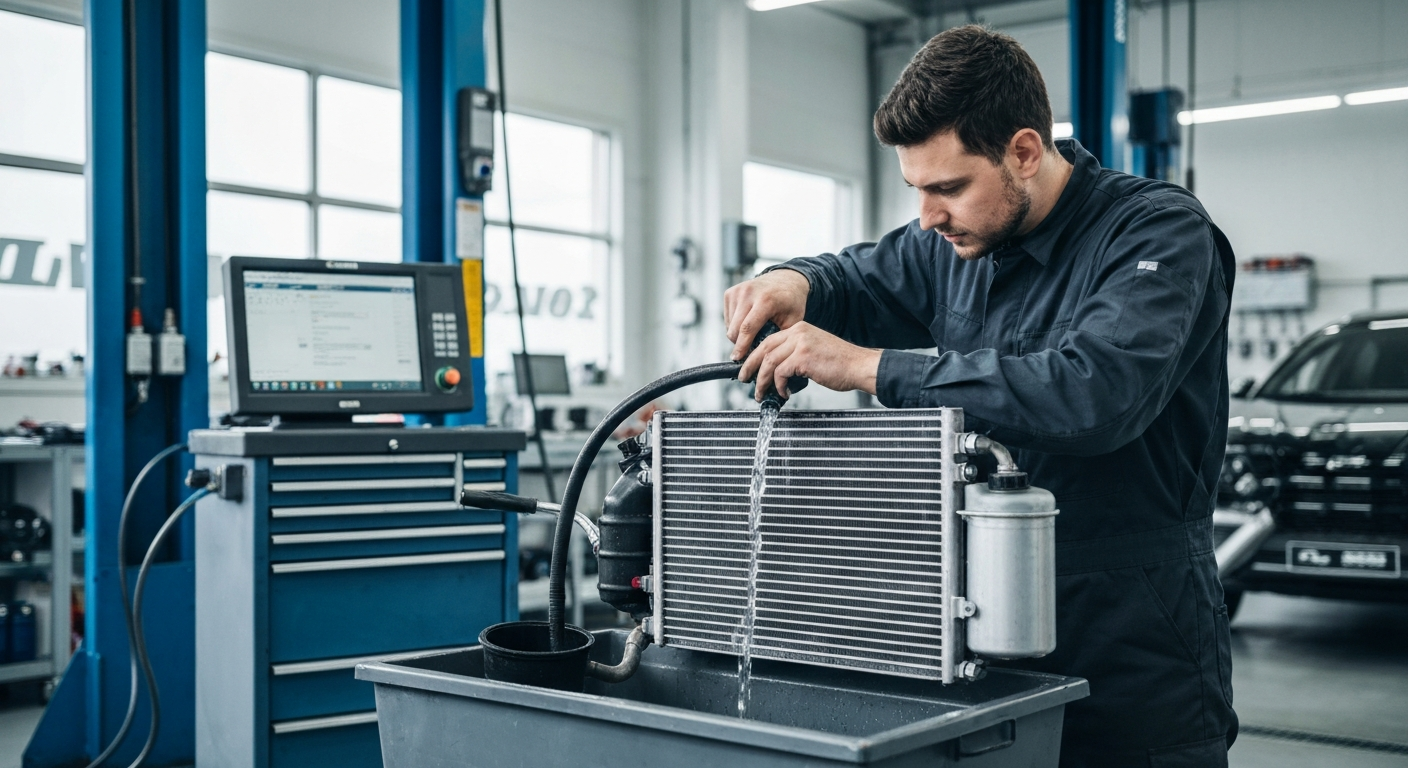
During Los Angeles summers, when temperatures regularly exceed 95°F, your vehicle’s cooling system works overtime to prevent engine damage. A coolant flush—also called a radiator flush—is one of the most important preventive maintenance services you can perform. At Hyperion Auto Repair, our ASE-certified technicians have been protecting Los Angeles drivers’ engines for over 40 years with expert coolant flush service.
This comprehensive guide covers everything you need to know about coolant flush service: what it is, why it matters, when to service your vehicle, typical costs in Los Angeles, and how our free multi-point inspection can identify cooling system problems before they become expensive repairs.
What Is a Coolant Flush?
A coolant flush (also called a radiator flush) is a preventive maintenance service that removes old coolant from your engine’s cooling system and replaces it with fresh, clean coolant. This process typically involves:
- Draining all old coolant from the radiator, engine block, and hoses
- Flushing the system with specialized fluid to remove sediment and contamination
- Refilling the system with new, manufacturer-recommended coolant
- Testing the system for proper pressure and performance
Coolant Flush vs. Coolant Change
Many vehicle owners confuse a coolant flush with a simple coolant top-up or change. Here’s the critical difference:
- Coolant Top-Up: Adding coolant to maintain fluid level (not a full service)
- Coolant Change: Draining and refilling coolant without flushing contamination
- Coolant Flush: Complete system cleaning, flushing of sediment, and refilling with fresh coolant
A full flush is far superior because it removes years of accumulated rust, mineral deposits, and contaminants that a simple change cannot address.
Why Is Coolant Flush Important?
Many Los Angeles drivers underestimate the importance of coolant service. Your vehicle’s coolant system is critical to engine longevity and performance. Here’s why regular flushing matters:
Engine Overheating Prevention
Coolant regulates engine temperature by absorbing heat from the engine and releasing it through the radiator. In Los Angeles’ hot climate, a properly maintained cooling system is essential. When coolant degrades or becomes contaminated, it loses efficiency and cannot properly cool your engine, leading to:
- Engine overheating and permanent damage
- Warped cylinder heads (often requiring $500-$2,000+ in repairs)
- Blown head gaskets
- Complete engine failure requiring full replacement ($3,000-$8,000+)
Corrosion and Rust Prevention
Over time, coolant breaks down and becomes acidic. Old coolant also accumulates:
- Rust particles from the radiator and engine block
- Sediment and mineral deposits
- Dissolved metal particles from gaskets and seals
These contaminants cause corrosion inside your cooling system, leading to radiator leaks, heater core failure, and water pump damage. A regular flush removes these damaging substances before they cause expensive failures.
Water Pump Maintenance
Your water pump circulates coolant throughout the engine and is integral to the cooling system. Sediment buildup and acidic coolant damage the water pump’s internal seals and bearings. A coolant flush protects the water pump by:
- Removing sediment that damages internal components
- Maintaining proper lubrication of pump bearings
- Extending water pump lifespan (typical cost to replace: $300-$600)
Extended Engine Longevity
Regular coolant service is pure preventive maintenance ROI. The cost of a coolant flush ($150-$250) is a tiny fraction of potential engine repair costs ($3,000-$10,000+). One of the best ways to extend your vehicle’s lifespan is to maintain the cooling system on schedule.
Coolant Flush Intervals: When Should You Service?
The age of your vehicle and its coolant type determine service intervals. Most manufacturers recommend flushing every 30,000-50,000 miles or every 2-5 years, whichever comes first.
Manufacturer Recommendations
Service intervals vary by vehicle:
- Domestic Vehicles (Ford, Chevy, Dodge): Every 30,000 miles or 2 years (traditional coolant) / 100,000 miles or 5 years (extended-life)
- Toyota/Lexus: Every 100,000 miles or 10 years with Toyota coolant (pink or red)
- Honda: Every 100,000 miles or 10 years with Honda HG coolant
- BMW/Mercedes/Audi: Every 4 years or 50,000 miles (German coolants are more aggressive)
Your vehicle’s maintenance schedule in the owner’s manual is your most reliable guide. If you’ve lost your manual, our ASE-certified technicians can check your specific vehicle’s requirements during a free multi-point inspection.
Signs Your Coolant Needs Service Now
Don’t wait for the scheduled interval if you notice these warning signs:
- Coolant Color Change: Coolant should be bright (red, green, pink, or blue). Brownish, rusty, or cloudy coolant indicates breakdown and contamination
- Temperature Gauge Rising: If your temperature gauge climbs higher than normal, your cooling system isn’t working effectively
- Coolant Odor Change: Fresh coolant has a slight sweet smell. A burnt or metallic smell indicates chemical breakdown
- Visible Corrosion: White or greenish deposits around the radiator cap indicate corrosion inside the system
- Coolant Leaks: Puddles under your vehicle or low coolant warnings on your dashboard require immediate attention
Coolant Flush Service Process
Understanding what professional technicians do during a flush helps you appreciate the value of quality service. Here’s what a complete coolant flush includes:
Professional Inspection
Before flushing, our technicians perform:
- Visual inspection of radiator, hoses, water pump, and thermostat housing
- Checking for visible leaks, corrosion, or damage
- Testing coolant condition with test strips to assess contamination level
- System pressure test (using 15 PSI) to check for leaks
- Assessment of overall cooling system health
Fluid Removal and Replacement
The flushing process includes:
- Locating and opening the radiator drain petcock
- Safely draining all old coolant (typically 4-6 gallons depending on vehicle)
- Running distilled water through the system to rinse out remaining contaminants
- Refilling with the correct coolant type for your vehicle (typically 50/50 mix with distilled water)
- Bleeding air from the system to prevent air pockets
System Testing and Verification
After flushing and refilling, proper service includes:
- Running the engine and monitoring temperature gauge for proper operation
- Checking all hose connections for leaks
- Pressure testing the cap and radiator (should hold pressure)
- Verifying the thermostat opens at proper temperature
- Test drive to confirm cooling system functions properly
Hyperion Auto Repair includes all these steps in our coolant flush service. We provide a complete cooling system inspection as part of our free multi-point inspection service.
Coolant Flush Cost in Los Angeles
Coolant flush service is affordable preventive maintenance. Here’s what to expect for pricing in Los Angeles:
Typical Price Range
A professional coolant flush typically costs between $150-$250 in Los Angeles, including:
- Labor: 1-1.5 hours ($80-$120/hour typical shop rate)
- Coolant Fluid: $30-$60 (depending on coolant type and vehicle size)
- Supplies: Distilled water and flushing materials ($10-$20)
Factors Affecting Your Final Cost
Several variables impact the total price:
- Vehicle Type: Luxury imports (BMW, Mercedes, Audi) may cost 20-30% more due to system complexity and coolant specifications
- System Condition: Severely contaminated systems may require additional flushing passes ($50-$100 extra)
- Coolant Type Required: Extended-life or specialty coolants cost more than conventional coolant
- Additional Repairs: If your technician identifies leaking hoses, thermostat problems, or water pump issues, repairs will add to the cost
Cost vs. Prevention
The real cost analysis shows why skipping coolant service is false economy:
- Coolant flush: $150-$250
- Radiator replacement: $400-$800
- Water pump replacement: $300-$600
- Head gasket repair (engine overheating): $500-$2,000
- Engine replacement (complete failure): $3,000-$8,000+
One missed coolant flush could lead to a $5,000+ repair bill. At Hyperion Auto Repair, we recommend service on schedule because prevention is always cheaper than repair.
Common Coolant Types and Selection
Not all coolants are created equal. Using the wrong type for your vehicle can cause problems.
Conventional vs. Extended-Life Coolant
Coolants come in two main formulations:
- Conventional Coolant: Green or orange colored, lasts 30,000 miles or 2 years, less expensive ($20-$30/gallon)
- Extended-Life Coolant: Red, pink, or blue colored, lasts 100,000 miles or 5+ years, costs more ($40-$80/gallon) but saves money long-term
Most newer vehicles (2000+) use extended-life coolants. Check your owner’s manual or ask our technicians which type your vehicle requires. Never mix coolant types—mixing conventional and extended-life coolants can cause chemical reactions and sludge formation.
OEM vs. Aftermarket Coolant
Some manufacturers require their own coolant formulations:
- OEM Coolant: Made to exact specifications, often required for warranty compliance
- Aftermarket Equivalent: Third-party brands that meet the same specifications, sometimes cheaper
At Hyperion Auto Repair, we use OEM-equivalent coolants that meet or exceed your manufacturer’s specifications. Our technicians will verify the correct coolant type for your vehicle before service.
Warning Signs of Cooling System Problems
Knowing these warning signs helps you catch cooling system problems before they cause engine damage:
Overheating Symptoms
Stop driving immediately if you notice:
- Temperature Gauge in the Red: Normal operating temperature is 180-210°F (shown in the middle of the gauge on most vehicles)
- Steam from Under the Hood: Never open the radiator when hot—steam can cause serious burns
- Burning Smell: A sweet burnt smell often indicates coolant leaking onto hot engine parts
- Dashboard Warning Lights: Temperature warning lights indicate immediate cooling system failure
Leaks and Fluid Issues
Inspect under your vehicle regularly for:
- Coolant Puddles: Bright colored (green, pink, red, or blue) fluid under your vehicle indicates a leak
- Low Coolant Warnings: Modern vehicles alert you when coolant level drops
- Sweet Smell Without Heat: Coolant has a distinctive sweet smell even when the engine is cool
Any cooling system leak requires immediate professional attention. Our free multi-point inspection will identify leaks and recommend repairs.
Hyperion Auto Repair: Your Local Coolant Flush Experts
For over 40 years, Hyperion Auto Repair has served Los Angeles drivers with professional, honest auto service. Our approach to coolant flush service reflects our commitment to your vehicle’s longevity:
- ASE-Certified Technicians: All our technicians maintain current ASE certification in cooling system service
- Free Multi-Point Inspection: Every service includes a comprehensive inspection to catch potential problems early
- Warranty on All Repairs: We stand behind our work with a full warranty on parts and labor
- OEM-Quality Parts: We use manufacturer-equivalent coolants and components that meet or exceed specifications
- Transparent Pricing: No surprises—we explain what needs service and why before starting work
Whether you need a scheduled coolant flush as part of your vehicle’s preventive maintenance or have cooling system concerns, our technicians are ready to help. We also specialize in related cooling system services including radiator repair, water pump replacement, and thermostat service.
FAQ: Coolant Flush Common Questions
Can I flush my coolant myself?
While DIY coolant flushes are theoretically possible, we recommend professional service. Here’s why: improper drainage can leave air pockets in the system, using wrong coolant type can cause sludge formation, and mishandling hot coolant creates burn risks. Professional service ensures the job is done correctly.
How long does a coolant flush take?
A complete professional coolant flush typically takes 1-1.5 hours, including inspection, flushing, refilling, and testing. Some vehicles with complex cooling systems may require additional time.
What’s the difference between a flush and a fill?
A “fill” simply tops up your coolant level to the maximum mark. A “flush” completely removes old coolant, cleans the system, and refills it with fresh fluid. Flushes provide vastly superior protection and are the recommended service.
Is a coolant flush really necessary, or is it a scam?
Coolant flush is not a scam—it’s genuine preventive maintenance recommended by every vehicle manufacturer. Coolant degrades over time and becomes contaminated, reducing its ability to protect your engine. Regular flushing prevents expensive repairs and extends engine life.
Should I flush my new car’s coolant?
Not immediately, but yes according to the manufacturer’s schedule. New vehicles typically don’t need service until 30,000-50,000 miles or 2-3 years, depending on the coolant type. Always follow your owner’s manual recommendation.
What if my vehicle is overheating right now?
If your engine is overheating, do not attempt a coolant flush yourself. Stop driving, allow the engine to cool completely (at least 30 minutes), and have a professional inspect your cooling system immediately. Overheating indicates a serious problem that could be:
- Low coolant from a leak
- Thermostat failure
- Water pump failure
- Radiator blockage
Professional diagnostics are essential to identify the exact problem.
Conclusion: Schedule Your Coolant Flush Today
Your vehicle’s cooling system is critical to engine longevity and performance. A regular coolant flush is one of the most cost-effective preventive maintenance services you can perform, protecting against thousands in potential repair costs.
If your vehicle is due for coolant service, or if you’ve noticed any cooling system symptoms, contact Hyperion Auto Repair today. We’ll provide a free multi-point inspection to assess your cooling system’s condition and recommend the right service for your vehicle.
Contact Hyperion Auto Repair:
- 📍 1845 Hyperion Avenue, Los Angeles, CA 90027
- 📞 (323) 667-3180
- ⏰ We’re open Monday-Friday for your convenience
We also offer related services including wheel alignment, brake service, and tire rotation and balancing—all the maintenance your vehicle needs to run safely and efficiently.
Trust Hyperion Auto Repair with your vehicle’s cooling system. Professional Auto Care You Can Trust®