
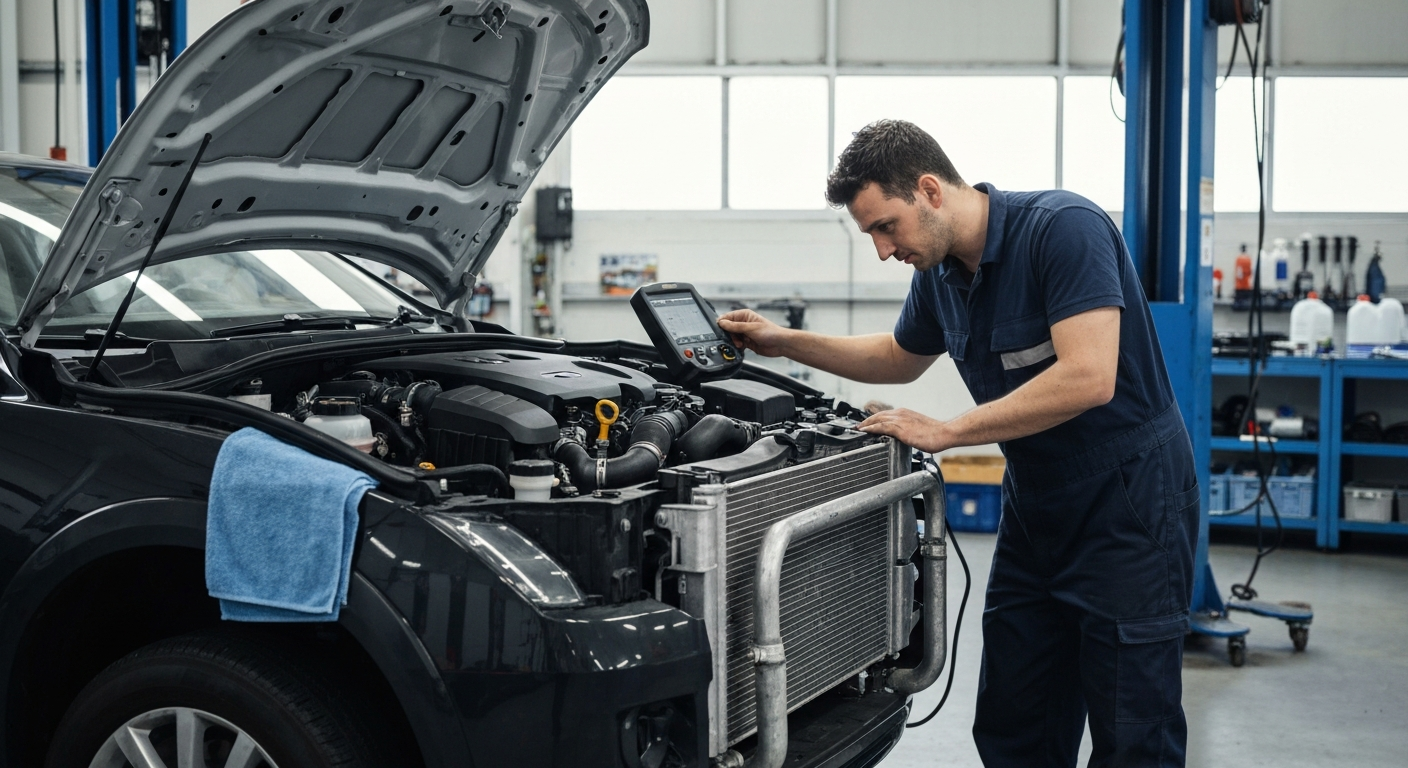
During Los Angeles summers, when temperatures soar above 95°F, your vehicle’s cooling system works overtime to regulate engine temperature and prevent overheating—one of the most serious and costly engine problems. Without proper maintenance, a failing cooling system can lead to complete engine failure, requiring replacement costs of $3,000-$5,000 or more.
This comprehensive guide covers everything Los Angeles drivers need to know about cooling system service, maintenance intervals, warning signs, costs, and why professional ASE-certified service matters. Whether you’re experiencing warning signs or just want to prevent problems, understanding your cooling system is critical to vehicle safety and longevity.
What Is a Cooling System and Why It Matters
Key Components of Your Cooling System
Your vehicle’s cooling system works as an integrated unit to keep your engine at the optimal operating temperature. Understanding its key components helps you appreciate why professional service is essential:
- Radiator – The primary heat exchanger that dissipates engine heat from hot coolant into the surrounding air
- Water Pump – Circulates coolant throughout the engine block and back to the radiator
- Thermostat – Regulates coolant temperature by controlling flow based on engine temperature
- Cooling Fans – Electric or mechanical fans improve heat dissipation when the vehicle slows or idles
- Hoses and Clamps – Transport coolant between components; must be replaced as they deteriorate
- Expansion Tank – Manages coolant pressure and provides a reservoir for expansion as coolant heats
- Antifreeze/Coolant – The heat transfer fluid that protects against freezing and boiling; typically rated to protect from -34°F to 256°F
Why Regular Cooling System Service Matters
Your cooling system is one of the most critical systems in your vehicle. Regular service provides multiple benefits:
- Prevents engine overheating and catastrophic damage – Overheating can warp cylinder heads, damage gaskets, and crack engine blocks
- Extends engine life and reliability – A well-maintained cooling system keeps your engine at optimal temperature, reducing stress and wear
- Maintains vehicle safety and performance – Proper cooling is essential for safe driving and optimal fuel efficiency
- Protects against corrosion and rust – Quality coolant contains inhibitors that protect internal engine components
- Saves money on major engine repairs – Preventative service costs far less than engine repair or replacement
Warning Signs Your Cooling System Needs Service
Don’t ignore these critical warning signs that indicate your cooling system needs immediate professional attention:
- Engine temperature gauge reading hot or fluctuating – A gauge in the red zone indicates immediate danger
- Coolant leaks or puddles under vehicle – Green, pink, orange, or blue liquid under your car signals a leak
- White smoke billowing from engine bay – This typically indicates coolant burning in the engine, suggesting a serious internal problem
- Strong sweet or fruity odor – Coolant has a distinctive sweet smell; any odor suggests a leak or other issue
- Reduced cooling performance – If your AC isn’t cooling as well, the cooling system may be compromised
- Warning light on dashboard – Temperature warning lights require immediate attention; stop driving when you see one
- Overheating after short drives – Your engine shouldn’t overheat on normal city streets; this signals a problem
- Visible corrosion on radiator or connections – White or greenish crusty deposits indicate coolant leaks or system degradation
Important: If you notice any of these warning signs, stop driving and get professional service immediately. Continuing to drive with a failing cooling system risks catastrophic engine damage.
Types of Cooling System Services
Cooling System Inspection and Diagnostic
Professional diagnostic service is the foundation of proper cooling system care. A comprehensive inspection includes:
- Visual inspection of radiator, hoses, clamps, and all connections
- Pressure test to identify leaks before they cause problems
- Coolant level and condition assessment (checking for contamination or degradation)
- Fan function test to ensure cooling fans engage properly
- Thermostat operation verification
Many shops offer diagnostic services as part of routine maintenance or as a standalone service to identify potential problems.
Coolant Flush and Refill
A coolant flush service is one of the most important preventative maintenance procedures. Over time, coolant loses its ability to regulate temperature and protect internal components. The process includes:
- Complete drain of old, degraded coolant
- System flush with specialized cleaning solution to remove deposits and contamination
- Refill with manufacturer-recommended coolant type
- Proper mixing of antifreeze concentration (typically 50/50 with water)
- System bleeding to remove air pockets and pressure testing to verify function
Radiator Repair and Replacement
When radiator problems develop, professional repair options depend on the damage:
- Leak repair and sealing – Small leaks can sometimes be sealed professionally
- Radiator core replacement – Core rebuilding for older vehicles
- Complete radiator replacement – The most common solution for failed radiators
- OEM vs. aftermarket options – We recommend OEM parts for proper fit and longevity
Water Pump Replacement
The water pump is critical to coolant circulation. When it fails, immediate replacement is necessary:
- Assessment of pump function through pressure and flow testing
- Seal and bearing wear evaluation during diagnostic
- Professional replacement with OEM parts
- Timing belt considerations (some vehicles require timing belt removal for access)
Thermostat Replacement
A stuck or failed thermostat can cause overheating or insufficient warming:
- Temperature regulation assessment
- Diagnosis of stuck thermostats (open or closed)
- Replacement with OEM thermostat and gasket
- System rebalancing and testing
Hose and Connection Inspection
Hoses deteriorate over time and can fail suddenly. Professional inspection catches problems early:
- Visual inspection for cracks, splits, and soft spots
- Clamp tightness verification
- Hose replacement when showing signs of age
- Clamp replacement or upgrade to prevent future leaks
Cooling System Service Cost in Los Angeles
Understanding typical costs helps you budget for necessary service. Los Angeles cooling system service costs vary based on vehicle make/model, component condition, and parts availability. German luxury cars and newer hybrids may cost more due to specialized components:
| Service | Typical Cost |
|---|---|
| Cooling System Inspection and Diagnostic | $80-$150 (often waived with service) |
| Coolant Flush and Refill | $150-$250 (includes labor and coolant) |
| Radiator Repair (leak sealing) | $100-$300 |
| Radiator Replacement | $400-$900 (parts and labor) |
| Water Pump Replacement | $300-$750 |
| Thermostat Replacement | $150-$400 |
| Hose Replacement (per hose) | $50-$150 |
Pro tip: Regular maintenance (like a coolant flush every 30,000-60,000 miles) typically costs $150-$250 and prevents expensive repairs that can cost $400-$900 or more. Preventative service is a smart investment.
Cooling System Maintenance Schedule and Intervals
Manufacturer Recommendations
Your vehicle’s manufacturer specifies maintenance intervals based on engineering and durability testing:
- Coolant replacement every 30,000-60,000 miles – Most manufacturers recommend this interval for traditional coolant
- Extended-life coolant – Some modern vehicles use premium coolant rated for 100,000+ miles
- Always check your owner’s manual – Specific intervals vary by vehicle make/model and year
- Climate and driving conditions affect maintenance needs – Stop-and-go city driving and towing require more frequent checks
Preventative Maintenance Checklist
Follow this maintenance schedule to keep your cooling system in peak condition:
- Every oil change: Check coolant level and condition with your technician
- Every 6 months: Inspect hoses and connections for cracks, leaks, or deterioration
- Every 15,000 miles: Professional cooling system inspection (especially in Los Angeles heat)
- Every 30,000-60,000 miles: Coolant flush and refill according to manufacturer specs
- Every 2-3 years: Pressure test for leaks and system integrity
Los Angeles Climate Considerations
Southern California’s climate presents unique cooling system challenges:
- Summer heat requires more frequent checks – Temperatures above 95°F stress your cooling system
- Desert driving accelerates coolant degradation – Extreme heat breaks down coolant faster
- Mountain driving with elevation changes stresses cooling system – High altitude and elevation changes require more cooling capacity
- Consider more frequent inspections – Many Los Angeles mechanics recommend inspections every 15,000 miles in summer months, rather than waiting 30,000 miles
Professional Cooling System Service Process
At Hyperion Auto Repair, our ASE-certified technicians follow a comprehensive service process to ensure your cooling system receives proper care:
- Step 1: Comprehensive diagnostic inspection – We start with a thorough visual and pressure test inspection
- Step 2: Visual assessment of all components – Radiator, water pump, thermostat, hoses, clamps, and fans are examined
- Step 3: Pressure and temperature testing – Advanced equipment tests system pressure and temperature response
- Step 4: Component evaluation – We assess condition and remaining life of key parts
- Step 5: Transparent recommendation – You receive a clear recommendation of needed services with costs
- Step 6: Professional execution – Service is performed with OEM parts and proper procedures
- Step 7: Final system testing – Post-service testing verifies proper operation
- Step 8: Detailed service report – You receive documentation of work performed and maintenance guidance
Why Choose ASE-Certified Technicians for Cooling System Service
ASE Certification Matters
Certified technicians have the training and knowledge to properly diagnose and repair cooling system problems:
- Rigorous training and testing requirements – ASE certification requires passing comprehensive exams
- Current knowledge of cooling system technology – Certified technicians stay current with evolving vehicle systems
- Understanding of different vehicle systems – They understand how cooling relates to electrical, engine, and transmission systems
- Commitment to professional standards – ASE-certified technicians follow industry best practices
What to Look for in a Service Shop
When choosing a cooling system service shop, ensure they offer:
- ASE-certified technicians with cooling system expertise
- Advanced diagnostic equipment for accurate diagnosis
- OEM or quality replacement parts with warranties
- Clear warranty on parts and labor
- Transparent pricing and detailed communication
- Free multi-point inspections to catch problems early
DIY vs. Professional Cooling System Service
While some vehicle maintenance can be handled by DIY enthusiasts, cooling system service requires professional expertise:
- OK for DIY: Checking coolant level – You can check and top off coolant between professional services
- Professional only: Flush, replacements, and repairs – These services require specialized knowledge and equipment
- Why professional is important: Improper coolant mixing ratios, pressure release hazards, and system damage risks make DIY work dangerous and potentially costly
Safety note: Never open a cooling system when the engine is hot. Pressurized coolant can cause severe burns. Always let the engine cool for at least 30 minutes before working on the cooling system.
How to Extend Your Cooling System Life
Simple practices help your cooling system last longer and perform better:
- Use manufacturer-recommended coolant type – Don’t mix coolant types; stick with what your owner’s manual specifies
- Never ignore overheating warning signs – Address problems immediately before they cause engine damage
- Keep coolant level topped off – Check between services and top off as needed (let engine cool first)
- Replace hoses before they fail – Don’t wait for leaks; replace aging hoses proactively
- Drive smoothly – Avoid extreme temperature fluctuations and aggressive acceleration
- Regular maintenance prevents costly repairs – A $200 coolant flush prevents $3,000 engine repairs
- Keep cooling fans clean – Dust and debris buildup reduces cooling efficiency
- Address small issues immediately – A small leak caught early costs far less than waiting for system failure
Frequently Asked Questions About Cooling System Service
How often should I have my cooling system serviced?
Follow your vehicle manufacturer’s recommendations, typically every 30,000-60,000 miles. Some modern vehicles use extended-life coolant lasting 100,000+ miles. Check your owner’s manual for specifics. In Los Angeles’ hot climate, more frequent inspections (every 15,000 miles) are recommended to catch problems early.
What type of coolant should I use?
Always use the coolant type specified in your owner’s manual. Different vehicles require different coolant colors and formulations (green, pink, orange, or blue). Using the wrong type can damage your cooling system, cause compatibility issues, and void your warranty.
Can I drive with a coolant leak?
No. Driving with a coolant leak can cause overheating and catastrophic engine damage. If you notice a leak (green, pink, or orange liquid under your car), stop driving and get professional service immediately. The cost of a small repair now is far less than engine replacement.
What does white smoke from my engine mean?
White smoke from your engine typically indicates coolant is burning in the engine, suggesting a head gasket failure, crack in the engine block, or other serious internal problem. This requires immediate professional diagnosis to prevent further damage.
How much does a coolant flush cost?
A coolant flush typically costs $150-$250 in Los Angeles, depending on your vehicle and the type of coolant used. This includes labor, coolant, and system flushing. Many shops include a free diagnostic with this service.
Is preventative cooling system maintenance really necessary?
Yes. Preventative maintenance costs far less than engine repairs. Ignoring cooling system service can lead to overheating, engine damage, and repair bills exceeding $1,000-$3,000 or more. A $200 coolant flush is significantly cheaper than an engine repair or replacement.
Conclusion: Protect Your Engine with Professional Cooling System Service
Your vehicle’s cooling system is critical to engine health and longevity. Regular professional service, timely maintenance, and prompt attention to warning signs keep your cooling system operating efficiently and your engine protected under all driving conditions—especially during Los Angeles’ hot summers.
Don’t wait for your cooling system to fail. Contact Hyperion Auto Repair today for expert cooling system service. Our ASE-certified technicians provide comprehensive inspections, professional repairs, and transparent pricing. We offer a free multi-point inspection to identify any cooling system issues before they become major problems.
Hyperion Auto Repair
1845 Hyperion Avenue, Los Angeles, CA 90027
Phone: (323) 667-3180
Family-owned since 1985 • ASE-Certified Technicians • Warranty on All Repairs