
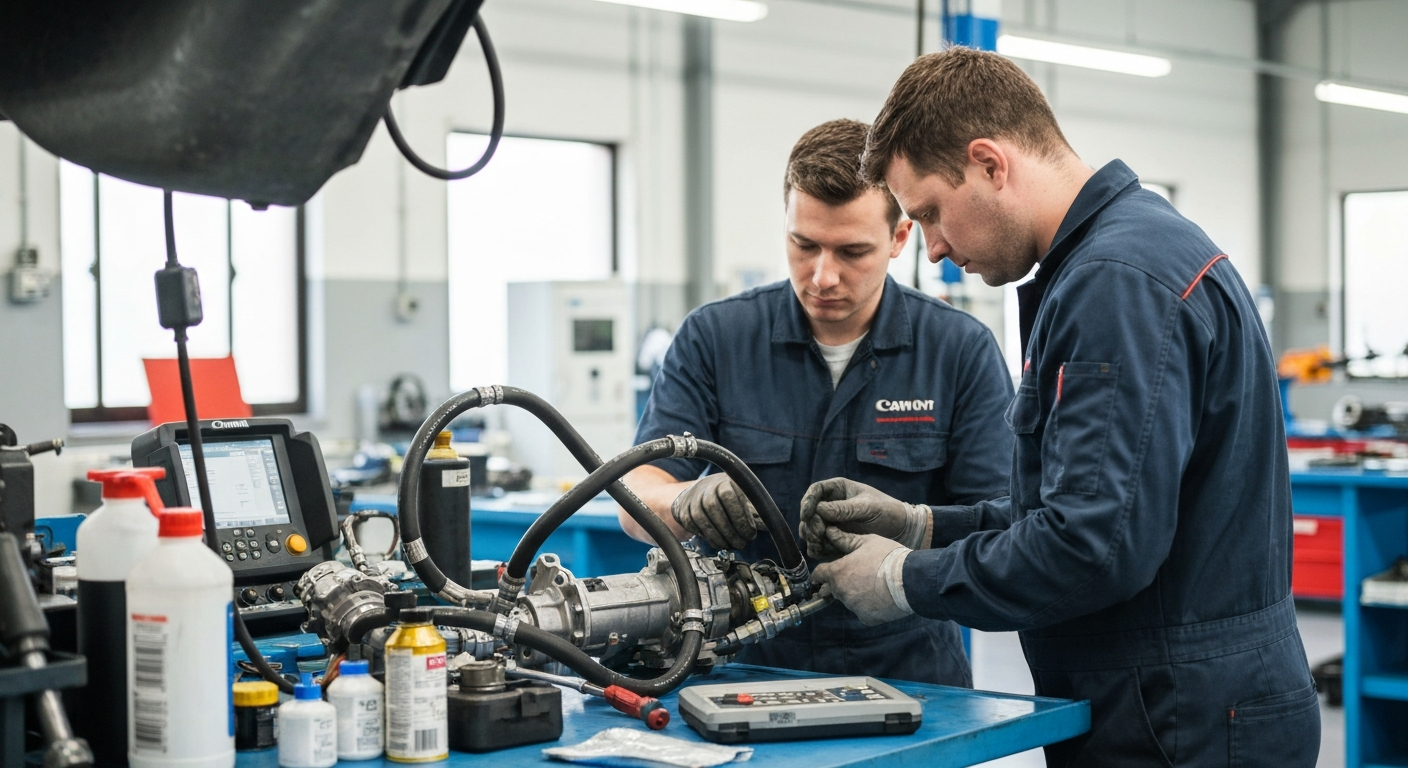
When you turn your steering wheel, you expect smooth, responsive control. Power steering makes this possible—reducing the effort needed to turn the wheels by up to 95%. But when your power steering system fails, something as simple as parking becomes exhausting, and your vehicle becomes unsafe to drive.
If you’ve noticed a heavy steering wheel, whining sounds, or difficulty turning, you likely need power steering repair. This complete guide explains what’s wrong, how much it costs, and why professional ASE-certified service matters for your safety.
Why Power Steering Repair Matters
Safety Critical System
Power steering isn’t just a convenience feature—it’s essential for vehicle control and safety. When power steering fails, you lose the mechanical advantage that allows effortless steering.
A modern power steering pump reduces steering effort by approximately 90-95% compared to manual steering. This means without it, parking and low-speed maneuvers require significant physical force. More importantly, on the highway, steering becomes sluggish and unpredictable, creating dangerous driving conditions.
Complete steering failure is rare but serious. A partially failed system, however, is common in older vehicles or those with high mileage. Either way, professional diagnosis is essential.
Los Angeles Driving Conditions
Los Angeles drivers face unique challenges for steering systems. The combination of:
- Frequent stop-and-go traffic in crowded streets stresses the hydraulic pump
- Hilly terrain (particularly in neighborhoods like Los Feliz, Silver Lake, and Atwater Village) requires constant steering adjustments
- Long highway drives on freeways cause systems to work continuously
- Heat accelerates fluid degradation in summer months
These conditions mean LA drivers often need power steering service more frequently than those in gentler climates.
Common Power Steering Problems & Warning Signs
Understanding these warning signs helps you catch problems early:
Heavy or Stiff Steering Wheel
The most common symptom is difficulty turning. When your steering wheel feels noticeably heavier than normal, especially at low speeds or when parking, your power steering system is struggling.
Causes:
- Low power steering fluid (most common)
- Pump cavitation or failure
- Worn serpentine belt slipping
- Blockage in hoses or lines
Whining or Squealing Noises
A high-pitched whine when turning is usually the pump cavitating—sucking air instead of fluid. This indicates low fluid or pump wear.
Why it matters: This noise precedes complete failure. You have days to weeks before the system fails completely. Don’t ignore it.
Steering Wheel Vibration
When your steering wheel vibrates or shakes, especially at highway speeds, multiple systems could be involved. Wheel alignment service can help rule out alignment issues, but vibration may also indicate:
- Bent or damaged tie rods
- Worn steering components
- Unbalanced wheels
- Sometimes related to suspension problems, which are closely connected to steering
Leaking Power Steering Fluid
You’ll notice pink or reddish fluid under your car (power steering fluid is distinctively colored). Leaks can occur at:
- Hose connections
- Pump seals
- Steering rack seals
- Pressure switch
Important: Low fluid leads to rapid pump damage. A small leak today becomes a major repair tomorrow.
Difficulty Turning or Steering Pull
Your steering feels slow to respond, or the wheel pulls to one side despite proper alignment. This suggests:
- Pump failure or weakness
- Internal rack damage
- Hose blockage
- Seized components
Types of Power Steering Repairs
The specific repair depends on diagnosis. Here are the main categories:
Power Steering Fluid Service
What it is: Complete flush and refill of the hydraulic fluid
Why needed: Fluid degrades over time, losing its lubricating and hydraulic properties
Cost: $150–$300
Recommended interval: Every 30,000–50,000 miles, or per manufacturer specs. City driving like Los Angeles traffic may require more frequent service.
Power Steering Hose Replacement
What it is: Removal and replacement of cracked, split, or leaking hoses
Why needed: Hoses wear from vibration and temperature changes
Cost: $200–$400 per hose (replacement includes new hose and fittings)
Common failure points: High-pressure lines near the pump, connections at the rack, and areas near sharp engine components
Power Steering Pump Replacement
What it is: Complete replacement of the hydraulic pump
Why needed: Internal wear makes the pump unable to generate pressure, or seals have failed
Cost: $400–$800 (parts and labor)
Signs of pump failure:
- Continuous whining noise
- Complete loss of power steering assistance
- Pump doesn’t prime even with fresh fluid
Steering Rack/Gearbox Repair or Replacement
What it is: The steering rack is the mechanism that converts pump pressure into wheel movement
Why needed: Internal seals fail, or the rack is damaged from collision or wear
Cost: $300–$1,200+ (can be extensive if internal work is needed)
This is complex: Steering rack work requires specialized equipment and expertise. This is where certified ASE technicians prove their value.
Tie Rod Replacement
What it is: Inner and outer tie rods connect the steering rack to your wheels
Why needed: Worn ball joints in tie rods make steering loose or cause uneven tire wear
Cost: $150–$400 per side, depending on inner vs. outer rod
Related service: Tie rod replacement often includes wheel alignment service to ensure proper steering geometry.
Power Steering Repair Costs in Los Angeles
Cost Breakdown by Service Type
Here’s what you can expect to pay for different repairs in the Los Angeles area:
| Repair Type | Estimated Cost |
|---|---|
| Fluid flush and refill | $150–$300 |
| Hose replacement (single) | $200–$400 |
| Pressure hose kit | $250–$500 |
| Power steering pump | $400–$800 |
| Steering rack repair/replacement | $300–$1,200+ |
| Tie rod replacement (per side) | $150–$400 |
| Belt and pulley service | $100–$250 |
Factors Affecting Price
Several variables influence the final cost:
Vehicle make and model: European and imported vehicles often cost more to repair due to parts availability and labor complexity.
Part availability: Some pumps or racks must be ordered, extending labor time.
Extent of damage: A small leak differs from complete system failure in both complexity and cost.
Additional repairs needed: If your steering is misaligned due to a collision, you’ll need brake repair or suspension work alongside steering service.
Why Hyperion offers free inspections: We diagnose the exact problem before giving you a quote. No surprises.
Professional Steering Repair Process
Comprehensive Diagnosis
Our ASE-certified technicians follow a structured diagnostic process:
- Listen to your description – What sounds/feelings did you notice?
- Visual inspection – Check fluid levels, hose condition, and obvious leaks
- Fluid analysis – Examine color, consistency, and condition
- Pressure testing – Measure pump output with professional equipment
- Road test – Verify the problem under actual driving conditions
Fluid Check & Analysis
Power steering fluid should be:
- Color: Bright red or pink (ATF) or amber (synthetic)
- Clarity: Clear, not cloudy or dark
- Odor: Slightly sweet (burnt smell indicates overheating)
- Level: Between minimum and maximum marks
Degraded fluid is brown, dark, or burnt-smelling. This requires a complete flush.
System Pressure Testing
Professional technicians use pressure gauges to measure pump output. Normal power steering pressure is typically:
- Idle: 40–60 PSI
- Turning: 800–1,200 PSI
If pressure is low, the pump is failing. If pressure is high even at idle, the system may be restricted.
Visual Component Inspection
We check every connection, hose, and seal for:
- Cracks or splits
- Discoloration (indicates heat damage)
- Loose fittings
- Evidence of leaks
- Belt condition (a worn belt can’t drive the pump)
Road Test Verification
After repair, we take your vehicle for a test drive to confirm:
- Smooth steering without noise
- Proper power assist at all speeds
- No vibration or pulling
- Responsive feel that matches factory specs
Why Choose ASE-Certified Technicians
Expertise in Complex Systems
Modern power steering combines hydraulic and electronic components. Some systems include:
- Electronic power steering (EPS) with sensors
- Lane-keeping assist systems
- Steering angle sensors for traction control
These aren’t simple mechanical repairs. Misdiagnosis wastes money; improper repair can affect safety systems.
ASE Certification means:
- Technician passed comprehensive exams on steering systems
- Current knowledge of emerging technologies
- Commitment to ongoing professional development
Proper Equipment & Tools
Steering repair requires specialized equipment:
- Pressure testing gauges
- Steering angle alignment equipment
- Computer diagnostic scanners
- Proper tool sets for pump and rack removal
- Fluid evacuation and refill systems
DIY or discount shops often lack this equipment, leading to incomplete repairs.
Warranty & Guarantee
Hyperion Auto Repair provides a warranty on all power steering repairs, giving you confidence that the job is done right. If the repaired component fails within the warranty period, we’ll fix it at no additional cost.
When to Seek Immediate Service
Emergency Situations
Complete steering loss while driving is rare but dangerous. If you experience:
- Sudden stiffness despite the engine running
- No power assist at all
- Steering locked up
Pull safely to the side of the road and call for professional assistance. Don’t attempt to drive home.
Warning Signs You Shouldn’t Ignore
These symptoms warrant urgent service (same day or next morning):
- Loss of power assist while driving
- Continuous steering noise
- Visible leaking fluid
- Steering wheel that’s suddenly very hard to turn
- Steering that feels loose or unresponsive
Power Steering System Maintenance Tips
Preventive maintenance extends system life and prevents costly repairs:
Regular Fluid Checks
Between service appointments, check your power steering fluid monthly:
- Park on level ground with the engine off
- Locate the power steering fluid reservoir (check your owner’s manual)
- Check the fluid level—it should be between the MIN and MAX marks
- Note the color and smell
- Top up if low (use the correct fluid type for your vehicle)
Recommended Service Intervals
Most manufacturers recommend:
- Standard conditions: Every 30,000–50,000 miles or 3 years
- Severe conditions (frequent towing, hot climates, city driving): Every 15,000–30,000 miles
Los Angeles drivers with frequent stop-and-go traffic should consider the severe interval.
Protecting Your System
Simple driving habits extend system life:
- Avoid extreme turning at low speeds – Excessive full-lock turning stresses the pump
- Let the system warm up – In cold weather, let the engine idle briefly before aggressive steering
- Don’t hold the steering wheel at full lock for more than a few seconds
- Keep the serpentine belt in good condition – The belt drives the pump, so monitor belt condition regularly
Hyperion Auto Repair: Your Local Steering Experts
Family-Owned Expertise Since 1985
Hyperion Auto Repair has served Los Angeles drivers for over 40 years. Our family-owned shop is dedicated to professional service and customer care. We’ve earned our reputation through honest diagnostics and quality repairs.
Free Multi-Point Inspections
We don’t charge for diagnosis. Bring your vehicle in, and our technicians will thoroughly inspect your steering system and explain exactly what’s needed. If you decide to repair elsewhere, that’s your choice—but we think our recommendations and pricing will convince you to stay.
ASE-Certified Technicians
Every repair at Hyperion is performed by ASE-certified technicians who understand power steering systems inside and out. Your vehicle is in qualified hands.
Warranty on All Repairs
We stand behind our work. All power steering repairs include a warranty period, so you have confidence in the repair.
Conclusion
Power steering repair is essential for your safety and vehicle control. Whether you need a simple fluid service or complex pump replacement, professional diagnosis ensures you’re not paying for unnecessary work.
If you’ve noticed any signs of power steering trouble—stiffness, noise, leaks, or difficulty turning—don’t wait. Complete steering failure can happen suddenly, leaving you stranded or in a dangerous situation.
Contact Hyperion Auto Repair today for your free power steering inspection:
📞 Phone: (323) 667-3180
📍 Address: 1845 Hyperion Avenue, Los Angeles, CA 90027
🌐 Schedule online or visit our location
Our ASE-certified technicians will diagnose the problem, explain your options, and provide a fair quote for repairs. With over 40 years serving Los Angeles, we’re your trusted local steering repair expert.
Did you know? Regular power steering maintenance can extend system life by 50,000+ miles. Our free inspection includes fluid analysis and system pressure testing—no obligation.