
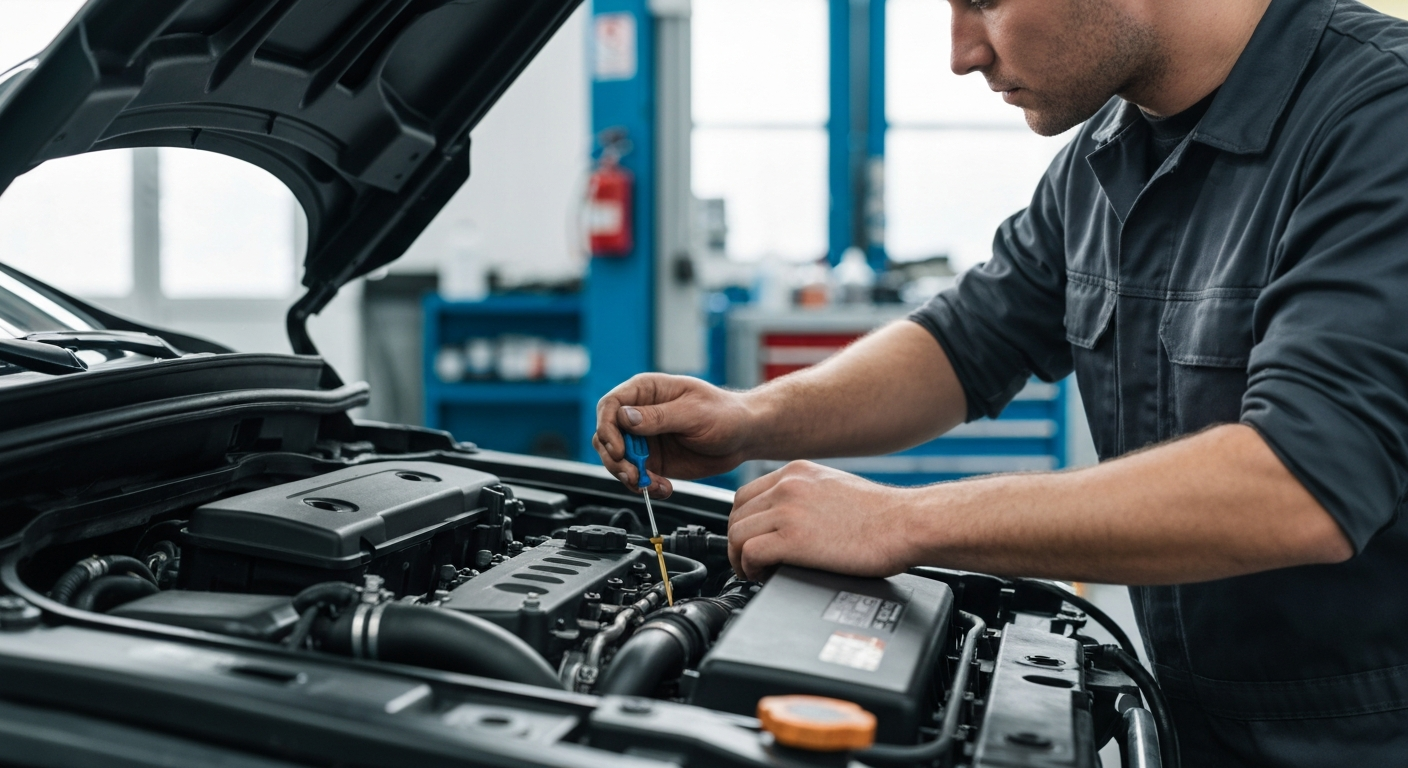
Transmission fluid is one of the most critical fluids in your vehicle. Yet many drivers ignore it until something catastrophically fails. Understanding when and why you need a transmission fluid change can save you thousands in repairs down the road.
In this comprehensive guide, we’ll cover everything you need to know: what transmission fluid does, warning signs you need service, the difference between a fluid change and a flush, typical costs, and why professional ASE-certified service matters. At Hyperion Auto Repair, we’ve been serving Los Angeles drivers since 1985 with expert transmission maintenance and our signature free multi-point inspections.
What is Transmission Fluid and What Does It Do?
Transmission fluid isn’t just a lubricant—it’s a complex hydraulic fluid performing multiple critical functions:
The Three Critical Jobs of Transmission Fluid
1. Lubrication
Reduces friction between transmission gears, clutches, and bands, preventing wear and extending component life.
2. Cooling
Transmissions generate extreme heat during operation. Transmission fluid circulates through a cooler to dissipate heat. Without proper cooling, temperatures spike, causing fluid degradation and transmission failure.
3. Hydraulic Pressure
Transmission fluid enables hydraulic pressure for gear shifts. When you shift gears, fluid pressure engages and disengages clutches and bands—without the right pressure, your transmission won’t shift smoothly.
How Transmission Fluid Degrades
Modern transmission fluids are engineered for extreme conditions, but they degrade through:
- Heat exposure during operation
- Friction from moving parts and gear teeth
- Oxidation (chemical breakdown)
- Contamination from metal shavings and debris
As fluid ages, it loses its ability to maintain pressure, protect against wear, and dissipate heat effectively.
Warning Signs You Need a Transmission Fluid Change
Don’t wait for complete transmission failure. These warning signs indicate it’s time for service:
1. Delayed Engagement
When shifting from Park to Drive or Reverse, your transmission should respond immediately. A delay indicates old, degraded fluid may be losing hydraulic pressure. This is one of the earliest warning signs.
2. Transmission Slipping
Your transmission “slips” when the engine revs but the vehicle doesn’t accelerate smoothly, or when it abruptly drops out of gear. This indicates the fluid has lost its ability to maintain proper pressure.
3. Burning Smell
A burnt, sweet-smelling odor from under your vehicle is a red flag. Overheated transmission fluid produces this distinctive smell. If you notice it, pull over safely and let the transmission cool before driving to a repair shop.
4. Transmission Leaks
Look under your vehicle after parking. Transmission fluid is typically bright red (automatic) or amber (manual). Leaks indicate seal or gasket failure—fluid levels drop, pressure decreases, and overheating accelerates.
5. Strange Noises
Grinding, whining, or clunking sounds from the transmission indicate worn internal components starved of proper lubrication. Once you hear these sounds, damage is usually underway.
6. Rough or Hard Shifts
If shifting feels abrupt, hesitant, or delayed, old fluid may not be providing smooth hydraulic pressure transitions between gears.
7. Check Engine Light or Transmission Warning Light
Modern vehicles have transmission fluid temperature sensors and pressure sensors. If these trigger a warning light, your vehicle is signaling a problem.
Action Item: If you notice any of these signs, schedule transmission service promptly. Many issues worsen rapidly once they start.
Transmission Fluid Change vs. Transmission Flush: What’s the Difference?
These terms are often confused, but they represent two different service approaches:
Transmission Fluid Change (Drain and Fill)
- The transmission pan is removed, old fluid is drained
- The pan filter is replaced
- New transmission fluid is added to the proper level
- Typically removes 50-70% of old fluid
- Cost: $150-$300
- Time: 1-2 hours
Transmission Flush
- Specialized equipment connects to transmission cooler lines
- Old fluid is completely evacuated and replaced with new fluid
- 100% fluid replacement occurs
- Includes fresh filter replacement
- Cost: $300-$500+
- Time: 2-3 hours
Which One Do You Need?
The difference comes down to your vehicle’s condition and the manufacturer’s recommendation:
- Fluid Change is typically recommended for routine maintenance on the manufacturer’s schedule
- Transmission Flush is often recommended if the fluid is significantly degraded, after high-heat towing, or if transmission problems are developing
Always check your owner’s manual for your vehicle’s specific requirements. A professional technician can inspect your current fluid condition and recommend the appropriate service.
How Often Should You Service Your Transmission Fluid?
Transmission fluid service intervals vary significantly by manufacturer:
Common Service Intervals
- Newer vehicles: 60,000 to 100,000 miles or longer
- Some older vehicles: 30,000 to 40,000 miles
- Vehicles used for towing or severe conditions: 25,000 to 40,000 miles
Severe Driving Conditions
These conditions require more frequent service:
- Regular towing or hauling heavy loads
- Driving in very hot climates (like Los Angeles summers)
- Stop-and-go city driving in heavy traffic
- Highway driving at consistently high speeds
Your best resource: Open your owner’s manual and look for the transmission fluid service interval. This is the manufacturer’s recommendation specific to your vehicle. If you’re unsure, a free multi-point inspection from Hyperion can clarify what your vehicle needs.
Transmission Fluid Change Cost in Los Angeles
Transmission fluid service costs depend on several factors:
Typical Cost Ranges
- Transmission Fluid Change: $150-$300
- Transmission Fluid Flush: $300-$500+
What Affects the Price
- Vehicle Make and Model: Luxury and European vehicles often cost more due to specific fluid requirements and access complexity
- Transmission Type: Manual vs. automatic; some automatics require more complex service
- Fluid Type: Synthetic vs. conventional; some vehicles require proprietary fluids
- Shop Location: Dealerships typically charge more than independent shops. Hyperion’s pricing is competitive while offering superior ASE-certified expertise
Why Professional Service Saves Money Long-Term
While it’s tempting to skip transmission service to save $200-300 today, transmission damage costs $3,000-10,000+ to repair or rebuild. Regular service costs less than 5% of a potential rebuild—that’s smart maintenance.
At Hyperion Auto Repair, we offer competitive pricing and include a warranty on all repairs. Plus, our free multi-point inspections catch fluid problems before they become expensive issues.
The Transmission Fluid Service Process
Here’s what happens when you bring your vehicle to Hyperion for transmission fluid service:
Step 1: Inspection and Fluid Analysis
Your technician checks the current transmission fluid color, smell, and viscosity. Dark, burned, or gritty fluid indicates degradation. We may recommend a flush instead of a simple change if the fluid is in poor condition.
Step 2: Removal of Old Fluid
The transmission pan is safely lowered, and old fluid is drained into a container. (Old transmission fluid must be properly disposed of for environmental responsibility.)
Step 3: Filter Replacement
Most transmissions have an internal filter that’s replaced during service. This captures metal particles and contaminants from normal wear.
Step 4: Pan Cleaning and Reinstallation
The transmission pan is cleaned (metal shavings removed) and reinstalled with a new gasket to prevent leaks.
Step 5: New Fluid Addition
Manufacturer-approved transmission fluid is added to the proper level. Using the correct fluid type is critical—using the wrong fluid can cause shifting problems, overheating, and transmission damage.
Step 6: System Testing and Pressure Checks
Your technician starts the vehicle, runs it through all gears, and checks transmission pressure and temperature. This confirms the fluid is circulating properly and pressure is within specifications.
Timeline: A typical transmission fluid change takes 1-2 hours. A flush may take 2-3 hours due to the specialized equipment involved.
Why Professional Service Matters
You might wonder: “Can’t I just do this myself?” Here’s why professional service is worth the investment:
ASE-Certified Expertise
Hyperion’s technicians are ASE-certified, meaning they’ve passed rigorous exams on transmission systems and service procedures. We know the critical details—which fluids work with which transmissions, proper pressure specifications, and how to diagnose related problems.
Correct Fluid Type
Different vehicles require different transmission fluids. Using the wrong fluid causes:
- Delayed or harsh shifting
- Overheating
- Seal swelling or degradation
- Complete transmission failure
A professional ensures the correct fluid goes into your specific vehicle.
Proper Disposal
Old transmission fluid is hazardous waste. Professional shops dispose of it responsibly, protecting groundwater and the environment.
Diagnostic Opportunities
During service, your technician inspects seals, gaskets, the transmission pan, and cooler lines. We catch leaks, seal degradation, or other issues early—before they become expensive problems.
Warranty Protection
At Hyperion, every repair comes with a warranty. If something goes wrong after service, you’re protected.
Peace of Mind
Transmission problems can be catastrophic. Professional service gives you confidence that your transmission is in good hands.
DIY Transmission Fluid Change: Why It’s Not Recommended
While many car owners successfully handle their own oil changes, transmission fluid service is more complex and risky:
Safety Hazards
Transmission fluid gets extremely hot—often above 200°F. Draining hot fluid can cause severe burns. Additionally, some transmission designs operate under high pressure; improper service can cause dangerous leaks.
Contamination Risks
Transmission systems are sealed for a reason. Even tiny amounts of dirt or dust entering during a DIY service can cause transmission damage. One grain of sand in your transmission can accelerate wear on precision-engineered parts.
Fluid Type Mistakes
With dozens of different transmission fluid types on the market, it’s easy to buy the wrong one. Using incompatible fluid causes:
- Harsh or delayed shifts
- Transmission overheating
- Seal degradation
- Transmission failure
Missing Diagnostic Opportunities
A professional inspection catches problems you might miss: leaks, seal wear, cooler line issues, or metal shavings in the pan that signal internal wear. These early warnings are invaluable.
False Economy
A DIY fluid change might save $150-250, but transmission damage from improper service costs $3,000-10,000+. Professional service is the smart investment. Learn more about transmission care in our Professional Oil Change Service Los Angeles Guide and our comprehensive Transmission Repair Near Me Los Angeles Expert Guide.
Frequently Asked Questions
Q: Can I safely change my transmission fluid myself?
A: While possible for experienced DIYers, transmission service is complex and risky. Professional service ensures correct fluid type, proper procedure, and early problem detection. The cost is reasonable insurance against expensive damage.
Q: How much does transmission fluid itself cost?
A: Transmission fluid costs $20-80 per quart, depending on the type. A transmission change might use 4-6 quarts; a flush might use 10+ quarts. Labor is typically the larger cost component.
Q: What happens if I never change my transmission fluid?
A: Degraded fluid loses its lubricating and cooling properties. Internal wear accelerates, seals degrade, and the transmission overheats. Eventually, shifting becomes harsh, then the transmission slips or fails completely—a $5,000-15,000 repair or replacement.
Q: What color should my transmission fluid be?
A: New automatic transmission fluid is typically bright red. Over time, it darkens to amber or brown as it ages. If your fluid is dark brown or black, service is overdue. Manual transmission fluid (gear oil) is usually amber or golden.
Q: How long does a transmission fluid change take?
A: A standard fluid change takes 1-2 hours. A flush takes 2-3 hours due to the specialized equipment used.
Q: Do I need an appointment?
A: Yes, we recommend scheduling an appointment to ensure your service is completed efficiently. However, we can often accommodate walk-in requests based on shop availability.
Protect Your Transmission with Regular Service
Your transmission is a complex, expensive system. Regular fluid changes are one of the simplest, most cost-effective ways to keep it running smoothly for years to come.
At Hyperion Auto Repair, we’ve been serving Los Angeles drivers since 1985 with professional, ASE-certified service and genuine care for your vehicle. Our transmission fluid service includes:
- ✓ Expert inspection of your current fluid condition
- ✓ Correct fluid type for your specific vehicle
- ✓ Proper disposal of old fluid
- ✓ Comprehensive system testing
- ✓ Warranty on all work
- ✓ FREE multi-point vehicle inspection
Contact Hyperion Auto Repair Today
Don’t wait for transmission problems to develop.
- 📞 (323) 667-3180
- 📍 1845 Hyperion Avenue, Los Angeles, CA 90027
- 🌐 Online booking available
Let our ASE-certified technicians keep your transmission in peak condition. Your future self will thank you when your transmission shifts smoothly for years to come.
For more information about transmission repairs and comprehensive maintenance, see our Transmission Repair Near Me Los Angeles Expert Guide.