
Auto Air Conditioning Repair: Complete Guide to Costs, Diagnosis & Professional Solutions
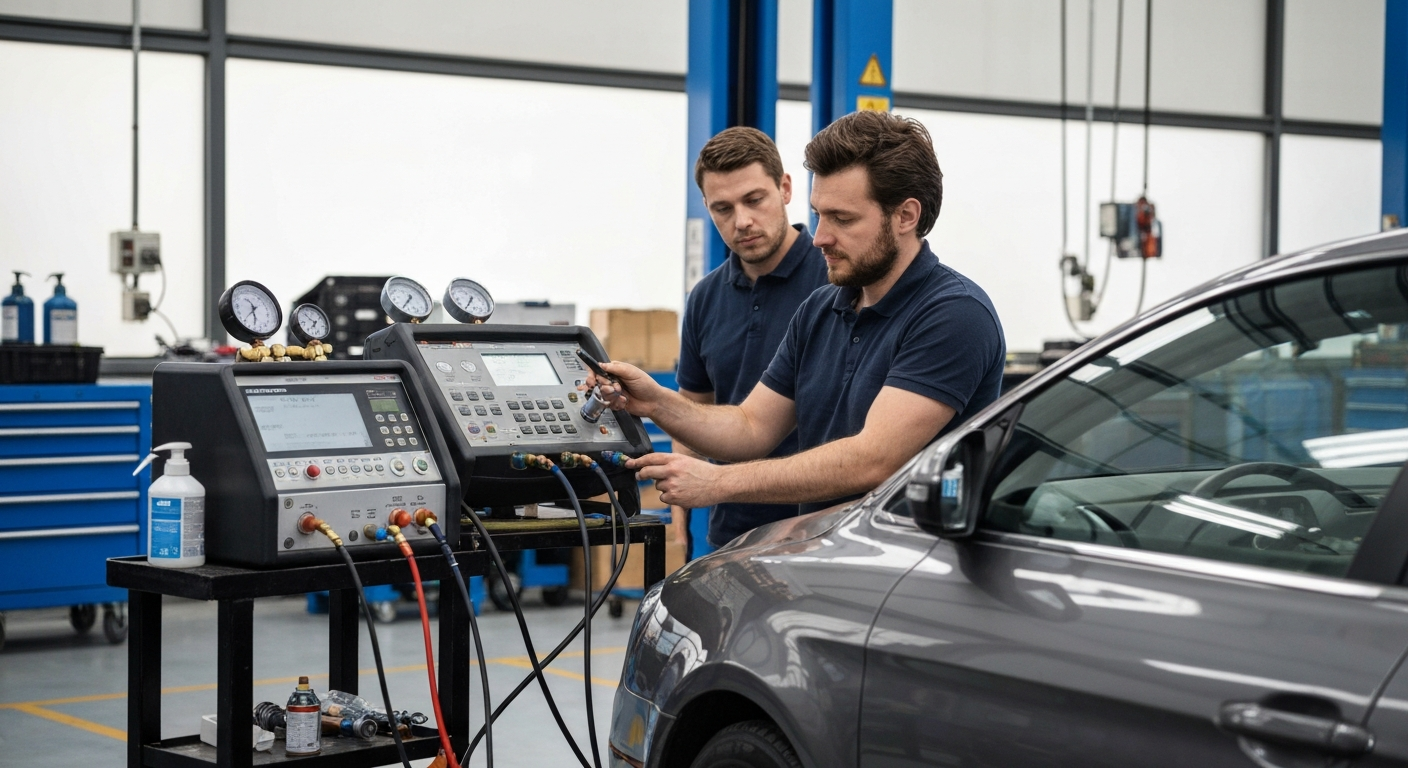
Los Angeles summers mean temperatures regularly exceed 95°F. When your car’s AC fails, it’s not just uncomfortable—it’s unsafe. Many drivers don’t know why their AC stopped working, how much repairs cost, or whether they need professional service.
This guide covers everything Los Angeles drivers need to know about AC repair: warning signs, diagnostic steps, costs, and when to see ASE-certified technicians. Whether you’re dealing with weak airflow or warm air blowing from your vents, we’ll help you understand your options and make the right decision.
Understanding Your Car’s Air Conditioning System
How Car AC Systems Work
Your car’s air conditioning system is a closed-loop refrigeration system that removes heat from the cabin and expels it outside. Unlike home HVAC systems, automotive AC operates under high pressure and must function reliably in extreme conditions.
The process begins with the compressor, which is driven by a belt connected to your engine’s crankshaft. The compressor takes low-pressure refrigerant gas and compresses it into a high-pressure, high-temperature gas. This system works similarly to how your engine’s cooling system operates.
This pressurized gas flows to the condenser, which is similar to a radiator and sits in front of your engine. The condenser uses airflow to cool the high-pressure gas, converting it into liquid form.
The liquid refrigerant then passes through the dryer (or receiver-dryer), which removes moisture from the system. Water contamination can seriously damage AC components, so this step is critical.
Next, the liquid flows through an expansion device (either a thermal expansion valve or orifice tube) that reduces pressure and temperature, preparing the refrigerant for the final stage.
The cooled, low-pressure liquid enters the evaporator, which is located inside your cabin. As warm air from your cabin passes through the evaporator, the refrigerant absorbs this heat and turns back into a gas. This is where the actual cooling happens.
Finally, the gas returns to the compressor, and the cycle begins again. For this system to work properly, it must be completely sealed with no contaminants and the proper amount of refrigerant.
Key Components You Should Know
- Compressor: The heart of the AC system; compresses refrigerant
- Condenser: Converts high-pressure gas to liquid
- Evaporator: Provides cooling inside your cabin
- Expansion Valve: Controls refrigerant flow
- Dryer: Removes moisture from the system
- Refrigerant: The lifeblood of AC; typically R-134a in modern cars
7 Warning Signs Your Car AC Needs Repair
1. Weak Airflow from Vents
If air comes out of your vents but feels weak, several problems could be responsible:
- Clogged cabin air filter: The most common cause; restricts air passage
- Blower motor failure: Reduces fan speed
- Blocked ducts: Obstructed airflow
Action: Check and replace your cabin air filter first (usually costs $15-$50). If airflow doesn’t improve, professional diagnosis is needed.
2. Warm Air Instead of Cold Air
This is one of the most common AC complaints and indicates several possible problems:
- Low refrigerant: The most frequent cause; indicates a leak in the system
- Compressor failure: Not functioning properly or not engaging
- Condenser blockage: Dirt, debris, or damage prevents cooling
Action: This requires professional diagnosis. Don’t drive with broken AC in LA heat—professionals can identify and fix the problem.
3. Strange Noises from the AC System
Unusual sounds indicate mechanical problems:
- Clicking/rattling: Compressor clutch issues or loose components
- Grinding: Compressor failure or bearing problems
- Squealing: Belt issues (problems with your serpentine belt can affect your AC)
- Hissing: Refrigerant leak
Action: Turn off AC immediately if you hear grinding. Schedule professional service as soon as possible.
4. Unpleasant Odors
Two distinct smells indicate specific problems:
- Musty smell: Mold or bacterial growth in your evaporator or ducts
- Sweet smell: Refrigerant leak (can be harmful to inhale)
- Burning smell: Electrical issue or compressor problem
Action: Have a technician inspect immediately, especially if you smell sweet refrigerant odors.
5. Visible Refrigerant Leaks
What to look for:
- Oily residue under your car
- Visible fluid on AC components in your engine bay
- Refrigerant pooling in your cabin or trunk
Even small leaks matter. Normal refrigerant loss is less than 1 ounce per year. Visible leaks mean your system will lose refrigerant faster and won’t cool properly.
6. Compressor Not Engaging
You should hear a subtle click when AC turns on, indicating the compressor clutch engages. If you don’t hear this sound or the AC cycles on and off erratically:
- Electrical issues: Compressor circuit problems
- Low refrigerant: Pressure switch prevents engagement
- Compressor failure: Internal mechanical failure
7. AC Works Intermittently
If your AC cools sometimes but not others, you likely have:
- Low refrigerant: Fluctuates with ambient temperature
- Electrical connection issues: Intermittent power supply
- Compressor cycling problems: Pressure switches malfunctioning
Common AC Repair Problems & Solutions
Refrigerant Leaks
What happens: Refrigerant escapes through worn seals, cracks in hoses, or damaged O-rings. Over time, the system loses cooling capacity.
How it’s fixed: Technicians pressurize the system to locate the leak, then repair or replace the leaking component (O-ring, hose, or seal). The system is evacuated and recharged with new refrigerant.
Cost: $150-$300 for minor leaks; $400-$800+ if the compressor has been running low (may need replacement)
Prevention: Regular inspections catch small leaks before they become expensive
Compressor Failure
What happens: The compressor is the most expensive AC component. Failure can result from:
- Running the system with low refrigerant
- Contamination in the system
- Wear and tear over time (average life: 8-10 years)
How it’s fixed: The failed compressor is replaced. To prevent recurrence, technicians flush the entire system to remove contamination.
Cost: $800-$1,500+ including parts and labor (compressor itself $400-$600+)
Prevention: Keep refrigerant at proper levels; address leaks promptly
Cabin Air Filter Issues
What happens: Dust, pollen, and debris clog your cabin air filter, restricting airflow through your AC system.
How it’s fixed: The old filter is replaced with a new one (typically takes minutes).
Cost: $30-$70 for parts and labor
Maintenance interval: Every 15,000-30,000 miles (check your owner’s manual)
Prevention: Change cabin air filters on schedule
Condenser Problems
What happens: Condenser fins get bent or clogged with debris, preventing proper heat dissipation.
How it’s fixed: Minor blockages can be cleaned. Bent fins can sometimes be straightened. Severe damage requires condenser replacement.
Cost: $200-$400 for cleaning/repair; $500-$1,000+ for replacement
Prevention: Drive carefully to avoid debris; regular inspections
Electrical Issues
What happens: AC compressor relies on multiple electrical connections. Issues include:
- Failed compressor clutch
- Broken wiring
- Failed pressure switches
- Bad capacitors
How it’s fixed: Depends on the specific electrical component; technician diagnoses with electrical testing equipment. Similar to how we diagnose electrical issues related to your battery.
Cost: $100-$400 depending on the component
Prevention: Regular electrical system checks
How Much Does AC Repair Cost in Los Angeles?
Small Repairs: $150-$300
These include:
- Cabin air filter replacement
- Minor refrigerant leak repair (O-rings, hose connections)
- Electrical connector repairs
- Low refrigerant recharge
Typical examples:
- AC recharge service: $150-$200
- Cabin air filter: $30-$50
- O-ring replacement: $100-$200
Medium Repairs: $300-$800
These include:
- Compressor clutch replacement
- Condenser repair/replacement
- Hose or seal replacements
- System flush and recharge
Typical examples:
- Condenser replacement: $400-$800
- Multiple component repair: $400-$600
- Compressor clutch: $300-$500
Major Repairs: $800-$1,500+
These include:
- Compressor replacement
- Complete system overhaul
- Multiple component failures
Typical examples:
- Compressor with labor: $900-$1,500
- Full system failure: $1,000-$2,000+
Factors Affecting AC Repair Costs in Los Angeles
- Vehicle make and model: Luxury vehicles and imports cost more to repair
- Part availability: Rare parts increase costs
- Labor complexity: Some repairs require extensive disassembly
- System contamination: Flush/evacuation adds $100-$200
- Refrigerant type: Newer R-1234yf costs more than R-134a
- Labor rates: Los Angeles rates ($85-$150/hour) are higher than national average
The AC Repair Process: What to Expect
Step 1: Visual Inspection
Your technician visually inspects the AC system for obvious problems:
- Refrigerant or oil leaks
- Damaged hoses or seals
- Loose connections
- Corrosion or debris
Step 2: Pressure Testing
Using manifold gauges, the technician checks high-side and low-side pressures:
- High pressure should be 150-200 psi (depending on ambient temperature)
- Low pressure should be 25-35 psi
Abnormal readings indicate specific problems.
Step 3: Refrigerant Level Check
The technician verifies refrigerant quantity. Low levels indicate leaks or normal loss.
Step 4: Diagnosis
Based on pressure readings and visual inspection, the technician identifies the problem and discusses repair options.
Step 5: Repair
The chosen repair is performed, whether that’s adding refrigerant, replacing a component, or sealing a leak.
Step 6: Post-Repair Testing
The system is tested to verify:
- Proper cooling at the vents
- Correct pressure readings
- No leaks
- Compressor engagement
Why Professional ASE-Certified Service Matters
Proper Diagnosis Saves Money
Professional technicians with diagnostic equipment identify the actual problem, not just symptoms. This prevents unnecessary repairs and wasted money.
Avoid Costly Mistakes
Improper AC repair can lead to:
- System contamination (requiring expensive flush)
- Overcharging refrigerant (damages compressor)
- Incorrect component replacement
- Environmental violations
EPA Compliance
Federal law requires proper handling of refrigerant. Only certified technicians can legally work on AC systems. Violations carry significant fines.
Warranty Protection
Professional repairs come with warranties. If a problem persists, the shop fixes it at no additional cost.
Prevention Tips: Keep Your AC Running Strong
Schedule Annual Maintenance
Before summer arrives, have your AC system inspected:
- Pressure check
- Refrigerant level verification
- Visual leak inspection
- Electrical testing
Annual inspections catch small problems before they become expensive.
Change Cabin Air Filters Regularly
Check your owner’s manual for intervals (typically 15,000-30,000 miles). A clean cabin filter:
- Improves cooling efficiency
- Increases airflow
- Reduces compressor workload
- Prevents mold growth
Keep Your Radiator Clean
A clean radiator helps your condenser dissipate heat efficiently. Remove leaves, debris, and dirt from your engine bay regularly.
Run AC in Winter
Even in Los Angeles, occasional winter AC use:
- Keeps the compressor lubricated
- Prevents seal drying
- Maintains system functionality
Run for 10-15 minutes monthly during cooler months.
Address Problems Immediately
Early diagnosis saves money. Small problems become expensive when ignored. If you notice any warning signs, schedule service right away.
Contact Hyperion Auto Repair for Expert AC Service
Los Angeles drivers trust Hyperion Auto Repair for expert auto air conditioning repair and maintenance. Our ASE-certified technicians have the diagnostic equipment and experience to identify and fix AC problems correctly the first time.
Why choose Hyperion Auto Repair?
- ASE-certified technicians
- Free multi-point AC inspections
- Warranty on all repairs
- Family-owned since 1985
- Serving Los Angeles for 40+ years
Schedule your AC inspection today:
- Phone: (323) 667-3180
- Address: 1845 Hyperion Avenue, Los Angeles, CA 90027
- Free estimates on AC repair
Don’t sweat through another Los Angeles summer with a broken AC. Call Hyperion Auto Repair today for professional diagnosis and repair.