Auto Body Near Me: Finding Expert Collision Repair Services
When your vehicle has been damaged in a collision, finding quality auto body repair near you becomes urgent. The decisions you make—choosing the right shop, understanding insurance coverage, and knowing what to expect—directly impact your vehicle’s safety and long-term value. This guide helps you navigate the auto body repair process with confidence.
Why Choose Professional Auto Body Repair Near You
Professional auto body repair protects both your physical safety and your financial investment. Your vehicle’s frame is its structural foundation, designed to protect you and your passengers. Poor repairs compromise this protection, reducing your vehicle’s ability to protect occupants in future accidents. Additionally, improper repairs may void your manufacturer warranty and cause insurance companies to deny future claims.
Choosing a shop near you also offers practical advantages: faster turnaround times, easier scheduling, more personalized communication, and easier access for warranty follow-up work. Local shops depend on word-of-mouth referrals, creating strong incentive for excellent service.
What to Look for in an Auto Body Shop
Essential Certifications
ASE Certification (Automotive Service Excellence): ASE-certified technicians have passed rigorous exams and must recertify every five years, ensuring current knowledge of repair standards.
I-CAR Gold Class Certification: This specialized collision repair certification indicates investment in technician training and adherence to industry best practices, particularly important as vehicles use advanced materials.
OEM Certifications: Manufacturers like BMW, Honda, Toyota, and Ford offer certification programs. OEM-certified shops demonstrate expertise specific to your vehicle’s construction.
Equipment and Quality Standards
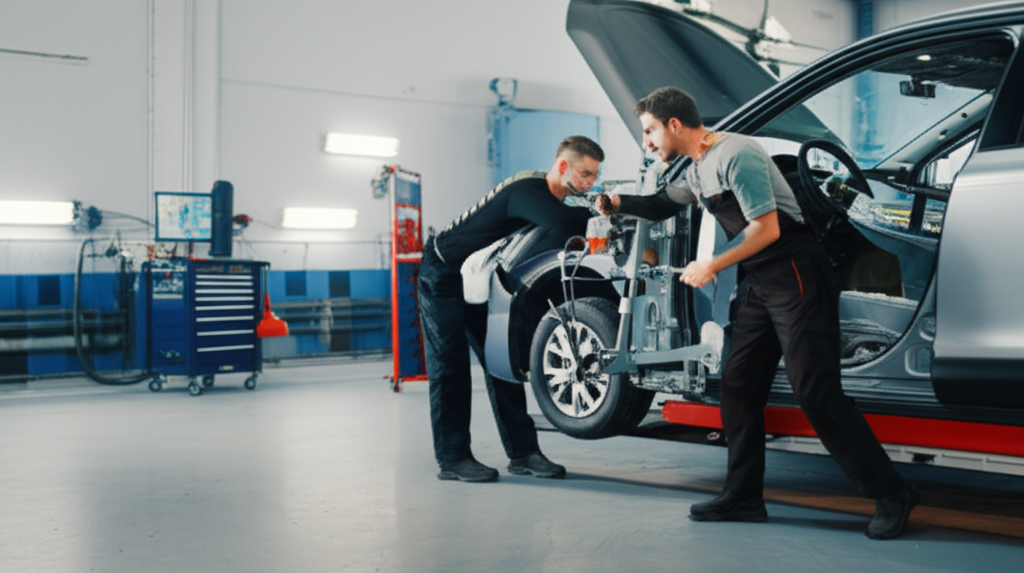
Professional shops invest in computerized measuring systems that align frames to within 1–2 millimeters of factory specifications. Frame straightening equipment, specialized welding systems, paint booths, and alignment racks are essential infrastructure for quality repairs. Shops lacking these tools cannot perform quality work.
Warranty and Accountability
Reputable shops provide written warranties covering parts and labor, typically lasting 3–10 years. This demonstrates confidence in their work and provides you with recourse if issues emerge after repairs.
The Auto Body Repair Process – What to Expect
Step 1: Comprehensive Damage Assessment
Professional technicians conduct thorough assessments including visual inspection, structural damage checking with specialized equipment, mechanical system evaluation, damage photography, and frame alignment measurement. This comprehensive approach catches hidden damage—like bent frame rails or suspension damage—that could cause serious problems if left unaddressed.
Step 2: Detailed Estimate and Timeline
The shop provides a detailed written estimate including labor broken down by repair type, parts costs (OEM or aftermarket), paint materials, completion timeline, and contingencies for additional damage discovered during repair. If filing an insurance claim, the shop submits this estimate for approval. California law (Insurance Code §758.5) protects your right to choose your repair shop—insurance companies cannot require you to use a specific facility.
Step 3: Repair Execution
Technicians follow manufacturer specifications for disassembly, structural repair using specialized equipment, panel replacement, welding, surface preparation, painting in controlled conditions, and reassembly. Quality control checks occur throughout to maintain standards.
Step 4: Final Inspection and Delivery
Before releasing your vehicle, shops conduct comprehensive final inspections including frame measurements, panel gap verification, paint quality checks, electrical and mechanical system testing, and test drives. You receive detailed documentation of all work performed, warranty coverage, and photographs of repaired areas.
Auto Body Repair Costs
Minor Repairs
Minor damage typically includes:
- Paintless Dent Repair: $150–$400
- Paint Touch-up: $200–$500
- Single Panel Replacement: $300–$1,000
- Bumper Repair/Replacement: $400–$1,500
Minor repairs complete within 1–3 days.
Major Repairs
Significant collision damage costs considerably more:
- Frame Straightening: $1,500–$5,000+
- Multiple Panel Replacement: $2,000–$8,000+
- Full Vehicle Restoration: $5,000–$15,000+
Major repairs typically require 2–4 weeks.
Understanding Insurance Deductibles
Insurance policies typically include collision coverage with deductibles ranging from $250 to $1,000. You pay your deductible, and insurance covers remaining costs up to policy limits. Some policies offer deductible waiver options.
Insurance Coordination and Your Rights
Your Right to Choose Your Shop
California Insurance Code §758.5 protects your right to choose your preferred repair shop. Insurance companies cannot require you to use a specific facility, though they may have preferred networks.
Working with Insurance Adjusters
Your insurance company will send an adjuster to inspect damage and verify estimates. Professional shops coordinate directly with adjusters, requesting additional authorization if hidden damage is discovered during tear-down.
Direct Repair Programs
Many professional shops participate in Direct Repair Programs (DRPs) with major insurance companies, allowing expedited claims processing. DRP participation doesn’t affect repair quality or limit your choice of shop.
Questions to Ask Auto Body Shops
- What certifications do your technicians hold? (Look for ASE, I-CAR, OEM)
- What is your estimate process and timeline?
- Do you work with my insurance company?
- What warranty do you provide on labor and parts?
- What type of parts will you use—OEM or aftermarket?
- Can you provide references from recent customers?
- How do you handle additional damage discovered during repair?
Red Flags to Avoid
- No written estimate provided
- Pressuring you to use aftermarket parts for structural repairs
- Reluctance to coordinate with insurance companies
- Unwillingness to provide customer references
- No visible modern equipment or outdated facilities
- Unrealistic completion timelines
- Negative online reviews mentioning poor communication
Find Quality Auto Body Repair at Hyperion
When you need expert collision auto repair near you in Los Angeles, Hyperion Auto Repair has served the community since 1985 with professional expertise and transparent communication.
We offer free multi-point inspections, ASE-certified technicians, advanced frame straightening equipment, direct insurance coordination, and warranties on all body work. Our team combines decades of experience with modern repair technology to restore your vehicle to pre-accident condition safely and reliably.
Contact Hyperion Auto Repair today:
📍 1845 Hyperion Avenue, Los Angeles, CA 90027
📞 (323) 667-3180
FAQ: Auto Body Repair
Q: How long does auto body repair take?
A: Minor repairs take 1–3 days. Major repairs involving frame work typically take 2–4 weeks depending on damage extent and parts availability.
Q: Will insurance cover auto body repair?
A: Yes, if you have collision or comprehensive coverage. You pay your deductible, and insurance covers the rest up to policy limits.
Q: What’s the difference between OEM and aftermarket parts?
A: OEM parts are made by your vehicle’s manufacturer and offer superior quality and fit. Aftermarket parts are less expensive but may not fit as precisely. We recommend OEM for structural repairs.
Q: Can I use my car during repairs?
A: That depends on repair extent and your insurance coverage. Many policies cover rental vehicles. Contact your insurance company or ask us about loaner options.
Q: What should I do after a collision?
A: Ensure everyone is safe, call 911 if needed, document the scene with photos, get the other driver’s information, call your insurance company, then schedule a professional inspection.
Q: Why is my vehicle pulling to one side after a minor accident?
A: This typically indicates frame damage or wheel alignment issues requiring professional inspection, even from minor collisions.
Q: Do you work with all insurance companies?
A: Yes, we work with all major insurance companies and participate in their Direct Repair Programs, streamlining the claims process for you.