
Introduction: Understanding Frame Alignment
When you think about vehicle alignment, you might picture a mechanic checking your wheels. But there’s another critical alignment that often gets overlooked: frame alignment. Your vehicle’s frame is its structural foundation—the skeleton that holds everything together and protects you in an accident. When the frame becomes misaligned, it affects your vehicle’s handling, safety, and longevity.
If you’ve noticed your car pulling to one side, experiencing uneven tire wear, or feeling unstable on the road, frame misalignment could be the culprit. At Hyperion Auto Repair, our ASE-certified technicians diagnose and correct frame alignment issues using precision laser measuring equipment and advanced straightening technology. In this complete guide, we’ll explain what frame alignment is, why it matters, what it costs, and when you need professional service in Los Angeles.
What Is Auto Frame Alignment & Why It Matters
Frame alignment is the process of adjusting your vehicle’s frame and axles to precise manufacturer specifications. Unlike wheel alignment, which addresses the angles of individual wheels, frame alignment corrects the structural foundation of your entire vehicle.
Your car’s frame serves multiple critical purposes:
- Structural support – It supports the weight of the engine, transmission, and all components
- Safety engineering – Modern vehicles have crumple zones and safety features engineered into the frame structure
- Handling precision – The frame must be perfectly square for proper steering response and suspension geometry
- Axle positioning – Both front and rear axles must align with the frame centerline
When your frame is even slightly misaligned, it creates a cascade of problems. The suspension can’t operate at the correct angles, the wheels can’t track properly, and the vehicle won’t handle as the engineers intended. Over time, this leads to accelerated wear on tires, suspension components, and the drivetrain.
How Frame Alignment Differs From Wheel Alignment
Many vehicle owners confuse frame alignment with wheel alignment service, but they’re two different things:
| Aspect | Frame Alignment | Wheel Alignment |
|---|---|---|
| What it fixes | The vehicle’s structural foundation and axle positions | The angles of individual wheels (toe, camber, caster) |
| When needed | After collision, impact, or structural damage | Periodically (every 6,000-10,000 miles) or after suspension work |
| Equipment used | Laser measuring systems, frame straightening machines | Alignment machine with laser targets |
| Complexity | Requires specialized collision repair certification | Standard automotive repair skill |
Think of it this way: wheel alignment fine-tunes your wheels. Frame alignment ensures the foundation they’re attached to is square. You can’t have truly straight wheels if the frame underneath is twisted.
Warning Signs Your Vehicle Needs Frame Alignment
Frame misalignment doesn’t always announce itself dramatically. Here are the most common warning signs:
1. Vehicle Pulls to One Side
This is the most obvious symptom. Even on a straight, level road, your car drifts left or right. This indicates the frame is no longer centered with the direction of travel. While a pulling sensation can sometimes indicate wheel alignment issues, persistent pulling despite wheel alignment service often points to frame problems.
2. Uneven or Excessive Tire Wear
When the frame is misaligned, the wheels can’t sit at the correct angles relative to the road. One side of each tire may wear faster than the other. If you’re replacing tires every 15,000-20,000 miles instead of the expected 40,000-50,000 miles, frame misalignment could be the cause.
3. Steering Wheel Not Centered
When driving straight, your steering wheel should be centered. If it’s tilted left or right while driving straight, or if you have to hold the wheel at an angle to drive straight, this indicates frame/axle misalignment.
4. Difficulty Steering or Stiff Steering
Frame misalignment can put stress on the steering linkage and suspension, making steering harder than normal. The power steering may seem less responsive.
5. Suspension Noise or Clunking
When the frame is twisted, it puts abnormal stress on suspension components. You might hear clunking sounds from under the vehicle, especially over bumps or during turns.
6. Vehicle Sits Unevenly
If one corner of your vehicle sits noticeably lower or higher than the others, or if the vehicle looks “twisted,” frame misalignment is likely.
7. Recent Accident or Impact
Even low-speed collisions can misalign the frame. If you’ve recently been in an accident—even a minor one—frame alignment should be checked immediately.
Frame Alignment Process: What to Expect at Hyperion Auto Repair
Professional frame alignment requires specialized equipment and expertise. Here’s what the process looks like:
Step 1: Visual Inspection
Our technicians first visually inspect the vehicle for obvious signs of damage, uneven gaps between body panels, and misaligned doors or hood.
Step 2: Laser Measurement
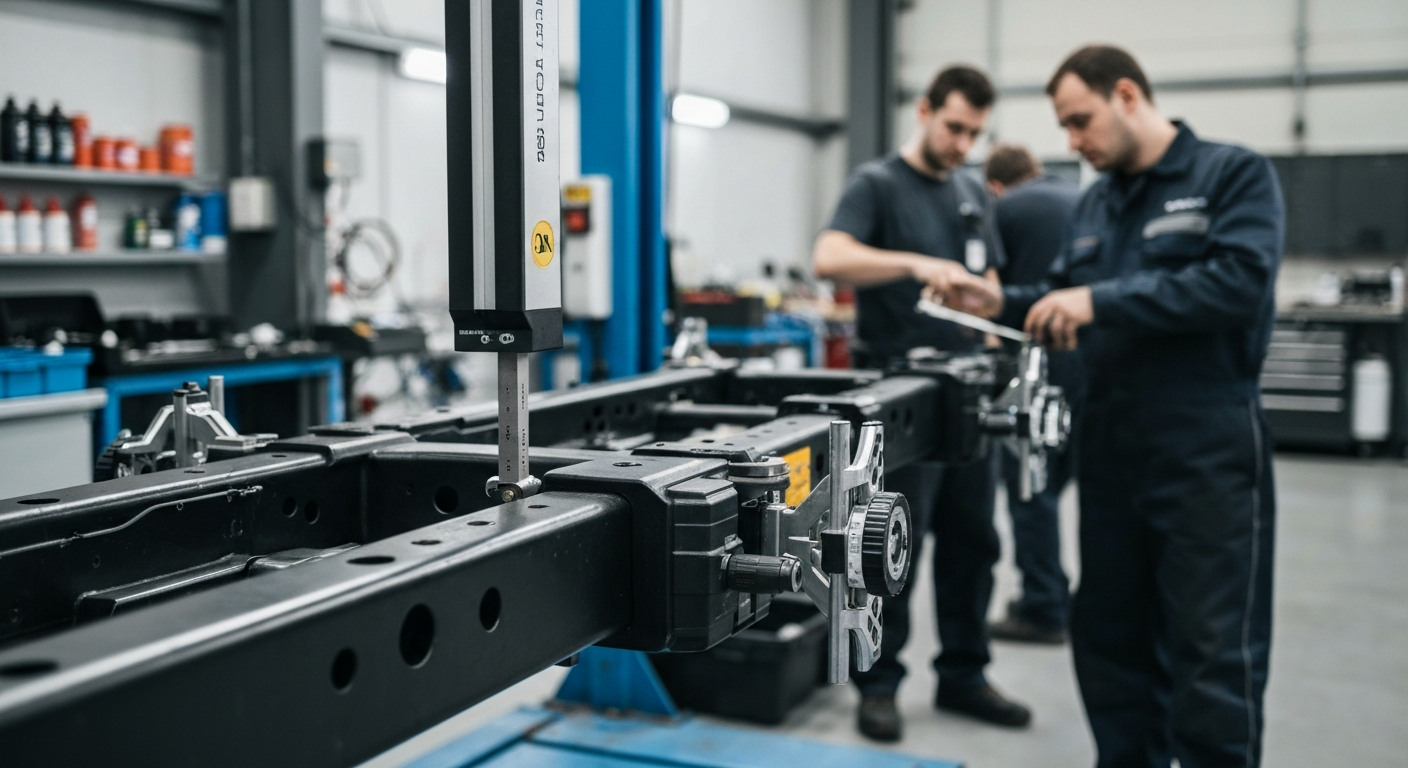
We place the vehicle on a level surface and use advanced laser measuring equipment to check the frame against manufacturer specifications. Modern systems like the Car-O-Liner can detect misalignment down to fractions of an inch. We measure the chassis at key points including:
- Axle centerlines (front and rear)
- Frame rail positions
- Suspension mounting points
- Overall wheelbase and track width
Step 3: Assessment and Planning
Once measurements are complete, our collision repair specialists assess the damage. We determine whether the frame can be corrected through alignment adjustments or if structural straightening is needed. We also check for any hidden damage to suspension, steering, or drivetrain components.
Step 4: Alignment Adjustment or Frame Straightening
For minor misalignment, adjustments to suspension mounting points or axle shims may be sufficient. For bent or severely misaligned frames, specialized straightening equipment applies controlled force to specific points on the frame, gradually bringing it back to spec.
Step 5: Verification and Testing
After repairs, we re-measure the frame with laser equipment to confirm everything is within manufacturer specifications. We then perform suspension and steering system checks to ensure all components function properly.
Step 6: Wheel Alignment
The final step is a complete wheel alignment (toe, camber, caster) to ensure your wheels are perfectly adjusted to the now-corrected frame.
Frame Alignment Costs in Los Angeles
Frame alignment costs vary significantly based on the extent of misalignment and required repairs. Here’s what you can typically expect:
Minor Frame Misalignment (Adjustment Only)
$300 – $600 – If the frame is slightly out of spec and only requires adjustments to suspension mounting points or axle positioning, costs are relatively modest.
Moderate Misalignment (Minor Straightening)
$600 – $1,200 – Light damage requiring some frame straightening or significant suspension work falls in this range.
Significant Frame Damage
$1,200 – $2,500+ – More serious damage requiring extensive straightening work, component replacement, or complex repairs can exceed $2,500, especially if suspension or steering components need replacement.
Factors Affecting Cost
- Extent of misalignment – How far the frame is out of spec
- Location of damage – Damage to the rear frame costs more than front damage
- Vehicle type – Luxury vehicles and trucks may cost more
- Component damage – Suspension, steering, or drivetrain damage adds to the cost
- Insurance coverage – Many policies cover frame alignment after an accident
Important note: At Hyperion Auto Repair, we provide free multi-point inspections and transparent pricing estimates. We’ll never begin work without your approval, and we’ll explain exactly what repairs are needed and why.
The Dangers of Neglecting Frame Alignment
Some vehicle owners ignore frame alignment issues, hoping they’ll go away. This is a serious mistake with real consequences:
Safety Risks
A misaligned frame compromises your vehicle’s structural integrity. In a collision, safety features may not function as engineered. Your vehicle’s crumple zones might not absorb impact correctly, potentially putting you and your passengers at greater risk of injury.
Accelerated Component Wear
Frame misalignment stresses every system it affects. You’ll face:
- Tire replacement every 15,000-20,000 miles instead of 40,000-50,000
- Premature suspension wear
- Steering system wear
- Drivetrain stress
Increased Fuel Consumption
A misaligned vehicle has more rolling resistance. This forces the engine to work harder, reducing fuel efficiency by 10-15% or more.
Handling Problems
Diminished handling makes driving less safe, especially in emergency maneuvers or adverse weather. The vehicle becomes harder to control.
Cascading Damage
Small frame problems often get worse if left unaddressed. The stress on suspension and steering components can lead to failures that create additional problems and costs.
Frame Alignment vs Frame Straightening: When You Need Each
While these terms are sometimes used interchangeably, they describe different levels of repair:
Frame Alignment
Frame alignment refers to adjusting and measuring the frame to ensure it meets manufacturer specifications. This can include:
- Adjusting suspension mounting points
- Using shims or spacers
- Minor pulling or straightening
When it’s needed: After minor impacts, minor accidents, or if measurements show slight misalignment
Frame Straightening
Frame straightening is a more intensive process that uses specialized equipment to physically straighten bent frame rails and components. This is required when:
- Frame rails are visibly bent or crimped
- Multiple frame sections are damaged
- Unibody panels are significantly bent
- Measurement shows severe misalignment in multiple directions
When it’s needed: After moderate to serious accidents or significant impacts
Often, both are performed together: the frame is straightened back toward spec, then precisely aligned using laser measuring equipment.
Why ASE-Certified Technicians Matter for Frame Alignment
Frame alignment is not a job for a general mechanic. It requires specialized knowledge, training, and certification.
What ASE Certification Means
ASE (Automotive Service Excellence) certification indicates that a technician has:
- Completed formal training in collision repair and frame work
- Passed rigorous, standardized examinations on structural repair techniques
- Maintained current knowledge of frame repair specifications
- Demonstrated hands-on proficiency with precision equipment
At Hyperion Auto Repair, our collision repair team holds current ASE certifications and specializes in frame alignment and structural repairs. We’re familiar with the frame specifications for hundreds of vehicle models, from compact cars to luxury vehicles.
Why It Matters
Frame misalignment affects your safety. A technician who doesn’t fully understand frame geometry or who uses imprecise measuring techniques could leave your vehicle unsafe. ASE-certified technicians know manufacturer specifications down to fractions of an inch and have the skills to meet them accurately.
Additionally, insurance companies often require that major frame repairs be performed by certified technicians. Using a certified shop ensures your repairs are documented and covered by warranty.
Free Multi-Point Inspection at Hyperion Auto Repair
If you suspect frame alignment issues, the first step is a professional inspection. At Hyperion Auto Repair, we offer FREE multi-point inspections where our ASE-certified technicians will:
- Visually inspect your vehicle for signs of frame damage
- Perform laser measurements to detect misalignment
- Check suspension and steering components
- Assess tire wear patterns and condition
- Provide a clear explanation of any issues found
- Give you a transparent, detailed estimate for any needed repairs
No appointment is necessary for an inspection, and there’s no obligation to have work done at Hyperion. We believe in giving Los Angeles vehicle owners the information they need to make informed decisions about their vehicles.
When to Seek Professional Frame Alignment Service
Contact Hyperion Auto Repair immediately if you:
- Have been in any kind of accident, even minor bumps
- Notice your vehicle pulling to one side
- See uneven tire wear developing
- Feel your steering is off-center or stiff
- Hear suspension noise or clunking
- Notice your vehicle sitting unevenly
- Just want to be safe and have frame alignment checked as preventive maintenance
Why Choose Hyperion Auto Repair for Frame Alignment
Since 1985, Hyperion Auto Repair has been serving Los Angeles families and businesses with expert collision repair and frame work. Here’s what sets us apart:
- ASE-Certified Technicians – Our team is fully certified in collision repair and structural work
- Advanced Equipment – We use precision laser measuring systems and modern frame straightening equipment
- OEM Standards – We repair to manufacturer specifications, not shortcuts
- Warranty on Repairs – All our work comes with a comprehensive warranty
- Free Inspections – Multi-point inspections are always free, with no pressure
- Transparent Pricing – You know exactly what repairs are needed and what they cost
- Local Expert – We’re family-owned and deeply committed to our Los Angeles community
Conclusion: Don’t Ignore Frame Alignment Issues
Your vehicle’s frame is its foundation. When it’s misaligned, your safety, comfort, and wallet all suffer. The good news is that frame alignment is a straightforward repair when handled by certified professionals with the right equipment.
If you’ve noticed any signs of frame misalignment—or if you’ve been in an accident and want to be certain your vehicle is safe—contact Hyperion Auto Repair today. Our free inspection will tell you exactly what’s going on, and our transparent estimates will help you understand your options.
Hyperion Auto Repair | 1845 Hyperion Avenue, Los Angeles, CA 90027 | (323) 667-3180
Professional Auto Care You Can Trust – Family-owned since 1985