
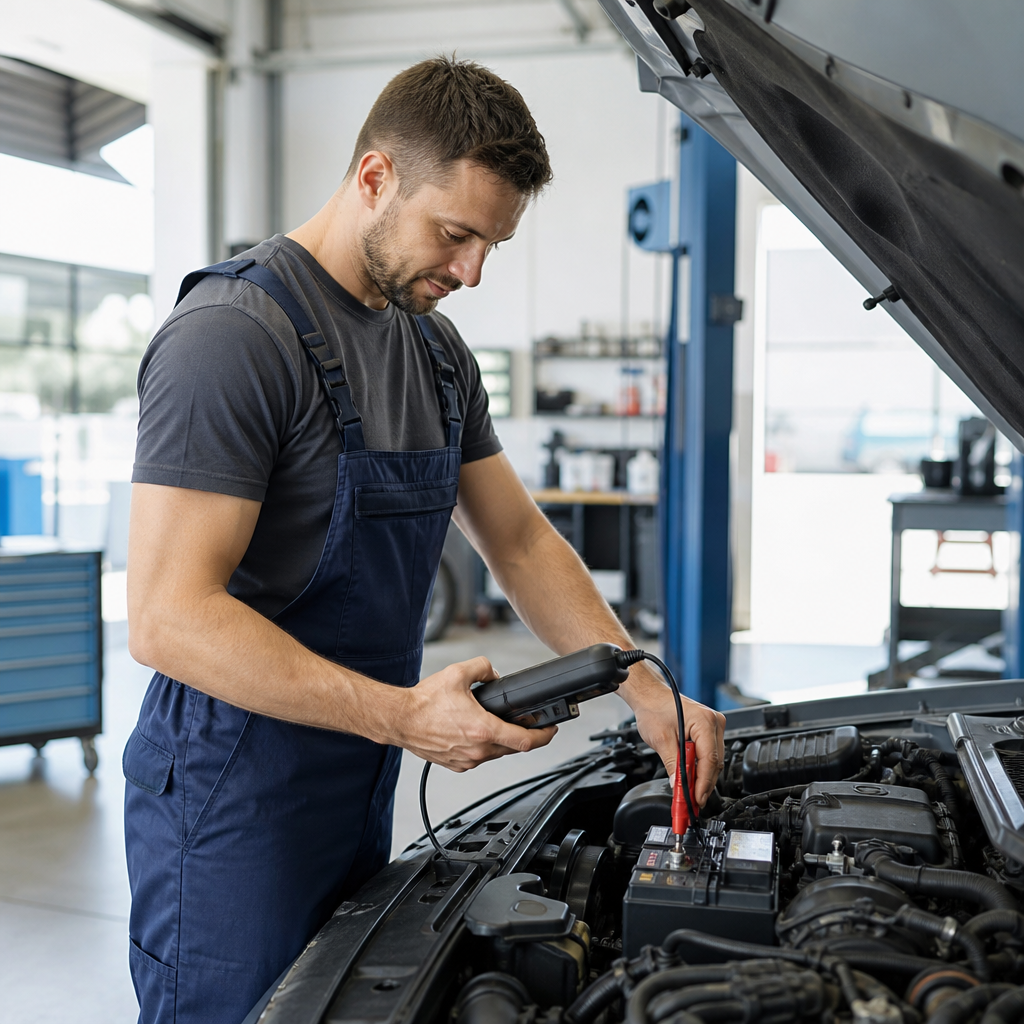
Your car starts slowly one morning, or maybe it doesn’t start at all. You’re probably thinking the same thing every driver does: is it the battery, or something worse? That’s exactly what a battery service visit is meant to answer. At Hyperion Auto Repair, we’ve been helping Los Angeles drivers sort out starting and electrical problems since 1985, and we’ve learned that the right answer almost always starts with testing, not guessing.
This guide explains what battery service actually involves, the warning signs worth acting on, and how to know whether you need a quick check or a full replacement.
What “Battery Service” Really Means
“Battery service” is a broad term, and it helps to know what’s covered before you book. In most shops it falls into three buckets:
- Battery testing: measuring whether your battery can still hold and deliver enough power to start the engine reliably.
- Inspection and cleaning: looking over the battery, cables and terminals for corrosion, loose connections or visible damage.
- Replacement: removing the old battery and installing a new one that matches your vehicle’s requirements.
Plenty of battery problems end at step one or two. A battery that tests healthy but sits behind a loose or corroded connection doesn’t need replacing. A battery that’s clearly at the end of its life does. The point of service is to tell the two apart before you spend money on parts you don’t need.
Warning Signs It’s Time for a Battery Check
Batteries rarely fail without hinting first. These symptoms can be signs of a weak battery:
- Slow cranking. The engine turns over sluggishly before it catches.
- Dim headlights or interior lights, especially when the engine is off or idling.
- A battery or charging warning light on the dashboard.
- Electrical glitches, such as a radio that resets or power windows that move slowly.
- Clicking when you turn the key or press the start button.
- Corrosion around the terminals, often a white or bluish-green crust that can contribute to hard starting.
Any one of these doesn’t prove the battery is bad, since other parts of the starting and charging system can cause similar symptoms. That’s why we recommend having it tested instead of assuming. If you want a deeper look at the symptoms, our guide to dead car battery symptoms in Los Angeles walks through them in more detail, and if your battery keeps going flat, see our article on a car battery not holding a charge.
How Long Should a Car Battery Last in Los Angeles?
According to AAA, car batteries typically last three to five years, and a battery nearing five years is approaching the end of its lifespan. Your own results depend on the battery, your driving habits and your climate.
Climate matters here. Extreme heat is known to shorten car battery life, and Los Angeles summers put real stress on a battery under the hood. A battery doesn’t usually announce that heat has worn it down; it just fails the next time you ask it for a big burst of power. If your battery is three or more years old, a test before summer is a sensible precaution against getting stranded.
What a Good Battery Service Visit Includes
Here’s what we believe a thorough battery service should cover, so you know what to expect from any shop you choose:
- A conversation about symptoms. When did the problem start? Does it happen when the engine is cold, hot, or both? Details like these help narrow things down.
- A battery test. A proper test checks the battery’s condition rather than relying on age or appearance alone.
- A look at the connections. Terminals and cables should be inspected for corrosion, looseness and damage, and cleaned if needed.
- A check of the wider electrical picture. A battery problem and a charging or starting problem can look alike from the driver’s seat, so a good shop doesn’t stop at the battery itself. If a related part such as the alternator turns out to be at fault, you’ll want to know before you buy a new battery. Our guide to alternator replacement costs in Los Angeles explains what that repair involves.
- A clear explanation of your options. You should hear what the test found, what’s urgent and what can wait, before any work begins.
- Proper installation and disposal, if you need a new battery. Ask that your old battery be recycled properly rather than thrown away.
Jump-Starts Get You Moving, But They Aren’t a Diagnosis
A jump-start is a great way to get out of a parking spot, but it doesn’t tell you why the battery went flat. It might have been a one-time mistake, like leaving a light on. It might also be a battery that’s worn out. If you’ve needed a jump, the smart next step is to have the battery tested soon after, while the car is still running and you’re not stuck somewhere inconvenient.
Choosing the Right Replacement Battery
If testing shows you need a new battery, a few details matter more than the brand name on the label:
- Size and fit. The battery needs to fit your vehicle’s tray and connect correctly.
- Cold cranking amps (CCA). CCA is a rating of a battery’s ability to start an engine in cold weather. Choose a battery that meets the specification for your vehicle; your owner’s manual is the best reference.
- Battery type. Vehicles with more electronics can be more particular about what they need. Confirm the correct type for your make and model before you buy.
- Warranty. Ask what’s covered and for how long, and keep your paperwork.
Pricing varies with your vehicle and the battery it requires, so ask for a clear price before work begins. For a broader look at what goes into a swap, see our car battery replacement guide for Los Angeles drivers.
Simple Habits That Help Your Battery
- Test it on a schedule. Once a battery passes the three-year mark, have it checked regularly, particularly before the hottest months.
- Don’t ignore early symptoms. Slow cranking is easier to deal with in your driveway than in a parking garage.
- Watch the terminals. If you see crusty buildup, have it looked at.
- Mention electrical oddities. Flickering lights or resetting electronics are worth bringing up during any visit.
Why Los Angeles Drivers Trust Hyperion Auto Repair
We’re a family-owned shop that has served the community since 1985, and our technicians are ASE-certified. When you bring in a car with a starting problem, we start with a free multi-point inspection so you get a straight picture of your vehicle’s condition, and our repairs are backed by a warranty. We’d rather tell you your battery is fine than sell you one you don’t need.
Battery Service FAQ
How do I know if it’s my battery or something else?
You can’t always tell from symptoms alone. Slow cranking, dim lights and clicking can point to the battery, but related parts of the starting and charging system can cause similar problems. Testing is the reliable way to find out.
Should I replace my battery before it dies?
If your battery is approaching the five-year mark or tests weak, replacing it on your schedule is usually less disruptive than replacing it after a breakdown.
Can I just clean the terminals myself?
Light cleaning is something some owners do themselves, but if you aren’t comfortable working near a battery, let a technician handle it.
Get Your Battery Checked
If your car has been slow to start, or your battery is getting up in years, don’t wait for it to fail on the 101 at rush hour. Contact Hyperion Auto Repair at (323) 667-3180 or stop by 1845 Hyperion Avenue, Los Angeles, CA 90027, and we’ll take a look.