After an accident, the damage you can see is only part of the decision in front of you. A crumpled panel or a deep scrape usually calls for two kinds of work: repairing what is physically damaged, and restoring the finish so the car looks the way it did before. In a shop, those jobs are called collision repair and refinishing, and you get a better experience when they are planned together.
This guide explains how the two fit together, what California says about written estimates and your choice of shop, and the questions worth asking before you approve any work. It is written for Los Angeles drivers who want to feel confident walking into a body shop, whether that is Hyperion Auto Repair or any other.
Collision Repair vs. Refinishing: What Each Covers
Collision repair
Collision repair is the work that restores your vehicle’s shape and structure. Depending on the accident, that can mean repairing or replacing body panels, fixing a bumper, removing dents, or addressing structural and frame damage. If your vehicle has taken a hit hard enough to raise questions about its frame or structure, our auto body structural repair guide explains what that work involves.
Refinishing
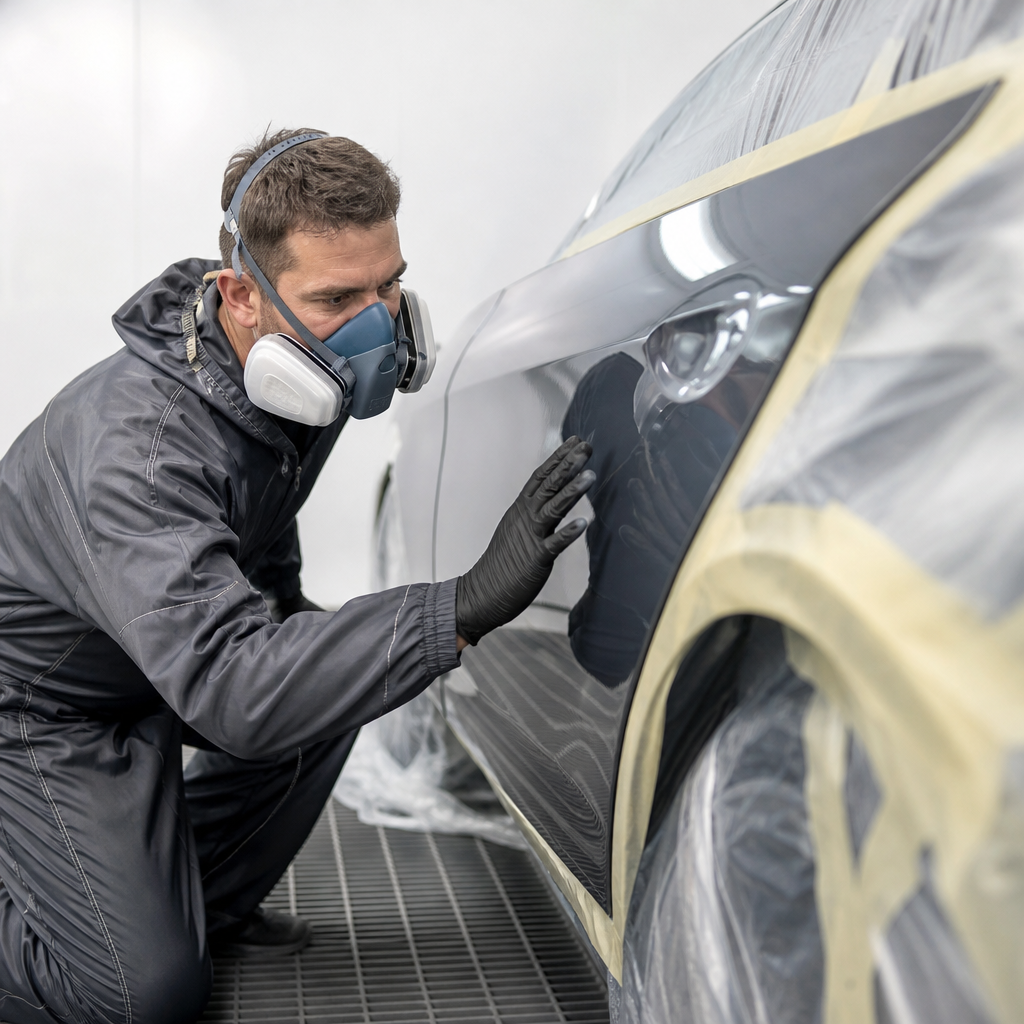
Refinishing is the work that restores the surface: the color and gloss that you see every day. It comes into play whenever a repair, a replacement panel or a scrape leaves the finish looking different from the rest of the car. Our professional car paint service guide goes into more detail on the paint side.
Why the two are planned together
The repair method often determines what has to be refinished, and the refinishing plan affects your timeline. A shop that looks at both from the start can give you a clearer estimate, a more realistic schedule and fewer surprises. It is also simpler to hold one shop accountable for the finished result when it handled both steps.
Step One: A Thorough Inspection and a Written Estimate
Every good repair starts with a careful look at the vehicle. At Hyperion, we offer free multi-point inspections, and we encourage you to bring your car in before you commit to anything. Whichever shop you visit, ask how it checks for damage that is not obvious at first glance, and how it will let you know if the plan changes.
Get the estimate in writing. The California Bureau of Automotive Repair’s Write It Right guidance explains that your authorization must be obtained and recorded on the estimate before repairs begin. A written estimate also gives you something specific to compare and refer back to if questions come up later.
If you are weighing pricing and insurance, our collision repair cost guide covers those topics in depth.
You Choose the Repair Shop
After an accident, it is common to feel pressure to use whichever shop is suggested to you. The California Department of Insurance states in its accident guide for consumers that an insurance company cannot require that your automobile be repaired at a specific repair shop.
You are free to consider the shops your insurer suggests, but the decision is yours. Base it on how clearly the shop communicates, how it explains its work, and what warranty it offers.
How to Prepare for Your First Visit
A little preparation makes the first conversation more productive. Consider bringing or noting the following:
- Your registration and insurance information, plus a claim number if you have already filed one
- Photos of the damage, ideally including any taken at the scene
- Any changes you have noticed since the accident, such as warning lights, unusual noises or a car that pulls to one side
- A list of your questions, including the ones below
Mention anything that seems off even if it does not look related to the visible damage. It helps the technician know where to look.
Six Questions to Ask About the Refinishing
Refinishing is the part of the job you will see every day, so it deserves specific questions before you approve the work.
- How will the new color be matched to the rest of the car? Ask the shop to explain its color-matching process and whether it checks the match before painting.
- Will any neighboring panels be included in the plan? If so, ask why. If not, ask how the shop plans to make the repaired area look consistent with the rest of the car.
- What does the warranty cover? Hyperion backs all of its repairs with a warranty. Whichever shop you choose, ask what is covered and for how long, and request the terms in writing.
- How should I care for the finish at first? Ask for the shop’s instructions on washing and waxing after the work, rather than relying on guesswork.
- What could change the schedule? Ask what might affect your timeline and how you will be updated if it does.
- How will additional issues be handled? Ask to be contacted and to approve any additional work before it is done.
What to Check When You Pick Up Your Car
Take a few minutes at pickup to look the car over carefully:
- View the car outdoors in daylight, not only under shop lights.
- Compare the color and gloss of repaired areas with the panels next to them, from several angles.
- Look closely at the repaired surfaces for texture differences, dust or rough spots.
- Check that doors, hood and trunk open and close normally and that the gaps between panels look even.
- Confirm that lights, trim and any parts removed during the repair are back in place and working.
- Compare the final invoice with your written estimate and ask about any differences.
If something looks off, say so before you leave. It is easier to address a concern while the car is still at the shop and the work is recent.
Not Every Mark Needs a Full Collision Repair
Not every blemish means a major repair. A light scrape or scuff can be a smaller job than a damaged panel. Our paint scratch repair guide covers what to consider for surface-level marks. If you are unsure which category your damage falls into, a visit to the shop is a good place to start, and you will leave with a clearer picture of your options.
Why Los Angeles Drivers Choose Hyperion Auto Repair
Hyperion Auto Repair has been family-owned since 1985, and our technicians are ASE-certified. We offer free multi-point inspections, and we stand behind our work with a warranty on all repairs. Whether you need collision repair, paint refinishing or both, we explain each step in plain language so you can decide with confidence.
Contact Hyperion Auto Repair to schedule your inspection: 1845 Hyperion Avenue, Los Angeles, CA 90027, or call (323) 667-3180.
Frequently Asked Questions
Do I need collision repair and refinishing together?
Often, but not always. Panel repair or replacement frequently involves finish work as well, while some minor marks may need only cosmetic attention. An inspection will tell you which applies to your car.
Do I have to use the shop my insurance company recommends?
No. According to the California Department of Insurance, an insurer cannot require that your vehicle be repaired at a specific shop.
Should I get my estimate in writing?
Yes. The Bureau of Automotive Repair’s Write It Right guidance explains that your authorization must be obtained and recorded on the estimate before repairs begin.
How long will my repair take?
It depends on the extent of the damage and the work involved. Ask your shop for an estimated timeline in writing, along with what might change it.