
Flashing Check Engine Light: What It Means & Why It’s an Emergency Signal
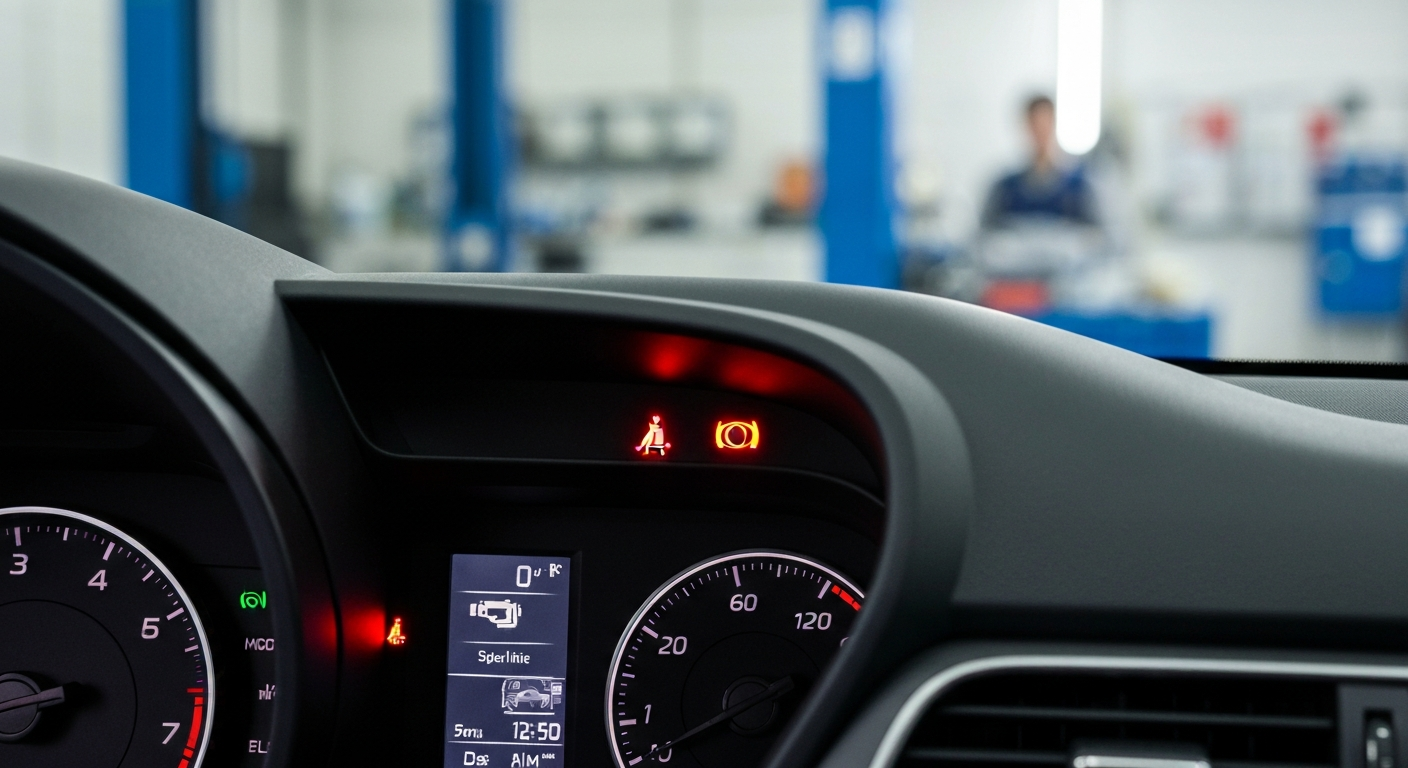
A steady check engine light is concerning, but a FLASHING check engine light is your vehicle’s emergency warning system — and ignoring it can lead to $1,000+ in damage.
If you’ve ever seen your check engine light flashing on your dashboard, you know that sinking feeling. Unlike a steady check engine light that indicates a problem worth investigating, a flashing light means your engine is actively misfiring right now, while you’re driving. This is not something you can ignore, and continuing to drive can cause severe damage to your engine and emissions system.
At Hyperion Auto Repair, we’ve seen countless customers try to limp their vehicles to repair shops when the check engine light starts flashing. The reality? That decision often costs them hundreds of dollars in preventable damage. In this comprehensive guide, we’ll explain exactly what a flashing check engine light means, why it’s a true emergency, what causes it, and most importantly, what you should do immediately.
Flashing Check Engine Light vs. Steady Light: Critical Differences
Before we dive into what’s happening under the hood, it’s important to understand the critical difference between a steady check engine light and a flashing one. Your vehicle uses these two distinct signals to communicate different levels of urgency.
A steady check engine light means your onboard diagnostic system (OBD-II) has detected a problem with your engine, emissions system, or transmission. You should schedule service within 24-48 hours, but the vehicle is generally safe to drive. The problem is present, but it’s not currently causing active damage.
A flashing check engine light is fundamentally different. It means your engine is experiencing an active misfire — one or more of your cylinders is failing to properly ignite the fuel-air mixture right now. This is happening while you drive. A misfire isn’t just an inconvenience; it means unburned fuel is entering your exhaust system, which rapidly overheats your catalytic converter and causes engine damage with every passing second.
Think of it this way: A steady light is your vehicle saying “I have a problem, please fix me soon.” A flashing light is your vehicle saying “EMERGENCY — STOP DRIVING IMMEDIATELY.” Hyperion’s check engine light diagnosis services can distinguish between these scenarios instantly and get you the right fix.
What Causes a Flashing Check Engine Light?
Understanding the root cause is the first step to fixing it. A flashing check engine light always points to an engine misfire — but what’s causing that misfire? Here are the most common culprits, in order of likelihood:
Spark Plug Issues (Most Common)
Fouled or worn-out spark plugs are responsible for the majority of misfire codes we see at Hyperion. When spark plugs wear out, they can’t generate the electrical spark needed to ignite the fuel-air mixture in your cylinders. As the electrodes wear down, the gap between them increases, making it harder for electricity to jump across. Eventually, no spark = no ignition = misfire.
Your vehicle may have 4, 6, or 8 spark plugs depending on engine size, and if even one is faulty, you’ll get a flashing light and active misfires.
Ignition Coil Failure
Your ignition coils convert low-voltage electrical power from your battery into the high-voltage spark that ignites fuel in each cylinder. One ignition coil typically fires one spark plug (though some vehicles have coil packs that fire multiple plugs). When a coil fails, the corresponding cylinder can’t fire, causing a misfire.
Unlike spark plugs that typically last 30,000-100,000 miles, ignition coils can fail prematurely due to heat exposure, moisture, or manufacturing defects. At Hyperion, we always test coils before replacing them to ensure we identify the actual problem.
Vacuum Leaks
Your engine relies on precise fuel-to-air ratios to operate correctly. A vacuum leak introduces unmetered air into the engine, disrupting this critical balance. This can cause misfires, rough idling, and poor fuel economy. Common sources include cracked hoses, failed intake gaskets, or faulty PCV systems.
Fuel Injector Problems
Modern engines use fuel injectors to precisely spray fuel into each cylinder. A clogged or malfunctioning injector can’t deliver the right amount of fuel, resulting in a lean fuel mixture and misfire. Unlike older carburetor systems, modern fuel injectors need to be perfectly calibrated.
Catalytic Converter Failure
In some cases, a failing catalytic converter can restrict exhaust flow so severely that it causes backpressure and misfires. This is typically accompanied by lack of power and reduced fuel economy. Unfortunately, a bad catalytic converter is also one of the most expensive fixes on this list.
Sensor Failures
Your engine has multiple sensors (mass airflow sensor, oxygen sensors, knock sensors) that feed real-time data to your engine control computer. If any of these sensors fail, the computer may get incorrect information and make wrong fuel injection decisions, leading to misfires.
For a complete diagnostic of what’s causing your specific misfire, Hyperion’s engine diagnostics and repair services use state-of-the-art OBD-II scanners to read your vehicle’s specific trouble codes and identify the exact problem.
Is a Flashing Check Engine Light an Emergency?
Absolutely, yes — it is a true emergency. Here’s why: When a misfire occurs, unburned fuel enters your exhaust system. Your catalytic converter is designed to convert harmful emissions into less harmful ones, but it can’t handle raw fuel. Instead of converting it, the fuel ignites inside the catalytic converter, creating intense heat.
A single misfire won’t instantly destroy your catalytic converter, but thousands of misfires over the course of driving will. In fact, many customers report that a misfire that started as an occasional flashing light (ignoring the warning) became constant, leading to a catalytic converter that needed complete replacement.
Here’s what happens when you keep driving with a flashing CEL:
- Engine overheating: Misfires create incomplete combustion, raising engine temperatures. Continuous driving accelerates this problem.
- Catalytic converter damage: Unburned fuel entering the converter creates internal chemical reactions that can weld the converter’s internal structure. Repair cost: $800-$2,500+
- Cylinder damage: In extreme cases, continuous misfires can cause valve damage or carbon buildup that requires expensive internal engine work.
- Environmental emissions: Your vehicle is emitting significantly higher levels of pollutants, potentially failing smog checks.
The safe response is straightforward: Pull over safely, turn off the engine, and call for towing or a professional mobile mechanic. Do not try to limp your vehicle to a distant repair shop or assume you’ll “make it” until morning. Every mile you drive multiplies the risk of expensive damage.
Hyperion Auto Repair offers same-day emergency diagnostics and often same-day repairs for misfire issues. Call us at (323) 667-3180 if you’re experiencing a flashing check engine light.
What Hyperion’s Diagnostic Process Reveals
So what exactly happens when you bring your vehicle to Hyperion for a flashing check engine light? Here’s our diagnostic process:
Step 1: OBD-II Code Reading
We plug in our OBD-II scanner, which reads the specific diagnostic trouble code (DTC) your vehicle has stored. These codes are crucial because they point directly to the problem:
- P0300: Random or Multiple Cylinder Misfire Detected — indicates multiple cylinders are misfiring or the pattern is random
- P0301: Cylinder #1 Misfire Detected
- P0302: Cylinder #2 Misfire Detected
- P0303-P0308: Cylinders #3-8 Misfire Detected (depending on your engine size)
These specific codes immediately point us toward the most likely cause. A P0301 code, for example, tells us the issue is with cylinder 1’s spark plug, ignition coil, fuel injector, or that cylinder’s valve.
Step 2: Visual Inspection
We visually inspect spark plugs, ignition coils, and fuel injector connectors. Sometimes the problem is obvious — a cracked spark plug boot, a visibly damaged coil, or a disconnected fuel injector connector. Many times, we can solve the problem immediately.
Step 3: Fuel Pressure & Compression Testing
If spark plugs and coils look fine, we test fuel pressure (should be 44-66 PSI depending on your vehicle) and compression in each cylinder. Low compression in one cylinder points to internal engine problems.
Step 4: Sensor & Electrical Testing
We test oxygen sensors, mass airflow sensors, and knock sensors using specialized equipment. These sensors fail frequently and are usually quick to replace.
Step 5: Scope Testing
For complex issues, our ASE-certified technicians use an engine scope to observe ignition waveforms and fuel injector patterns. This tells us exactly what the engine is doing during combustion.
The entire diagnostic process usually takes 1-2 hours, and in many cases, we can identify and repair the issue the same day.
Cost Ranges for Common Fixes
What will fixing your flashing check engine light cost? The answer depends entirely on what’s causing the misfire. Here’s what you can typically expect:
Spark Plug Replacement: $100-$300
This is the most common fix. Most vehicles need 4-8 spark plugs replaced, and most shops charge between $25-$50 per plug plus labor. At Hyperion, this often includes a full inspection at no additional charge.
Ignition Coil Replacement: $150-$400 per coil
If a coil is faulty, you’re looking at the cost of the part ($50-$150) plus labor ($100-$250). We always test before replacing to ensure you’re not paying for unnecessary work.
Fuel Injector Cleaning: $50-$100
Sometimes a misfire is caused by carbon buildup on injector tips. Cleaning is far cheaper than replacement and often solves the problem. Replacement is $200-$400 per injector.
Vacuum Leak Repair: $200-$600
The cost depends on where the leak is. A simple hose replacement might be $100, while a intake gasket can be $400-$600 depending on labor hours needed.
Mass Airflow (MAF) Sensor Replacement: $200-$400
A faulty MAF sensor is a frequent cause of misfires, and replacement is straightforward — usually 15 minutes of labor plus the sensor cost.
Catalytic Converter Replacement: $800-$2,500+
This is the expensive repair nobody wants. If your catalytic converter is damaged from prolonged misfiring, full replacement is necessary. This is why addressing a flashing check engine light immediately is so important — ignoring it for even a few days can turn a $200 repair into a $2,000 nightmare.
Full Engine Diagnostics
At Hyperion Auto Repair, we offer comprehensive engine diagnostics at no charge if you proceed with repairs at our shop. This includes OBD-II code reading, visual inspection, and the first part of our diagnostic process at no cost to you.
Why You Shouldn’t Ignore It: Real Consequences
We’ve seen the aftermath of customers who ignored flashing check engine lights, and the results are always expensive. Here are a few real examples:
Case #1: The 50-Mile Mistake A customer drove 50 miles with a flashing check engine light because they thought they could “make it to their favorite mechanic.” What they didn’t realize was that every mile was cooking the inside of their catalytic converter. By the time they arrived, the converter’s honeycomb substrate had melted internally. Repair cost: $2,100. Had they diagnosed and fixed the original problem (fouled spark plugs, $150) immediately, they would have saved $1,950.
Case #2: One Problem Becomes Many A customer ignored a single cylinder misfire (likely a bad spark plug) for three days while waiting for a convenient appointment. During that time, the fouled plug damaged the ignition coil serving that cylinder, and raw fuel damaged the oxygen sensor. Original diagnosis cost: $600. Solution cost with all the damage: $1,200. All of it preventable with a same-day diagnosis.
Case #3: Emissions System Failure A customer’s misfire went undiagnosed for two weeks. When they finally brought the vehicle in, the catalytic converter was so damaged it failed our diagnostic test, and the oxygen sensors had been burned out by excess fuel. Total repair bill: $2,600 for what likely started as a $200 problem.
The Pattern is Clear: Every day you wait, the cost of fixing the problem increases. Hyperion’s same-day diagnostics and repairs prevent this cascade of damage.
What to Do Right Now
If your check engine light is flashing right now, here are your immediate action steps:
- DO: Pull over safely as soon as traffic permits
- DO: Turn off your engine immediately
- DO: Call for a tow truck or roadside assistance
- DO: Call Hyperion Auto Repair at (323) 667-3180 to let us know you’re coming
- DON’T: Continue driving, even if the light stops flashing
- DON’T: Wait to address it tomorrow or next week
- DON’T: Assume it will go away on its own (it won’t)
If you’re able to safely pull over and restart your engine, and the light stops flashing, you’re in a slightly better position — but you still need immediate diagnosis. The problem hasn’t gone away; it’s just intermittent. Bring your vehicle to Hyperion for full diagnostics before the problem becomes constant and causes damage.
Hyperion Auto Repair: Your Flashing CEL Solution
Don’t let a flashing check engine light drain your wallet. Hyperion Auto Repair provides:
- ✓ Free multi-point inspections and OBD-II diagnostics for customers seeking repair services
- ✓ Expert technicians: All our mechanics are ASE-certified with specialized engine diagnostics training
- ✓ Same-day service: We often diagnose and repair common misfire issues within a few hours
- ✓ Full warranty: 12-month/12,000-mile warranty on all repairs gives you peace of mind
- ✓ Transparent pricing: We explain exactly what’s wrong and why it costs what it does — no hidden fees
- ✓ Family-owned since 1985: 40+ years of trusted service in the Los Angeles community
Call Hyperion Auto Repair today: (323) 667-3180
Visit us: 1845 Hyperion Avenue, Los Angeles, CA 90027
Available: Monday-Friday, 8:00 AM – 6:00 PM | Saturday, 8:00 AM – 4:00 PM
Conclusion: Act Now, Save Later
A flashing check engine light is not something to ignore, hope goes away, or attempt to drive away from. It’s an emergency signal that your engine needs immediate attention. The good news? Most misfire issues are quick and affordable to fix when caught early. A $150 spark plug replacement beats a $2,100 catalytic converter replacement every single time.
If your check engine light is flashing, the best time to seek help was yesterday. The second best time is right now.
Contact Hyperion Auto Repair for emergency flashing check engine light diagnostics and same-day repair service. Our ASE-certified technicians are ready to solve your misfire problem and get you safely back on the road.
Call (323) 667-3180 or visit us at 1845 Hyperion Avenue, Los Angeles, CA 90027