A car accident is stressful enough without having to make decisions about repairs. Between phone calls with insurance and figuring out how you will get to work, it is tempting to hand your keys to the first shop that comes up and hope for the best. A little preparation puts you back in control.
This guide is for Los Angeles drivers who want to know what to do in the days after a crash, how auto accident repair works from the first inspection to the final check, and which questions to ask before approving any work. At Hyperion Auto Repair, we believe an informed customer makes the best decisions, so we are happy to explain the process whether you choose us or another shop.
What to Do Right After an Accident
Your first priority is people, not paint. If anyone may be hurt, call 911 before anything else. Once everyone is safe, a few steps will make the repair process much smoother later:
- Exchange information. The California Department of Insurance’s guide for people who have had an accident lists what to get from the other driver: name and contact information, driver’s license number, license plate number, and insurance company and policy number.
- Document everything. Photograph all vehicles, license plates, the damage and the surroundings from several angles. Photos taken at the scene are useful when you talk with your insurer and your repair shop.
- Contact your insurance company promptly. Starting the claim early gets the process moving and gives you a point of contact for questions.
- Ask about reporting requirements. Depending on the circumstances, an accident may need to be reported beyond your insurer. Your insurance company and the California DMV can tell you what applies to your situation.
Is It Safe to Drive Your Car?
Some cars look fine after a collision but are not safe to drive. Be cautious if you notice any of the following:
- Fluid leaking under the car
- New warning lights on the dashboard
- Grinding, scraping or rattling noises
- The car pulling to one side, or a shaking steering wheel
- A hood, door or trunk that will not close properly, or a bumper hanging loose
If you are unsure, having the car towed is a safer choice than driving it and risking more damage. You can also bring it to us for a free multi-point inspection once it is safe to do so. Our free multi-point vehicle inspection gives you a clear picture of your car’s condition before you commit to any repair.
You Choose the Repair Shop
After an accident, it is common to feel pressure to use whichever shop is recommended to you. According to the California Department of Insurance, an insurance company cannot require that your automobile be repaired at a specific repair shop. You are welcome to consider the shops your insurer suggests, but the decision is yours.
When you compare shops, look at how clearly each one explains its work, whether it will put its estimate in writing, and what warranty it offers on the repair. Those three things tell you a lot about how the shop will treat you once your car is in the bay.
How Auto Accident Repair Works, Step by Step
Every shop has its own workflow, but most accident repairs follow the same general path. Knowing the steps helps you ask better questions and spot problems early.
1. Inspection and Written Estimate
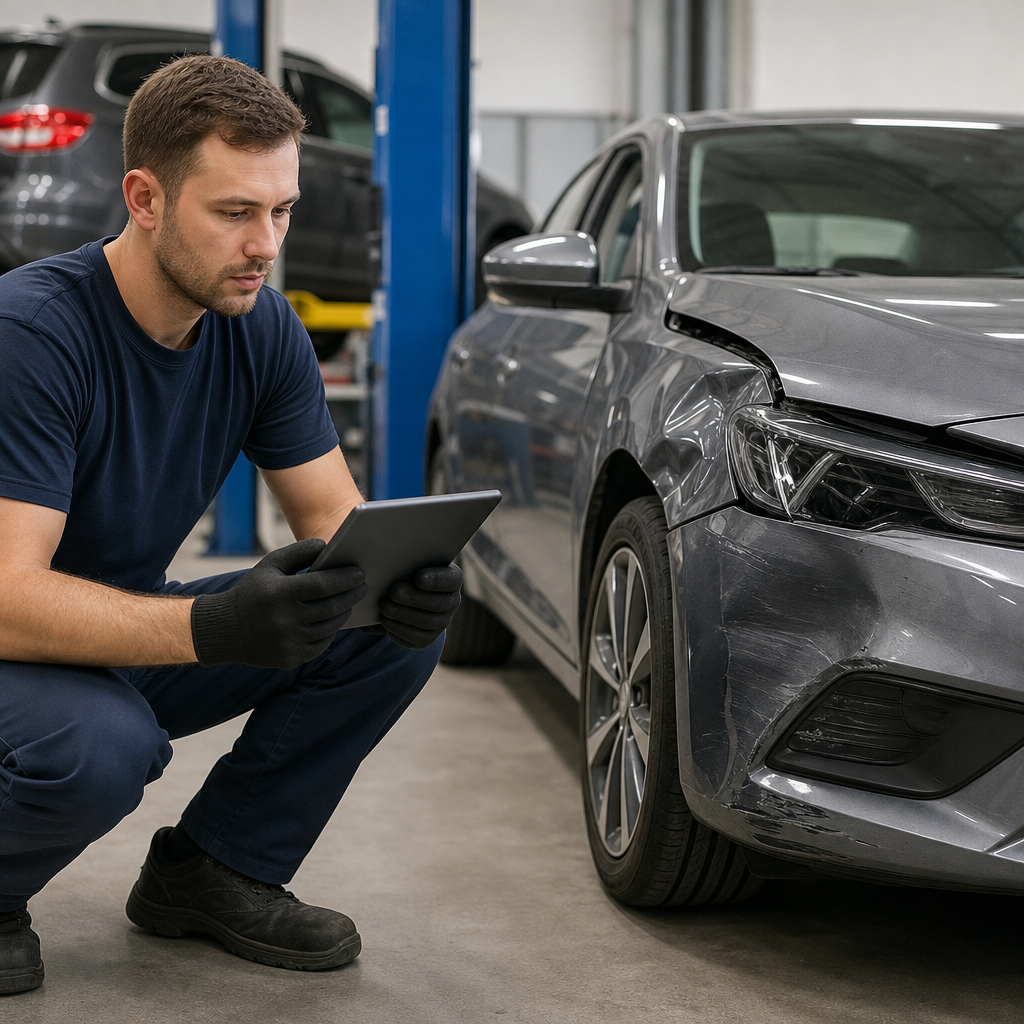
A good repair starts with a careful look at the whole vehicle, not just the dented panel. The technician checks the visible damage and looks for related problems that may not be obvious at first glance. You should then receive a written estimate. California’s Automotive Repair Act calls for a written estimate and your authorization before repairs begin, as explained by the state’s Bureau of Automotive Repair. If you want to understand what drives the numbers, our collision repair cost guide breaks down the main factors.
2. Teardown and Repair Plan
Once the work is approved, the shop removes damaged parts and trim so the technician can see what is underneath. This is often when the full extent of the damage becomes clear. Ask the shop to contact you, and to get your approval, before doing any work beyond what is on the original estimate.
3. Body and Structural Repair
This is the hands-on part of the job. Depending on the accident, it can include repairing or replacing body panels, fixing a bumper, removing dents, or correcting structural damage. If your car took a hard hit, read our auto body structural repair guide to see what that work involves. For damage limited to the front or rear corners, our bumper repair guide explains your options.
4. Paint and Refinishing
Once the body is straight, the repaired area has to match the rest of the car. Refinishing restores the color and gloss so the repair does not stand out. We cover the questions worth asking about color matching and the warranty in our guide to collision repair and refinishing.
5. Reassembly and Final Checks
The shop puts the vehicle back together and checks the work. At pickup, take a few minutes to look the car over in daylight. Compare the color of the repaired areas with the neighboring panels, check that the gaps between panels look even, and make sure lights, trim and any parts that were removed are back in place and working. Compare the final invoice with your written estimate and ask about any differences before you leave.
Damage You Cannot See From the Outside
A collision can affect parts of the car that are hidden behind the bodywork. That is why it is worth paying attention to how the car feels after the accident, not only how it looks. Mention anything unusual to the technician, even if it does not seem related to the visible damage:
- The car drifts or pulls to one side when you drive
- The steering wheel vibrates or sits off-center
- Doors, the hood or the trunk are harder to open or close than before
- Panel gaps look uneven or have changed
- New noises, rattles or warning lights have appeared
These details help the technician know where to look, and they make for a more complete repair plan.
Questions to Ask Before You Approve the Repair
- Can I have the estimate in writing, with the work itemized?
- How will you let me know if you find additional damage, and will you get my approval first?
- How long do you expect the repair to take, and what could change that schedule?
- How will you match the paint, and will neighboring panels be included in the plan?
- What does your warranty cover, and for how long? Can I have the terms in writing?
- After the repair, how will you confirm that the car is safe to drive and everything works as it should?
A shop that answers these questions clearly and without hesitation is usually a shop that is comfortable standing behind its work.
Why Los Angeles Drivers Choose Hyperion Auto Repair
Hyperion Auto Repair has been family-owned since 1985, and our technicians are ASE-certified. We offer free multi-point inspections, and we stand behind our work with a warranty on all repairs. Whether you need collision repair, paint refinishing or both, we explain each step in plain language so you can decide with confidence.
Frequently Asked Questions
Should I get my car looked at even if the damage seems minor?
Yes. A small dent or scuff can come with damage you cannot see. An inspection tells you whether the problem is cosmetic or something more, and it costs nothing at Hyperion.
Do I have to use the shop my insurance company recommends?
No. The California Department of Insurance states that an insurance company cannot require that your automobile be repaired at a specific repair shop. The choice is yours.
How long will my repair take?
It depends on the extent of the damage, the work involved and whether anything else turns up once the car is taken apart. Ask your shop for an estimated timeline in writing, along with what might change it.
Should I get my estimate in writing?
Yes. California’s Automotive Repair Act calls for a written estimate and your authorization before repairs begin. A written estimate also gives you something specific to refer back to if questions come up later.
What if the repair does not look right when I pick up the car?
Say so before you leave. It is much easier to address a concern while the car is still at the shop and the work is fresh.
Schedule Your Free Inspection
If your car has been in an accident, start with a clear picture of the damage. Contact Hyperion Auto Repair at 1845 Hyperion Avenue, Los Angeles, CA 90027, or call (323) 667-3180 to schedule your free multi-point inspection.