
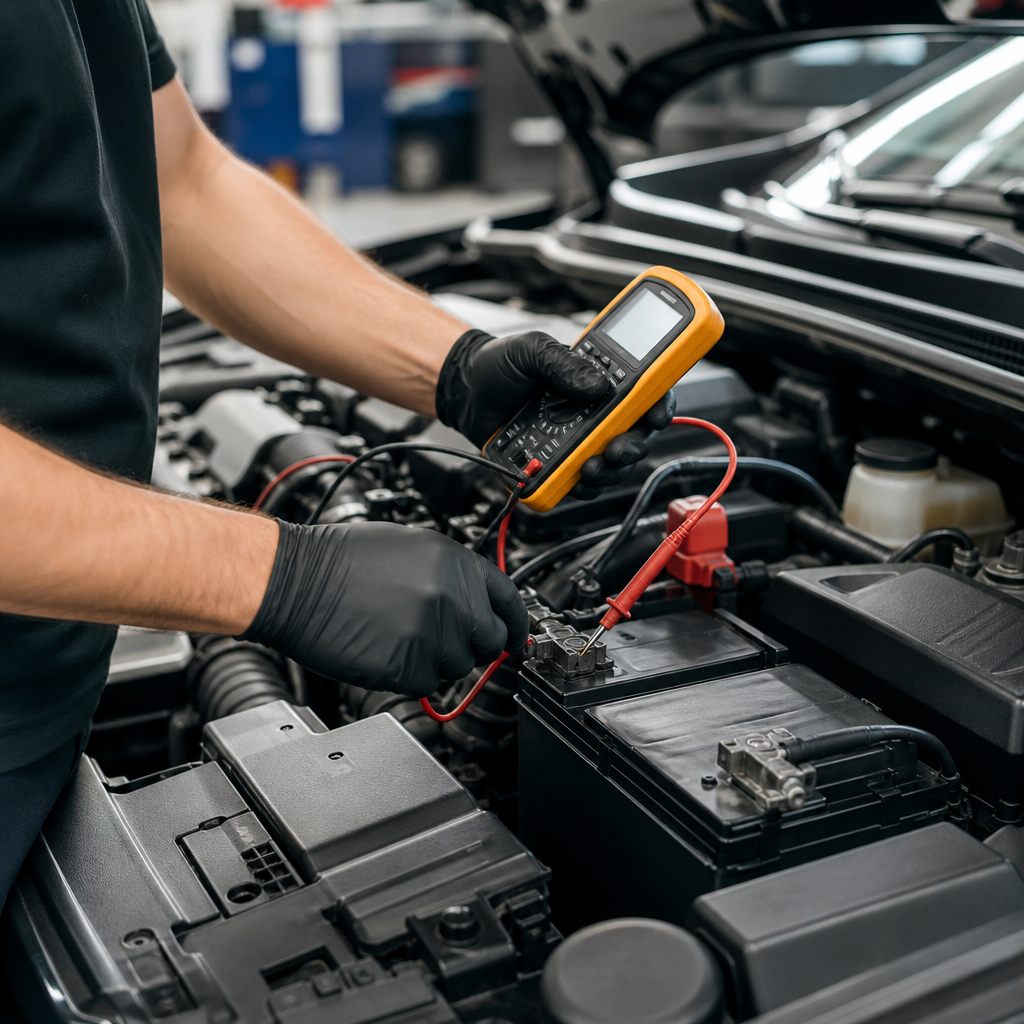
Electrical problems are some of the most frustrating issues a car can have. A dashboard light flickers and disappears. The engine starts fine on Monday and hesitates on Tuesday. A battery keeps dying, but the shop that replaced it can’t say why. If you’re dealing with something like this, you’re not alone, and many East Hollywood drivers run into the same thing.
This guide explains what auto electrical repair covers, the warning signs worth acting on, how a proper diagnosis works, and what to ask before you approve any work in Los Angeles.
Why Electrical Problems Are Hard to Pin Down
Your car’s electrical system is a network, not a single part. The battery stores power, the alternator recharges it while you drive, the starter turns the engine over, and wiring, connectors, fuses, sensors, and computers tie everything together. Modern vehicles lean heavily on that network, so a small fault in one place can show up as a symptom somewhere else entirely.
That is why guessing at parts gets expensive. The same symptom can have more than one possible cause, and a new part won’t fix a bad connection that was the real problem all along. A good repair starts with testing, not swapping.
Warning Signs Your Car’s Electrical System Needs Attention
You don’t need to be a technician to notice that something is off. These are the signs we hear about most often:
- Slow starting or no start. Corroded battery terminals can prevent a car from starting, according to AAA. A weak battery or a worn starter can cause similar symptoms, which is why testing matters. Our guide to dead car battery symptoms covers what to look for.
- A battery or charging warning light. A battery light on the dashboard often points to a battery or charging issue, and it can mean the alternator isn’t charging the battery properly. Don’t assume it’s just the battery.
- Dim or flickering headlights. Lights that dim or flicker can indicate a charging system or alternator problem.
- A battery that keeps dying. Sometimes the battery is simply worn out. In other cases something is draining it, such as a parasitic draw, which is when a component keeps pulling power while the car is off. See our article on a battery that won’t hold a charge for more.
- Stalling while driving. A failing alternator can drain the battery and may cause the car to stall. If that happens, it’s worth looking into alternator replacement and what it involves.
- Accessories that work on and off. Windows, lights, gauges, or infotainment features that act up unpredictably often point to a connection or circuit issue rather than a failed component.
- A check engine light. Many lights are triggered by sensor or electrical faults. Read more about check engine light diagnosis to understand what the light is telling you.
If more than one of these shows up together, mention that to your technician. Patterns help narrow down the cause quickly.
What Electrical Diagnosis Typically Involves
Electrical diagnosis is a process of elimination. While every shop works a little differently, a thorough diagnosis generally follows steps like these:
1. Listening to the symptoms
The technician starts with questions. When does the problem happen? Is it worse when the engine is cold, after the car sits overnight, or in wet weather? Did it begin after other work, or after an accessory was installed? Your answers can save real diagnostic time.
2. Visual inspection
Next comes a look at the battery, terminals, cables, and visible connections. Corrosion, loose clamps, and damaged wiring are easy to miss if nobody checks.
3. Testing the battery and charging system
Testing shows whether the battery can hold and deliver power and whether the alternator is doing its job. This is how a battery problem gets separated from a charging problem, which are two different repairs that can feel identical from the driver’s seat.
4. Testing circuits for resistance
A voltage drop test helps find excess resistance in an electrical circuit. High resistance from a corroded or damaged connection can restrict current flow, and it is a common reason electrical symptoms come and go.
5. Checking for a parasitic draw
If the battery keeps going flat, the technician looks for something drawing power while the car is off. Finding it can take patience, because the culprit might be a single circuit.
6. Explaining the findings
You should come away with a clear explanation of what was tested, what was found, and what it will take to fix. If you can’t get that, ask for it before approving anything.
Common Repairs After Diagnosis
The fix depends entirely on what the testing shows. Typical outcomes include:
- Battery replacement or battery service when the battery can no longer do its job. Our overview of battery service explains what a visit includes.
- Alternator repair or replacement when the charging system isn’t keeping up.
- Starter repair or replacement when the engine won’t crank properly. Here’s more on starter motor replacement.
- Cleaning or repairing connections when corrosion or looseness is behind the problem. This is often the smallest fix, and it’s one more reason to test before replacing parts.
Sometimes the answer is simple and inexpensive. Sometimes it’s more involved. Either way, a good shop explains which it is and why.
How to Help Your Technician Find the Problem Faster
Intermittent faults are the hardest to track down, and you can help more than you might think:
- Write down when the problem happens: cold start, after parking, while braking, when the AC is on.
- Take a photo or short video of any warning lights or odd behavior before it disappears.
- Tell the shop about recent battery replacements, accident repairs, or aftermarket accessories.
- Mention any water exposure, such as a leaking sunroof or driving through deep water.
Questions to Ask Before You Approve Electrical Repair
Whichever shop you choose, these questions keep the process clear and fair:
- What tests did you run, and what did they show?
- Is the part you’re recommending confirmed as the cause, or is it a best guess?
- Can I see the written estimate, with diagnosis and repair listed separately?
- Is there a less costly fix, such as a connection repair, that makes sense first?
- What warranty covers the parts and the labor?
- Will you explain what you found in plain language?
A shop that welcomes these questions is usually one worth trusting.
Electrical Repair for East Hollywood and Los Angeles Drivers
At Hyperion Auto Repair, we’ve been family-owned since 1985, and our ASE-certified technicians approach electrical problems the way described above: test first, explain clearly, and repair what’s actually wrong. Our shop at 1845 Hyperion Avenue is convenient for East Hollywood, Silver Lake, Los Feliz, and nearby neighborhoods, and we stand behind our work with a warranty on all repairs.
If you aren’t sure whether your symptoms are electrical, start with a free multi-point inspection. It gives you a clear picture of your vehicle’s condition and helps us decide whether further electrical testing is needed.
Quick Answers
Can I tell if it’s the battery or the alternator?
Not reliably from symptoms alone. Both can cause hard starts, dim lights, and warning lights. Testing the battery and charging system is how the two are separated.
Is it safe to keep driving with the battery light on?
The light can point to a charging problem, so it’s best to have it checked soon. If the charging system fails, the car could eventually leave you stranded.
Why does my electrical problem come and go?
Intermittent symptoms are often linked to connections or circuits that only misbehave under certain conditions, such as vibration, temperature, or moisture. Notes on when the problem appears help your technician a great deal.
Get Your Electrical Problem Checked
Don’t let a flickering light or a slow start turn into a breakdown. Contact Hyperion Auto Repair at (323) 667-3180 to schedule an electrical diagnosis at 1845 Hyperion Avenue, Los Angeles, CA 90027.